Jewellery Packaging UK: Materials, Inserts & What Actually Protects Small Items
A £15 pair of earrings and a £500 necklace often travel in boxes that look almost identical from the outside. What separates a piece that arrives scratch-free from one that doesn’t isn’t the box itself – it’s what’s sitting directly underneath the product. Bespoke jewellery packaging UK buyers get right tends to share one thing in common: the insert was designed around the item, not the other way round.
This guide covers the materials that honestly protect small items, how insert choice changes depending on what’s being packed, and what proper custom jewellery box setup tends to cost across the UK jewellery packaging market.
Why Small Items Need a Different Approach to Packaging
Jewellery is an unusual jewellery packaging UK category because the product is tiny, but expectations around it stay high regardless of price point. The real risk with small items isn’t crushing; it’s movement, and that changes how the whole spec should be approached.
What Actually Damages Jewellery in Transit?
Movement is the main cause, not the impact. A loose ring rattling inside an oversized cavity scratches its own band and any stone setting long before a box is ever dropped or squeezed. A chain dropped into an open compartment with no anchor point will tangle into a knot within seconds of being moved, and once knotted, a chain often needs untangling by hand before it can even be worn, which isn’t the first impression most brands want.
Does Box Size Alone Protect the Item?
Not really. Size on its own does very little. What matters is whether the insert holds the piece firmly enough that it can’t shift during a delivery van’s stop-start journey, a sorting facility conveyor, or a stack of parcels sitting on top of each other overnight. A box that’s the right size on paper but skips the insert usually protects less than a slightly bigger box with a cavity cut to fit, because the second one actually keeps the item from moving around.
What Materials Actually Work for Jewellery Boxes?
Material choice for jewellery packaging UK brands specify tends to come down to presentation, cost, and how much structural work the box needs to do on its own versus relying on the insert.
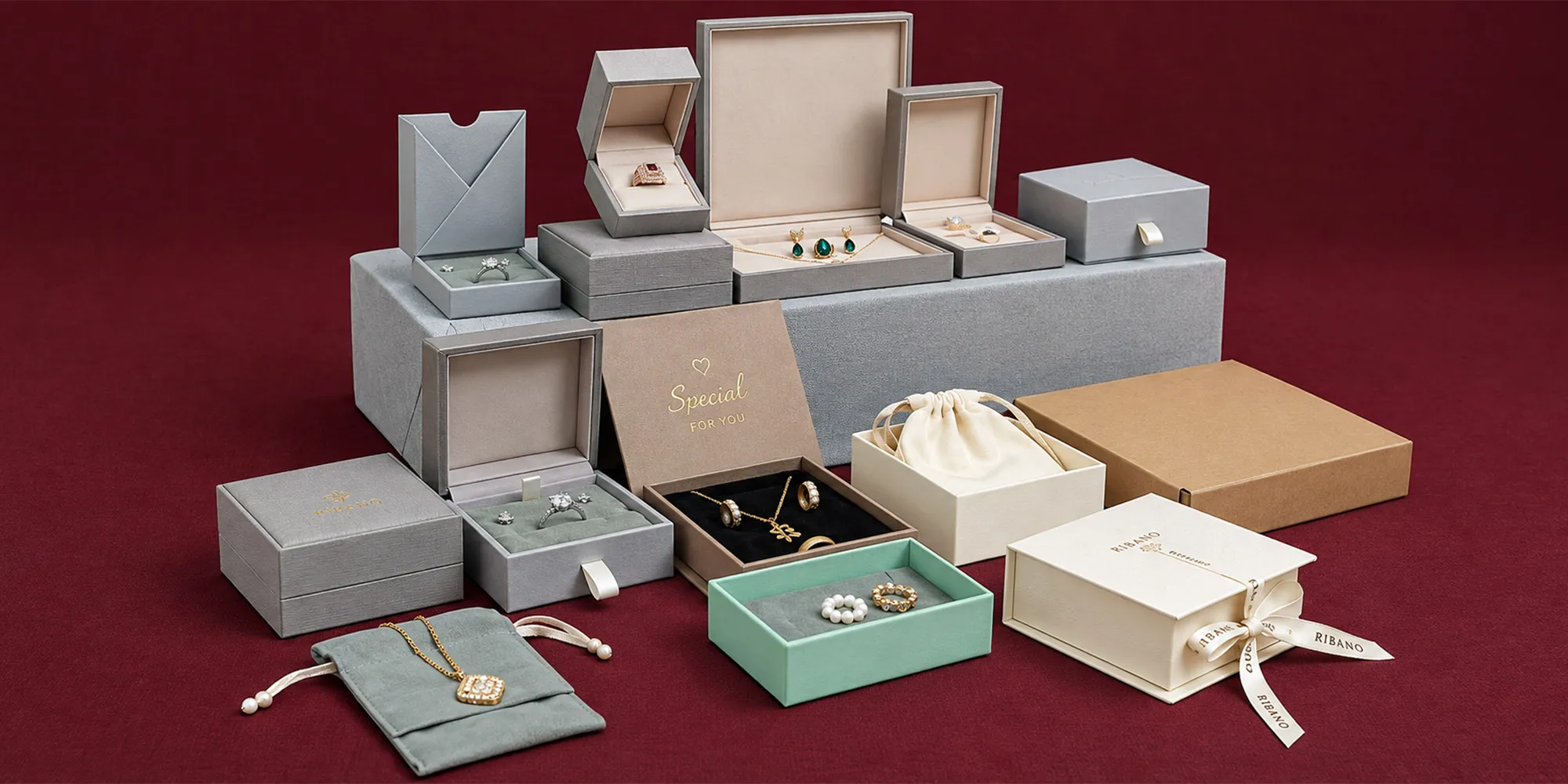
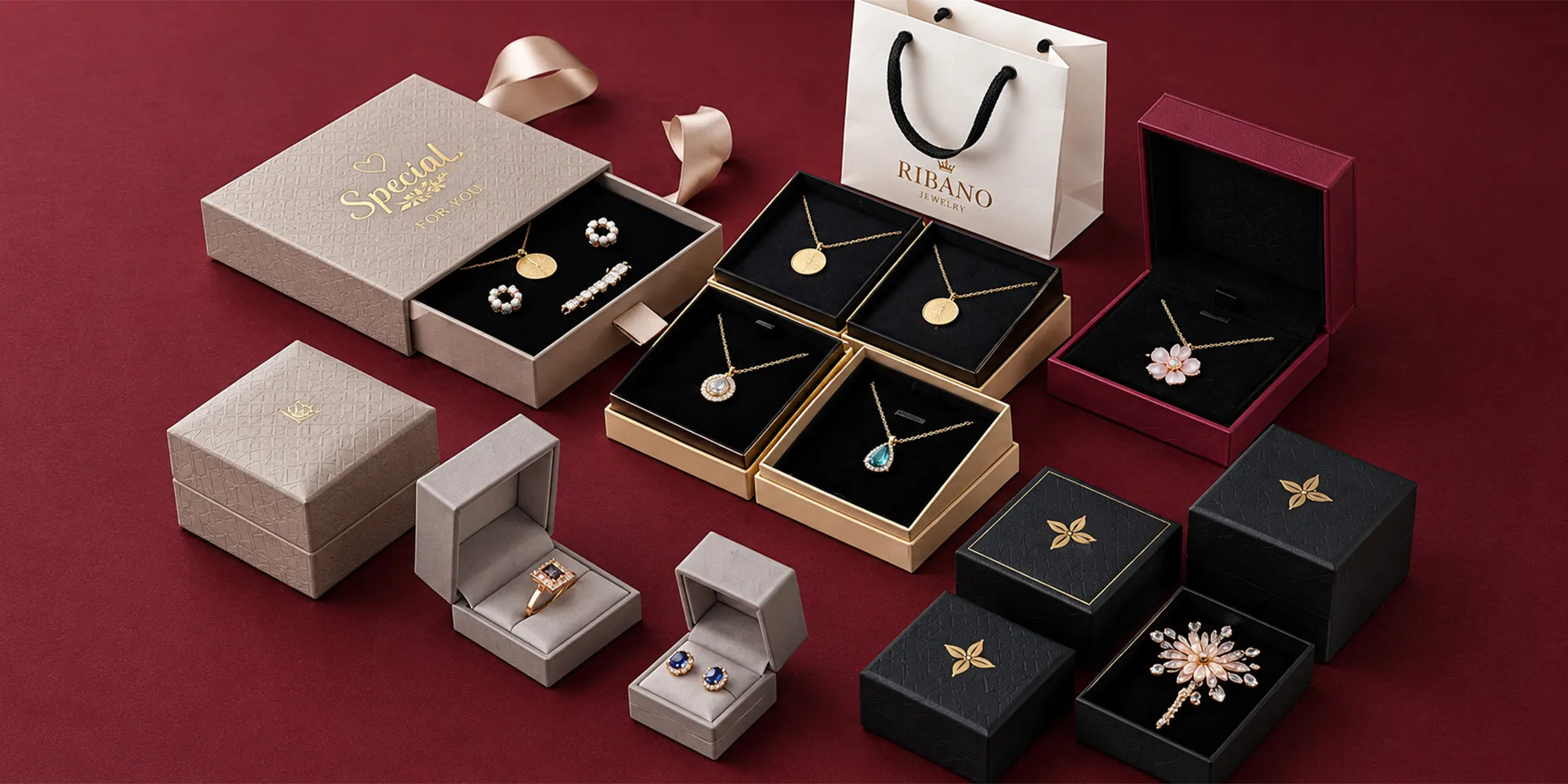
- Rigid board holds its shape without denting, gives a weighted feel when a lid lifts, and works for anything sold as a finished retail product where the unboxing moment matters
- Folding cartons are lighter and cheaper, and work well for lower-priced pieces or high-volume shipping where postage weight is the bigger cost factor, though the walls flex more, so the insert has to do most of the protective work
- Kraft and recycled board have become more common recently, mostly for sustainability reasons and because a raw, unbleached finish suits handmade and independent jewellery brands better than a glossy retail look
Our Box With Separate Lid UK range covers most of the rigid formats used for jewellery presentation and pairs naturally with a shaped insert rather than a flat pad.
Foam vs Velvet vs Card Inserts: Which Protects Best?
Insert material makes a bigger difference to protection than almost anything else in a jewellery packaging UK spec.
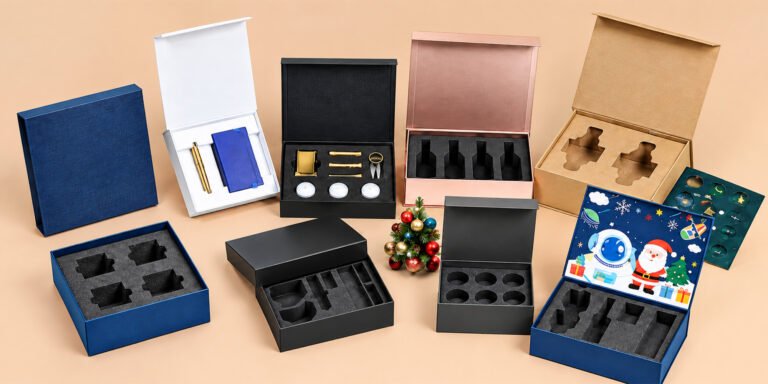
- Foam inserts give the strongest physical protection, since they can be cut to the exact shape of the item, leaving almost no room for movement. Die-cut foam suits set shapes at higher volumes, while CNC-cut foam works better for smaller runs or multiple SKUs in one order
- Velvet inserts are the traditional premium choice and still protect reasonably well, but only when the cavity is shaped to the item rather than being a flat velvet pad with no defined slot
- Card inserts sit at the budget end, but a well-designed slotted or rigid card cavity can hold a ring or stud earrings just as securely as foam; it simply won’t have the same soft feel when a customer touches it
Which Insert Is Best for a Ring With a Raised Stone Setting?
Foam, generally. A raised setting needs a cavity depth that clears the stone without pressing on it when the lid closes, which is easier to achieve with a precisely cut foam cavity than with a flat card or velvet pad.
Getting the Cavity Fit Right for Rings, Chains, and Earrings
Different jewellery types need genuinely different insert designs, and this is where a lot of jewellery box inserts go wrong in practice.
- Rings need a slot with enough grip to hold the band without forcing it in, since too tight a fit risks damage to a stone during removal, and too loose lets the ring slide
- Chains and necklaces need a hook, post, or rigid track to wrap or clip onto, keeping the chain stretched out rather than coiled loosely in an open compartment
- Earrings need paired cavities close enough that a matching set doesn’t separate in transit, with enough gap that the two pieces don’t touch and scratch each other
Our insert design team builds each cavity around the actual production sample rather than a rough sketch, since band width and stone height can vary slightly batch to batch, and a cavity cut too precisely around one early sample can end up too tight once real stock arrives.
Anti-Tarnish and Moisture Considerations
Metal jewellery, particularly silver, is sensitive to moisture and air exposure over time, and packaging choices can either support or worsen this.
Does Jewellery Packaging Honestly Cause Tarnishing?
Not on its own. Standard card and foam don’t cause tarnish, but sealed boxes stored in humid conditions can trap moisture against the metal if there’s no ventilation or anti-tarnish treatment involved, and that trapped moisture is what speeds up tarnishing over time.
How Can Brands Reduce Moisture Risk in Storage?
Anti-tarnish paper or tissue is a low-cost addition that a lot of brands skip, even though it makes a real difference for stock sitting in storage for months before it sells. Small silica gel sachets can help too, though they need to be positioned away from direct contact with a stone setting or delicate finish. This matters more for wholesale or subscription stock than for a piece bought and worn within days.
What Does Custom Jewellery Packaging Cost in the UK?
Pricing depends heavily on the insert choice, more than on the outer box itself.
What Drives the Price Difference Between Boxes?
A plain rigid box with a basic card slot insert sits at the lower end of the jewellery packaging UK cost range. Adding a die-cut foam insert, foil finishing, or a magnetic closure increases the price, since each element is a separate production stage. Order volume changes the maths considerably too, since foam tooling costs are spread across a larger run, dropping per-unit cost noticeably once volume increases.
Do Smaller Brands Need to Pay for Die-Cut Foam?
Not necessarily. CNC-cut foam or a well-designed card insert avoids the upfront tooling cost that die cutting requires, which usually makes more sense for lower-volume or handmade jewellery brands. Most UK jewellery packaging suppliers, including our own Printed Pillow Boxes UK and rigid presentation ranges, work to a minimum order in the low hundreds, with turnaround typically landing within one to two weeks once artwork and insert design are signed off.
Choosing Between Rigid and Folding Cartons for Jewellery
When Does a Rigid Box Make More Sense?
A rigid box with a proper foam or velvet insert fits higher-priced pieces, gifting occasions, and anywhere the unboxing moment is part of what a customer’s paying for. That extra cost is easier to justify at that price bracket, since the packaging itself becomes part of the product.
When Does a Folding Carton Make More Sense?
Folding cartons make more sense for everyday pieces, higher-volume brands, and anywhere shipping weight matters more than the physical opening experience, provided the insert – not a flat pad – is doing the actual protective work. Our Retail Packaging Boxes UK range covers folding carton options that work well alongside a properly cut insert for exactly this kind of split, and some brands run both, using rigid boxes for a premium line and folding cartons for everyday stock.
Common Mistakes in Jewellery Packaging
Should Every New Spec Be Transit Tested Before a Full Run?
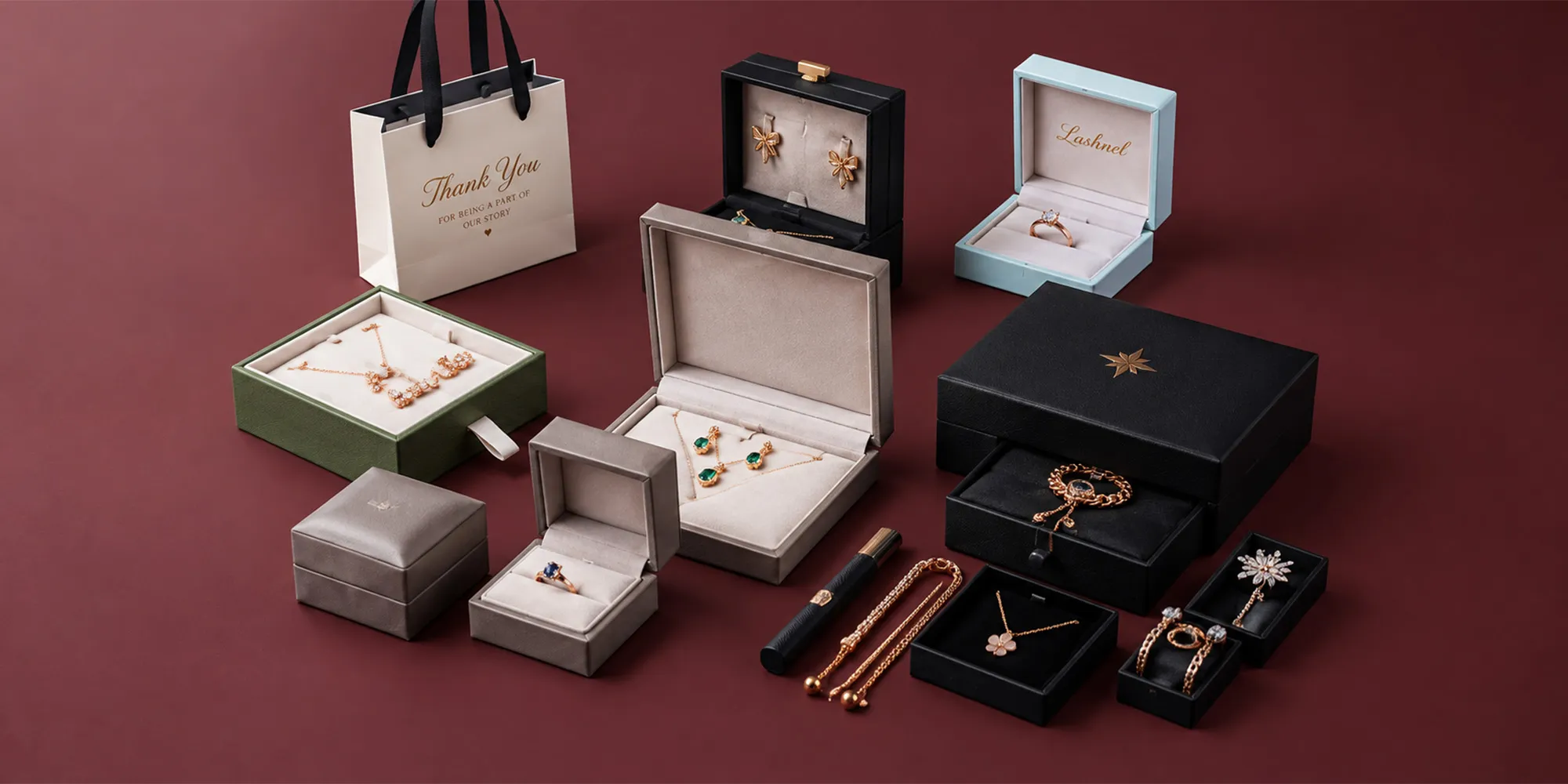
Yes, wherever possible. A box and insert combination that looks secure sitting on a desk can behave very differently after a courier van and a sorting facility – sending a small batch through the actual delivery route before committing to thousands of units is a cheap way to catch a design flaw before it turns into a returns problem. Two other issues show up just as often: an insert designed around a single sample piece rather than the actual production run, which can leave the fit too tight or too loose once real stock arrives, and a box size chosen for how it photographs rather than how the insert protects the item, since extra space around a properly fitted cavity adds shipping weight without adding any real protection.
Sustainability Choices Without Losing Protection
A lot of UK jewellery brands are moving toward recycled card and away from plastic inserts, and this is achievable without giving up much protection if the switch is planned properly.
Is Foam Jewellery Packaging Recyclable in the UK?
Not via standard kerbside collection in most areas, which is why brands prioritising full recyclability often lean toward moulded pulp or card inserts instead, accepting a slightly less premium feel in exchange. Moulded pulp, made from recycled paper fibre, can now hold a shape almost as well as foam for a lot of jewellery types. It just feels less soft and shows more texture on the surface.
What’s the Practical Middle Ground for Sustainable Brands?
Some brands compromise with a recycled card outer box paired with a foam insert, keeping the visible, most recyclable part low-impact while keeping protection where it actually matters, particularly for stone-set pieces or delicate clasps where extra cushioning genuinely reduces breakage. Our Custom Die-Cut Boxes UK range includes recycled and kraft stock options that pair well with a moulded pulp or card insert for brands making this switch.
Conclusion
The box is not really what protects a piece of jewellery; the insert is. A cavity cut to match the actual shape of the item does more to stop damage than any change to the outer material or finish. What decides whether a piece looks the same on arrival as it did leaving the workshop comes down to a few things: the right material for the price point, anti-tarnish protection if stock sits around for a while, and an insert method that matches the order volume.
Hale Path Packaging has built jewellery packaging UK brands rely on acrthat oss rigid and folding cartons for 10 years now, and every cavity insert is built around a real production sample, not an early prototype. MOQ and turnaround are confirmed upfront, so nothing changes once artwork is signed off. Orders usually start from a few hundred units, most completed within one to two weeks.
Written by the Hale Path Packaging team

Harry Taylor
Packaging expert at Hale Path Packaging, sharing insights on custom packaging solutions, sustainable materials, and industry trends.