
Luxury Hamper Packaging UK: Boxing Chocolates, Coffee, Gin & Candles Together Without Damage
A hamper sits in a hot delivery van for six hours, is turned upside down twice, and always has to look perfect when the lid comes off. That is the real brief behind luxury hamper packaging UK buyers see written down anywhere. Suppliers speak about ribbon, tissue paper and display. Almost none speak about what honestly happens when a glass gin bottle, a bar of chocolate and a fragrant candle finish a day closed inside the same box together.
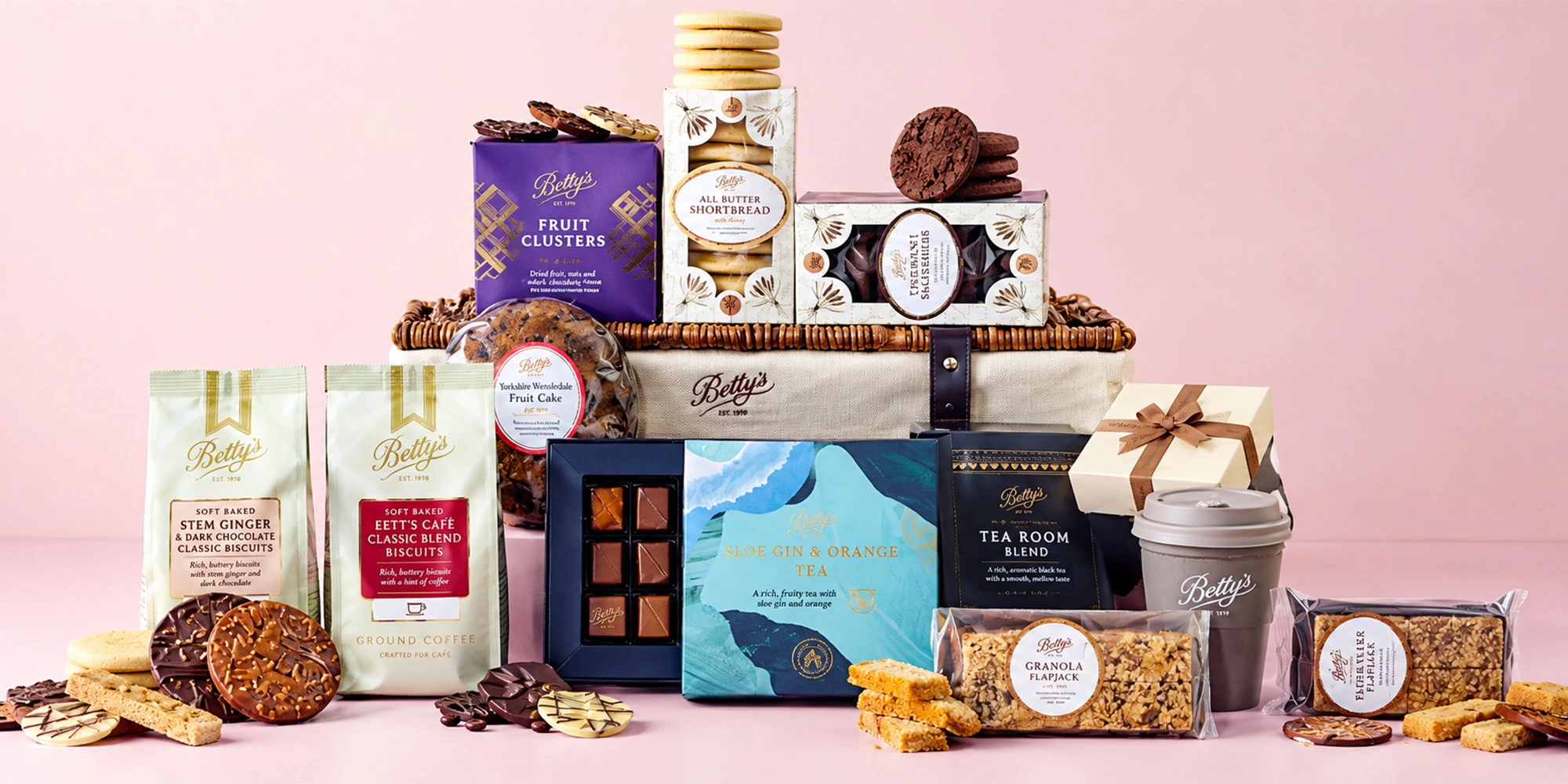
Hamper packaging UK buyers require a structure built around the weakest thing, not the average one: a separated corrugated insert for the glass bottle, a heat-stable pocket for chocolate and wax, and adequate separation so that a fragrant candle never touches food. Get the layering wrong, and it’s the gin bottle or the chocolate that pays for it, not the tissue paper on top. This guide covers what size hamper box you need, which divider material truthfully holds a bottle in place, and how much hamper packaging costs in the UK once all of that is specified correctly.
What Makes Hamper Packaging Different From a Single-Product Box
Most packaging is built around one product with one failure point. A candle box only has to survive drop and crush. A chocolate box only has to survive heat. A hamper, by contrast, holds three or four items that fail for completely different reasons inside the same outer shell.
A glass gin bottle fails from impact. Chocolate fails from heat and humidity. Wax candles soften at temperatures chocolate would also flag as unsafe. Coffee fails from crushed bags or lost aroma if the seal is compromised by a shifting bottle. Put all four in a single box with generic void fill, and you’re not protecting four products; you’re gambling on which one moves first.
This is the gap in most UK hamper suppliers’ pages: generic phrases like “securely packaged” or “beautifully presented” with no actual explanation of how a rigid bottle, soft wax and a sealed food pouch are kept apart. Hamper packaging UK done properly starts with treating the box as a system, not a container.
The Four Layers Inside a Well-Built Hamper
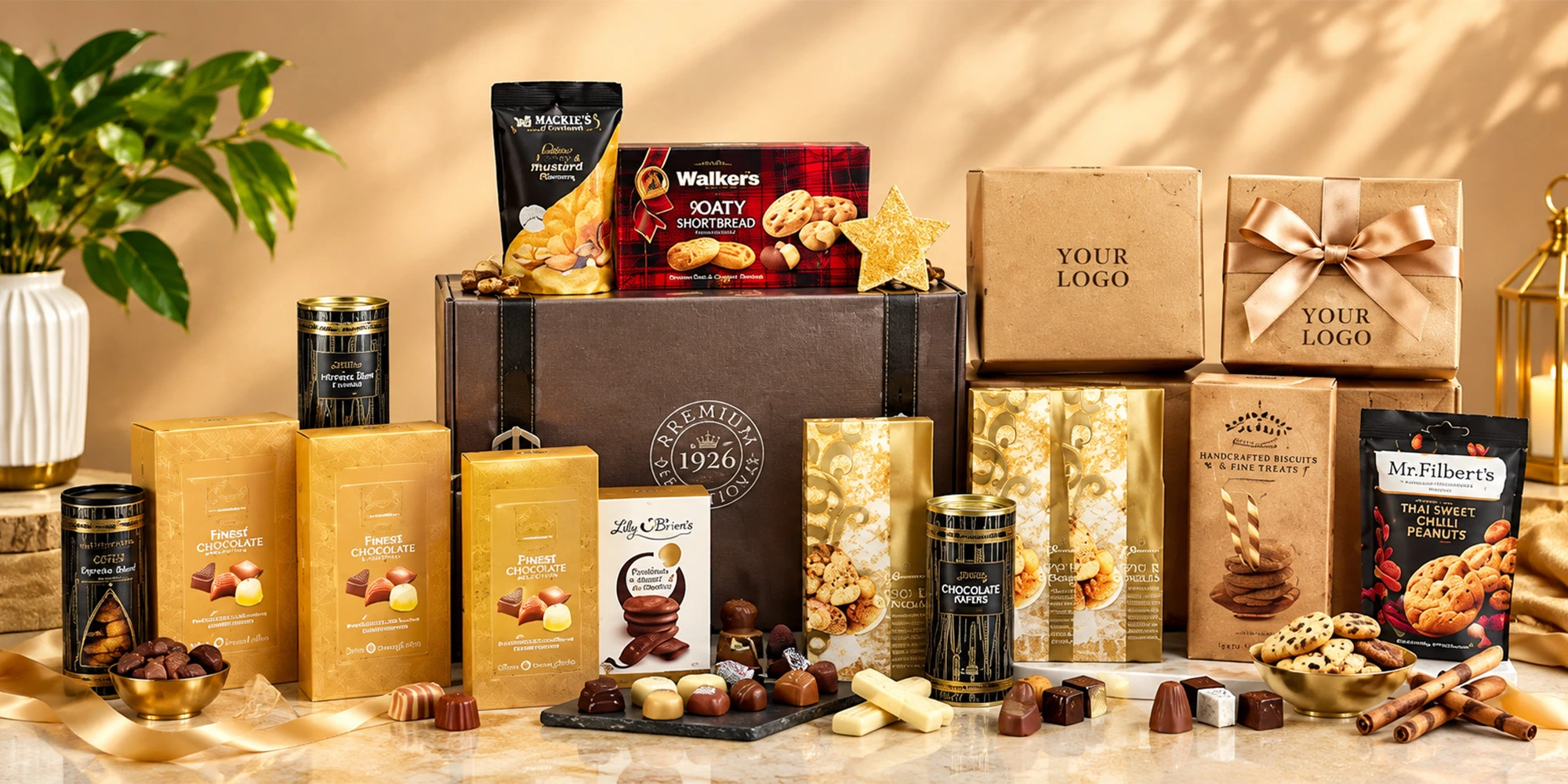
A hamper that survives transit is built in layers, not filled in one go. Each layer does a specific job.
The Outer Box
The outer shell holds the weight and handles the impact from drops and stacking. Double-wall corrugated board is the standard selection for hampers over around 2kg, since it provides both crush resistance and a second layer of thermal insulation compared to single-wall stock. Rigid setup boxes are used where presentation matters more than transport distance, for local or hand-delivered gifting.
What size hamper box do you need? As a working rule, the outer box should leave 25–30mm of clearance around the full divider tray, not the individual items. That margin is what absorbs a knock to the outer wall before it ever reaches a cell. A box cut too tight to the divider turns every side impact into direct contact with the product inside it.
The Divider System
This is where most damage is actually prevented or caused. A corrugated cell divider creates a fixed slot for each item so nothing shifts once the lid is closed. The material and thickness change depending on what sits in each cell.
| Divider material | Typical thickness | Best suited to |
|---|---|---|
| E-flute corrugated | ~1.5mm (1/16 in) | Small retail-style cells, subscription-style hampers |
| B-flute corrugated | ~3mm (1/8 in) | Heavier jars, glass bottles, standard shipping loads |
| Paperboard, 16–28pt | 0.4–0.7mm | Cosmetic-style trays, printed die-cut inserts |
| Chipboard, 22–60pt | 0.56–1.52mm | Internal stiffeners and flat pads between layers |
B-flute is the safer default for the bottle cell specifically. It has the compression strength to hold a 700ml bottle in place under stacking pressure without the cell walls collapsing.
Is a rigid or corrugated hamper box better for the divider itself? Corrugated wins for the division almost every time, even in a rigid outer box. Rigid board is inflexible but brittle at a fold; corrugated flutes flex just under stress and spring back, which is exactly the behaviour a cell wall requires when a bottle shifts a few millimetres in transport.
The Per-Item Wrap
Each item still needs its own wrap inside its cell, because a divider stops movement between items, not damage from the item hitting its own cell wall. Glass bottles need individual wrapping and a leak-proof seal on the cap. Chocolate needs a barrier layer, not direct contact with tissue paper that has been anywhere near a scented item.
Does every item in a hamper need its own wrap, even inside a fitted divider cell? Yes. A snug divider cell stops an item moving into its neighbour’s space, but it doesn’t stop that same item rattling against its own cell wall over a long journey. The wrap is what absorbs that small, repeated contact.
The Void Fill
Whatever space is left after the divider and wraps go in should be filled, not left open. Loose fill that can migrate away from a corner leaves that corner unprotected by the time the parcel is turned upside down on a delivery van floor.
Why Do Chocolates, Candles and Gin Need Separate Treatment Inside the Same Box?
Three items, three distinct tolerances, and they’re commonly boxed as if one solution covers all of them.
Chocolate starts to soften at around 24 to 25°C, and the damage isn’t limited to observable melting – even a short period above that threshold destabilises the cocoa butter’s crystal structure, and when it resolidifies, the surface can develop fat bloom, a light grey-white film that affects the finish although the chocolate remains safe to eat. The safer holding range for transport is closer to 13 to 20°C, with humidity kept down to avoid sugar bloom from condensation.
Candle wax shares a similar heat sensitivity to chocolate, softening and distorting in the same rough temperature window, which is exactly why the two should never be positioned in adjacent cells without a barrier between them if the hamper is likely to sit in a warm van or a customer’s porch for a few hours.
Gin and other spirits carry a different risk entirely: breakage and courier restrictions. UK carriers, including Royal Mail treat spirits between 24% and 70% ABV as a restricted item, generally capped at one litre per bottle and no more than two bottles per parcel, individually wrapped and clearly marked as fragile with the sender’s details visible on the outside. Spirits above 70% ABV aren’t a restricted item at this point – they’re prohibited outright.
Know this before you box a hamper with alcohol in it: the courier’s alcohol limit is not a suggestion; it is a condition of the parcel being accepted at all. A hamper built around a single 700ml bottle sits comfortably inside that limit; one built around two full-size bottles may not.
Getting the Box Order Right
A UK hamper supplier once had a batch of corporate gift hampers returned after the gin bottle’s cell had been positioned directly beside the candle cell, with only a single sheet of tissue between them. The candle had softened slightly in transport, the bottle had shifted a few millimetres against the divider wall under that softness, and the divider itself had broken along one stitch. Nothing broke outright, but the presentation was ruined, and every box in that batch had to be repacked before dispatch.
The fix was straightforward: heavier, more rigid items go at the base of the tray, temperature-sensitive items go in the middle, candles sit furthest from the outer wall, where solar heat gain through a window has the most effect, and glass should always have its own completely enclosed cell instead of sharing a divider wall with anything else.
That single change – regrouping by hazard type instead of by size – is the real distinction between a hamper that survives a hot afternoon in delivery and one that does not.
How Do You Stop Scent from a Candle Reaching the Coffee or Chocolate?
This is the part almost no UK hamper page mentions, and it’s a real problem. Fragrance oils used in aromatic candles are volatile compounds, and permeable packaging materials like unlined kraft, tissue paper, and untreated cardboard can absorb and pass on some of that perfume over the hours or days a hamper spends boxed up. Coffee is particularly vulnerable – roasted beans readily pick up ambient smells.
The practical fix is a barrier: a glassine liner, a foil-lined pouch, or simply making sure the candle sits in a completely enclosed, locked compartment instead of an open-topped cell. Coffee bags with a proper barrier film and a resealable zip, similar to the specification used across our own aluminium foil coffee bags UK range, hold up far better against scent transfer than a simple kraft pouch.
Choosing the Right Outer Box for a Luxury Hamper
The outer box does double duty: structural protection in transit, and presentation the moment the lid comes off. For corporate or premium retail hampers, a magnetic gift box gives a stronger unboxing moment than a standard tuck lid, and the magnet strength required scales with how many heavier items – bottles, jars – sit inside.
Where the hamper is being hand-delivered or collected in-store instead of couriered, a white rigid gift box or a box with a separate lid can replace the corrugated shell entirely, since it won’t be subjected to the same drop and stacking forces as a parcel network.
For hampers that do require travel by courier, a double-wall corrugated outer stays the safer default, particularly for anything over 2kg or containing glass. Our own custom corrugated boxes UK range is specified with this exact combination of crush resistance and insulation in mind, instead of treating corrugated as a plain shipping-only material.
Smaller, lighter hampers built around softer goods – biscuits, a single candle, or a small jar – can work well in a pillow box format instead, provided nothing glass or particularly heat-sensitive is involved.
Does the Candle Need Its Own Box Inside the Hamper?
Yes, in most cases. A candle sitting loose in a divider cell is exposed on every side to whatever sits next to it, including any heat or scent transfer from a neighbouring cell. A dedicated candle box with an insert inside the hamper cell solves two problems at once: it holds the scent within its own printed carton instead of allowing it to move freely through the divider system, and it gives the candle a rigid shell of its own so a knock against the divider wall doesn’t chip the glass jar or crack the wax.
This matters more for soy and coconut wax blends, which grow softer at room temperature than paraffin and mark more readily from pressure against a bare cell wall. A snug-fitting printed box removes that direct contact altogether.
Printing and Branding Across a Multi-Product Hamper
Branding on a hamper works in two groups: the outer box, which holds the prominent logo and headline artwork, and the individual item boxes inside, which carry a lighter version of the same branding so the range reads as one collection instead of four unrelated products bundled together.
Holding the artwork spec stable – the same Pantone, the same finish, matte or soft-touch – across the outer box and every item box inside is what separates a hamper that looks properly curated from one that looks like leftover stock grouped at the last minute. This is worth verifying at the proofing stage, not after the first production run, since board stock from different suppliers can print the same Pantone colour slightly differently.
MOQ, Lead Time and Getting the Spec Right First
Hamper packaging is rarely a single SKU. Most UK hamper suppliers need an outer box, a divider set, and often a printed sleeve or wrap, all matched to the same product mix. Ordering these separately, in mismatched quantities, is one of the main reasons a hamper range ends up with an outer box that no longer fits its divider once one product in the range changes size.
This is covered in more depth in our custom packaging MOQ guide for the UK, but the short version for hampers specifically: order the outer box and the divider insert against the same brief, at the same time, so the tolerances match from the first production run.
How much does hamper packaging cost in the UK? The outer box and divider set together typically land well below the value of the products they protect, and the cost moves mainly with divider complexity (number of cells, custom shapes) rather than with the outer box alone. A simple three-cell divider in B-flute costs a fraction of the price of the gin bottle it’s built to protect, which is the real justification for not cutting corners on that one component.
Anyone building a hamper range ahead of a seasonal peak should also build in lead time for proofing the divider fit against real samples of every item, not just the box itself. Our Christmas packaging deadlines guide covers how far in advance that proofing stage needs to start for a peak-season launch.
Corporate hamper programmes running through the same busy period tend to carry an added layer of complexity around consistent branding and traceable documentation across a bulk order, which we cover separately in our white rigid gift boxes UK guide.
Questions Worth Asking Before You Confirm a Hamper Spec
A few questions catch most of the hamper mistakes before they reach production.
- Will every item in this hamper still fit once one product in the range changes size or supplier? A divider built around one bottle shape rarely tolerates a supplier swap without a re-check.
- Has the candle been tested next to the food items, not just on its own? Scent transfer only shows up when items sit together for the length of a real delivery, not in a quick side-by-side check.
- Does the outer box match the actual courier route, or just the showroom photo? A box that looks right on a shelf can still be the wrong choice if it’s travelling by parcel network instead of being hand-delivered.
- Is the divider material rated for the heaviest item in the set, or the average one? A cell built to the average weight in the hamper is the cell that fails when the heaviest bottle goes in it.
Conclusion
A hamper is only as strong as its weakest item, and in most UK hampers that’s either the glass bottle or the chocolate, not the box itself. The dependable formula is a B-flute or E-flute corrugated cell divider sized to each item, individual wrap inside each cell, a barrier between anything scented and anything edible, and an outer box chosen for the actual transit route instead of for looks alone. Get the layering right once, and it repeats cleanly across every hamper in the range, instead of being solved product by product.
Hale Path Packaging builds outer boxes, divider inserts, candle boxes and coffee pouches from the same production run, so the tolerances match from day one rather than being reconciled after a bad batch. Minimum order quantities start at 100 units with a 7–14 working day turnaround, and our team can check a hamper’s item mix against the right divider spec before the first production run is confirmed.

Harry Taylor
Packaging expert at Hale Path Packaging, sharing insights on custom packaging solutions, sustainable materials, and industry trends.