Biltong & Jerky Packaging UK: Solving the Moisture Problem Standard Bags Get Wrong
Biltong & Jerky Packaging UK fails for a specific, measurable reason: standard bags don’t control moisture vapour transmission rate (MVTR) or oxygen ingress well enough to hold the product’s water activity steady. Biltong needs to stay below 0.85 water activity (UK Food Standards Code) – above that, mould risk rises sharply. Standard BOPP or PE bags let moisture creep through the film itself, not just the seams, slowly pushing water activity back up over weeks in transit and storage. A correctly specified foil or metallised laminate solves this; a bag chosen for how it photographs doesn’t.
Ask a biltong brand why a batch went soft and mouldy, and you’ll get three answers before “the bag” comes up: bad luck with the weather, a dodgy supplier, maybe the recipe needed tweaking. The pouch itself rarely gets a mention. Somewhere between the dehydrator and the customer’s kitchen counter, a bag that looked fine on day one lets a little moisture creep back into the meat, and nobody catches it until it’s too late to trace back.
The Problem: Why Standard Biltong Packaging UK Bags Fail Cured Meat
Why does biltong go mouldy even in a sealed bag? Biltong and jerky don’t behave like dry snacks such as crisps or granola. Proper biltong sits at a water activity around 0.75-0.85 – precisely the range where mould spores are able to grow if given the chance. Source: UK Food Standards Code, which sets 0.85 as the ceiling for dried meat products, and a Food Standards Agency-commissioned literature review recommending 0.7-0.75 as a practical drying target. A bag that’s “good enough” for genuinely dry snacks is very often the wrong bag for cured meat, because it was never tested against this specific risk.
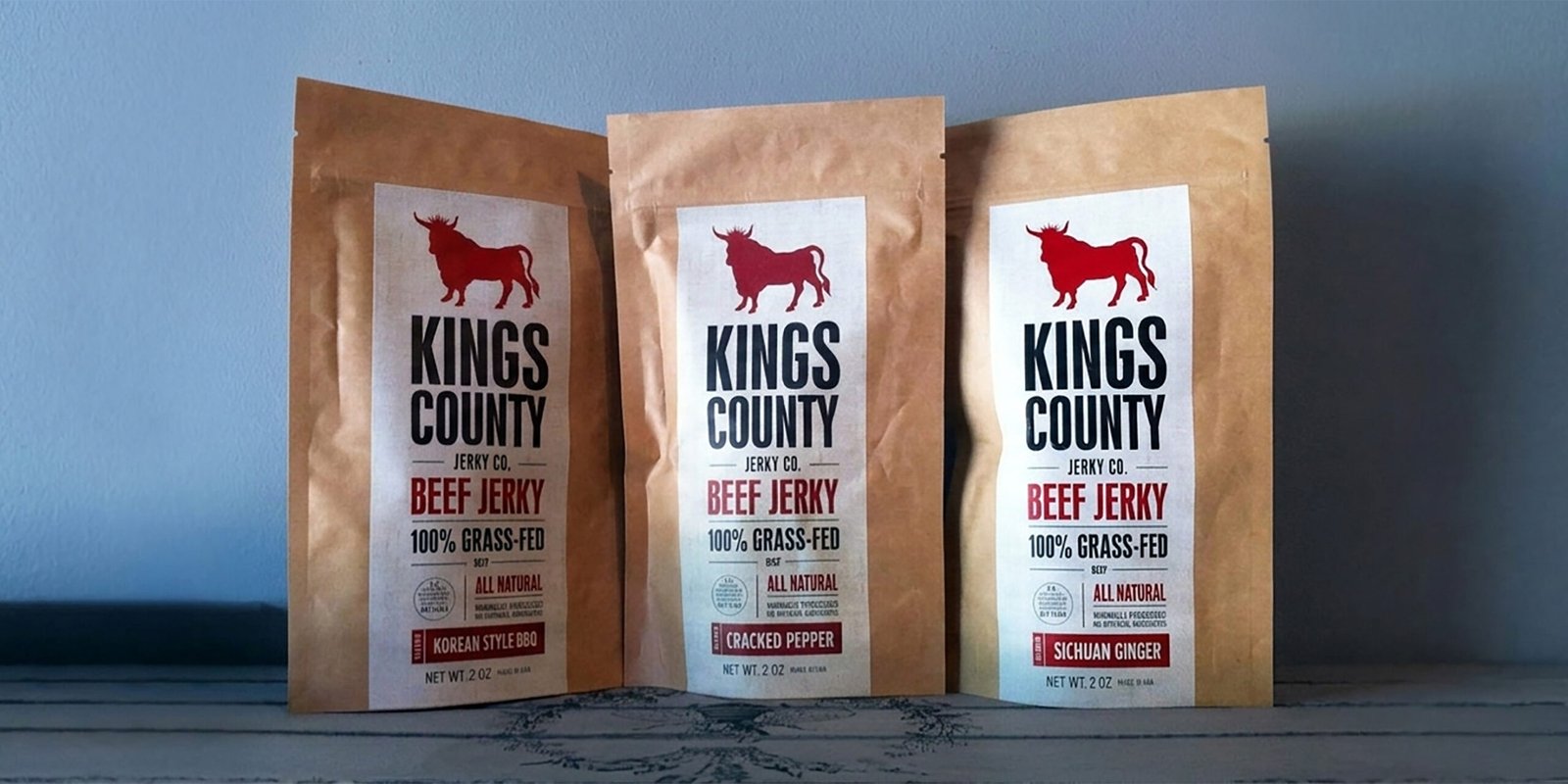
Walk into most farm shops or delis, and independent biltong brands are often packed in near-identical bags – kraft paper outside, a small window, a basic zip or tape seal. Most started with a home dehydrator and a market stall, and went with whichever supplier offered the smallest minimum order. Standard biltong and jerky packaging bought off the shelf usually solves for one thing: looking good in a product photo. It doesn’t solve for moisture vapour transmission, and that’s the part that decides whether the product survives the trip from production to a customer’s kitchen counter.
What’s Actually Happening Inside the Bag
A sealed bag isn’t a vacuum. Even a fully sealed bag made from ordinary BOPP or PE film still lets water vapour creep through the material itself, not just around the seal edges. That’s the moisture vapour transmission rate (MVTR), and most small suppliers never bring it up because they’ve never had it tested.
What is MVTR and why does it matter for biltong packaging? Moisture vapour transmission rate (MVTR) measures how much water vapour passes directly through a packaging film over time, independent of the seal quality. A low-barrier film like standard BOPP or PE lets vapour migrate through the material itself over weeks, slowly pushing a dried product’s internal water activity back up – even if every seam is sealed perfectly. This is why a bag can look completely intact and still fail the product inside it.
Give it a few weeks in transit and storage, and that slow trickle of moisture starts pushing biltong’s water activity back toward the range where mould risk increases. That’s not bad luck – it’s an under-specified film doing exactly what it was always going to do.
Jerky fails differently. Oxygen ingress causes rendered fat to oxidise, giving old jerky a faintly rancid, cardboard-like edge. A pouch with a weak oxygen barrier won’t look wrong. It just won’t taste right anymore, and by the time a customer notices, the brand has lost a repeat sale.
Benefits of a Proper High-Barrier Laminate
This is where a correctly specified pouch earns its cost. A foil or metallised laminate structure gives you:
- Longer shelf life – six months instead of six weeks, because moisture and oxygen can’t work their way through
- Consistent texture – the meat stays at the water activity it left the dehydrator at, instead of drifting soft
- True flavour protection – no fat oxidation, so the last piece in the bag tastes like the first
- Fewer returns and complaints – often the single biggest cost small brands don’t track until it’s already hurting margins
- Export readiness – a barrier strong enough for a three-week sea freight to the US market as well as UK retail
What a barrier laminate is actually made of:
- Foil or metallised core – blocks light and oxygen almost completely, which matters more for jerky’s fat content than most brands expect
- PET outer layer – gives stiffness and print clarity, resists punctures from sharp, irregular meat edges
- PE or CPP inner sealant layer – the part that touches the food, which needs to be food-contact safe, not just heat-sealable
- Matt or gloss laminate finish – mostly a branding choice, though matt hides fingerprints and oil transfer better on jerky bags handled a lot at markets
Why Choose Resealable Pouches Over a Basic Zip
A lot of brands put real thought into the film and then bolt on whatever zipper their supplier defaults to – where most post-opening moisture problems start.
Where should the zip go on a resealable jerky or biltong pouch? Below the fold, not right at the top edge. A properly positioned interlocking zip holds through repeated opening instead of loosening after two or three uses, costs a fraction of a penny more per unit, and matters most on multi-serve packs of 150g and up, where a customer opens and reseals the bag several times rather than eating it in one sitting.
Why Oxygen Absorbers Are Worth Adding – With One Condition
Oxygen absorber sachets get mentioned constantly in supplier brochures, and for good reason: they pull residual oxygen in a nitrogen-flushed pouch down close to zero, slow fat oxidation in jerky specifically, and cost little relative to the shelf-life gain.
Do oxygen absorbers work in any coffee or jerky bag, or only high-barrier ones? Only if the film around the absorber is doing its job too. A food-grade absorber inside a low-barrier bag simply exhausts itself fighting oxygen that’s leaking straight through the film walls – it’s a supporting tool, not a substitute for getting the laminate right first. Pairing an absorber with an under-specified bag wastes the absorber’s capacity within days.
A Common Failure Pattern Worth Recognising
This is a pattern that shows up repeatedly across the category, not a single business’s story: a batch sits in transit for several days during warm weather and arrives noticeably softer than it left the dehydrator – “clammy,” as brand owners often describe it. When the packaging failure is invisible like this, brand owners frequently assume it’s a production issue and start second-guessing their curing process, when the real fault sits with a bag that was never built for cured meat in the first place. The fix in cases like this is rarely a recipe change – it’s swapping to a foil-backed laminate with a properly placed zip, after which complaints tied to warm-weather transit typically stop.
Which Format Is Best: Matching the Pouch to the Product
Not every brand needs the same bag. As a starting guide:
- Butcher-counter biltong sold by weight (the kind of stock you’ll find at markets in Leeds or Sheffield): a simple kraft-laminate side-gusset bag with a roll-down top is usually enough – this stock moves fast and rarely sits around long enough to need heavier protection.
- Premium jerky priced above £8 a bag, aimed at retail shelves or subscription boxes: go with a tamper-evident tear strip and a resealable zip, since this bag could easily sit in a cupboard for a month before it’s finished.
- Export-focused brands shipping into the US or further afield: this is where a foil-core laminate, a nitrogen flush, and an absorber sachet earn their keep – barrier strength matters more here than how the bag looks.
Does UK packaging regulation affect Biltong & Jerky Packaging UK bag choice? Yes, increasingly. UK Extended Producer Responsibility for packaging (pEPR) began in April 2025, with modulated, recyclability-based fees taking effect from April 2026 – meaning the material and construction of a pouch now affects an ongoing fee, not just the unit price. Layered on top, the Simpler Recycling kerbside rules land by March 2027. A mono-material PE laminate with a high-barrier coating can hit two targets at once: strong protection and a recyclable format that doesn’t rack up avoidable EPR fees. For the sourced fee breakdown, see our Packaging EPR UK guide.
Print and Branding: Sells the Bag, Doesn’t Protect It
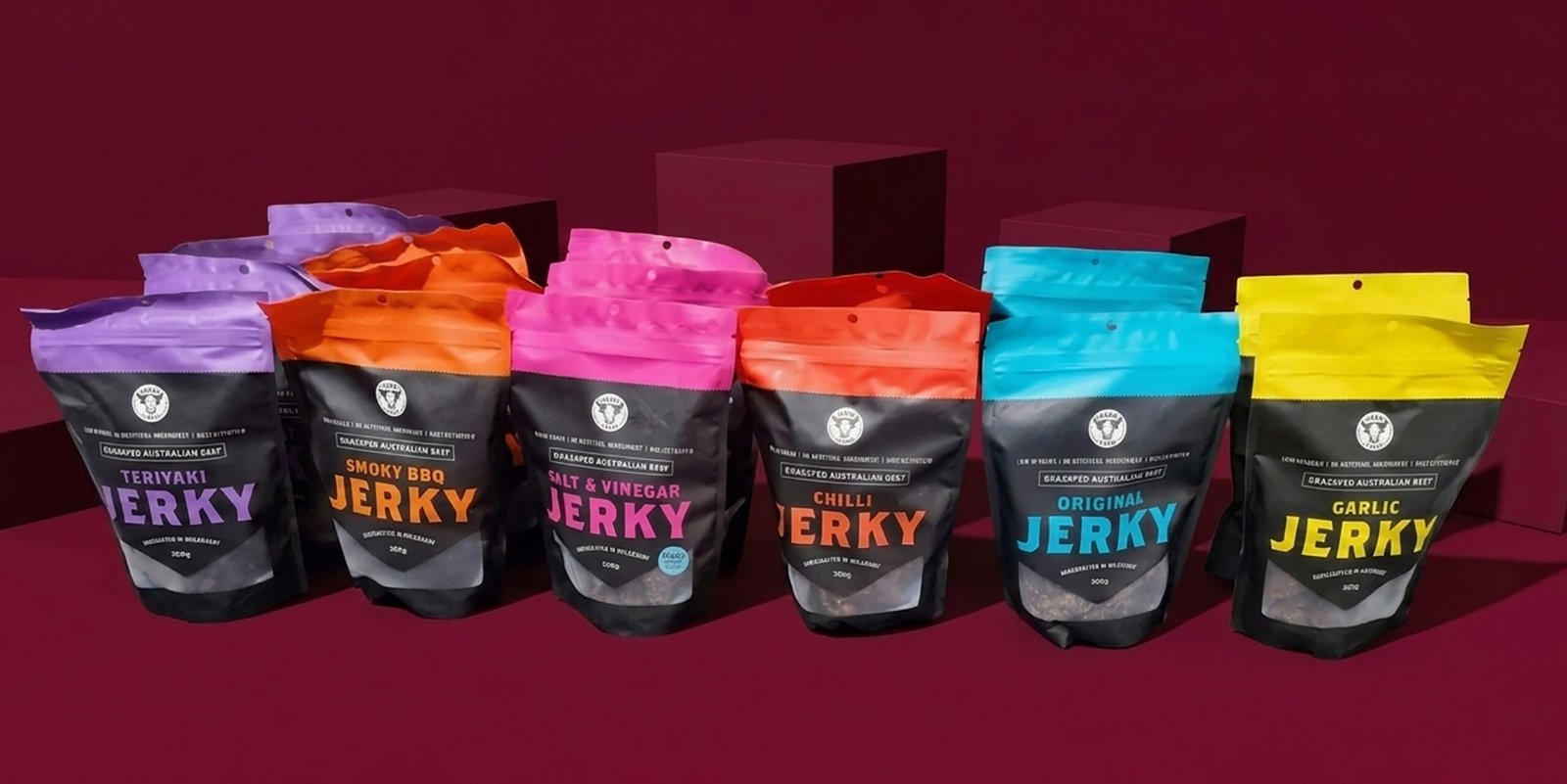
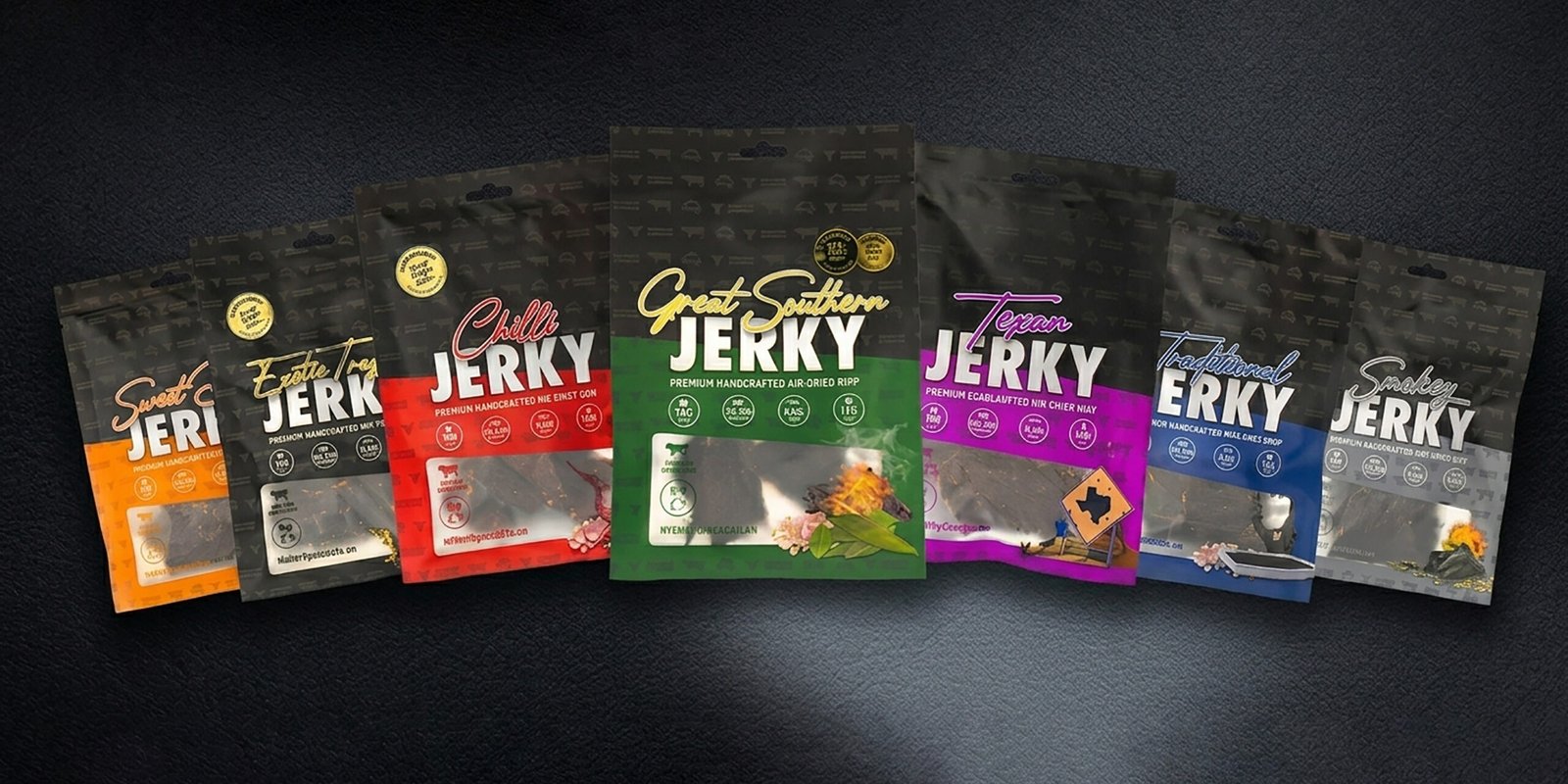
Window cut-outs, foil stamping, and bold typography sell the bag off the shelf, but none of it touches the moisture problem. A nice-looking matt pouch with a die-cut window can let just as much moisture through as a plain one, if nobody checked the laminate underneath it.
The smarter order of operations:
- Lock in the laminate structure and closure first
- Confirm the water activity and shelf-life target for the specific product
- Then build the branding and print around a bag that’s already doing its job
Getting the Spec Right From the Start
Custom Biltong & Jerky Packaging UK pouches don’t need to be complicated, but someone needs to ask the right questions before tooling is set: what water activity is the product sitting at, how long does it need to survive in transit and on shelf, and how many times will a customer realistically open and reseal it. Those three answers decide almost everything else – laminate structure, zip placement, and whether an oxygen absorber earns its place in the bag.
The Bottom Line
The recipe was rarely the problem. It’s the bag sitting quietly around it, doing far more work than most brands ever give it credit for. Getting the laminate, the closure, and the format right is what actually decides whether a customer’s second order happens – not just the first one. Biltong & Jerky Packaging UK are unforgiving products in this sense: get the packaging wrong and the flaw shows up weeks later, far from the kitchen where it started, in a customer’s hands instead of a lab test.
Hale Path Packaging works through these specifics – water activity target, transit time, reseal frequency – with brands before a single pouch gets printed, because the film choice made on day one decides whether a bag of biltong tastes right in week four.
Get a quote for your Biltong & Jerky Packaging UK, or browse our flexible packaging and pouches range.
Related: Flexible Packaging & Pouches · Stand-Up Zipper Food Pouches · Nuts & Dried Fruit Packaging Pouches · Packaging EPR UK for Small Businesses

Harry Taylor
Packaging expert at Hale Path Packaging, sharing insights on custom packaging solutions, sustainable materials, and industry trends.