

Custom Packaging for Small Business UK means choosing between corrugated (cheapest, built for shipping), rigid (premium presentation, higher MOQ), or mailer boxes (a middle ground popular with DTC brands) – with MOQs starting as low as 100-250 units on digital-printed formats. Hale Path Packaging runs digital formats from 100-200 units. Separately, UK EPR packaging rules apply once a business crosses £1m turnover and 25 tonnes of packaging a year: small producers in that band register and report annually but don’t currently pay disposal fees, while large producers (£2m+ turnover, 50+ tonnes) report twice yearly and pay both disposal fees and registration costs. If you already know you need the lowest possible MOQ and want the full supplier-sourcing breakdown, see our dedicated low-MOQ custom packaging guide – this post covers the broader picture: format types, budget orientation, and EPR.
Two suppliers quoting the same box design can land on MOQs a thousand units apart, and that gap is rarely explained on either quote. It comes down to print method, tooling, and how each supplier’s production schedule absorbs setup cost – not an arbitrary \”policy\”. This guide covers the format decision, realistic MOQ expectations, and the 2026 compliance landscape for small UK brands.
The Three Main Types of Custom Packaging for UK Brands
1. Corrugated Packaging (Shipping)
Corrugated is the workhorse of e-commerce. It’s built from fluted layers for strength, making it the default for shipping boxes and mailers. For a small business, corrugated offers the lowest entry price per unit, especially if you stick to standard brown or white board. Source: Hale Path’s corrugated styles guide.
- Best for: Subscription boxes, transit-safe shipping, and brands that need custom sizes without the price tag of premium folding cartons.
- MOQ Range: 100–500 units for digital; 1,000+ for flexographic.
- Pros: High protection, widely recyclable, and cost-effective at scale.
2. Rigid Box Packaging (Premium)
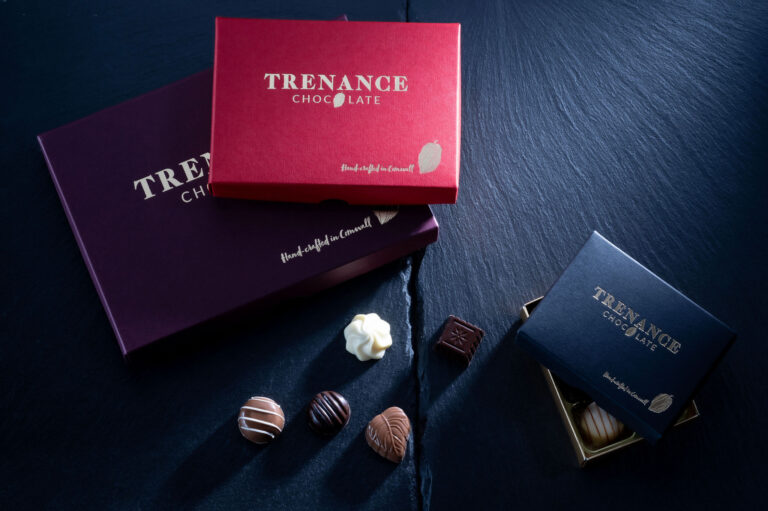
Rigid boxes are the heavy, non-collapsible boxes used for luxury products like perfumes, jewellery, or high-end tech. They are made from thick chipboard wrapped in a thinner paper finish. Because they don’t fold flat, shipping and storage costs are higher than corrugated. Source: Hale Path’s rigid box guide.
- Best for: Luxury gift sets, premium cosmetics, and electronics where unboxing is the focus.
- MOQ Range: Usually 250–500 units; harder to find below 100 units.
- Pros: Unmatched shelf appeal and perceived value for the brand.
3. Mailer Box Packaging (DTC)
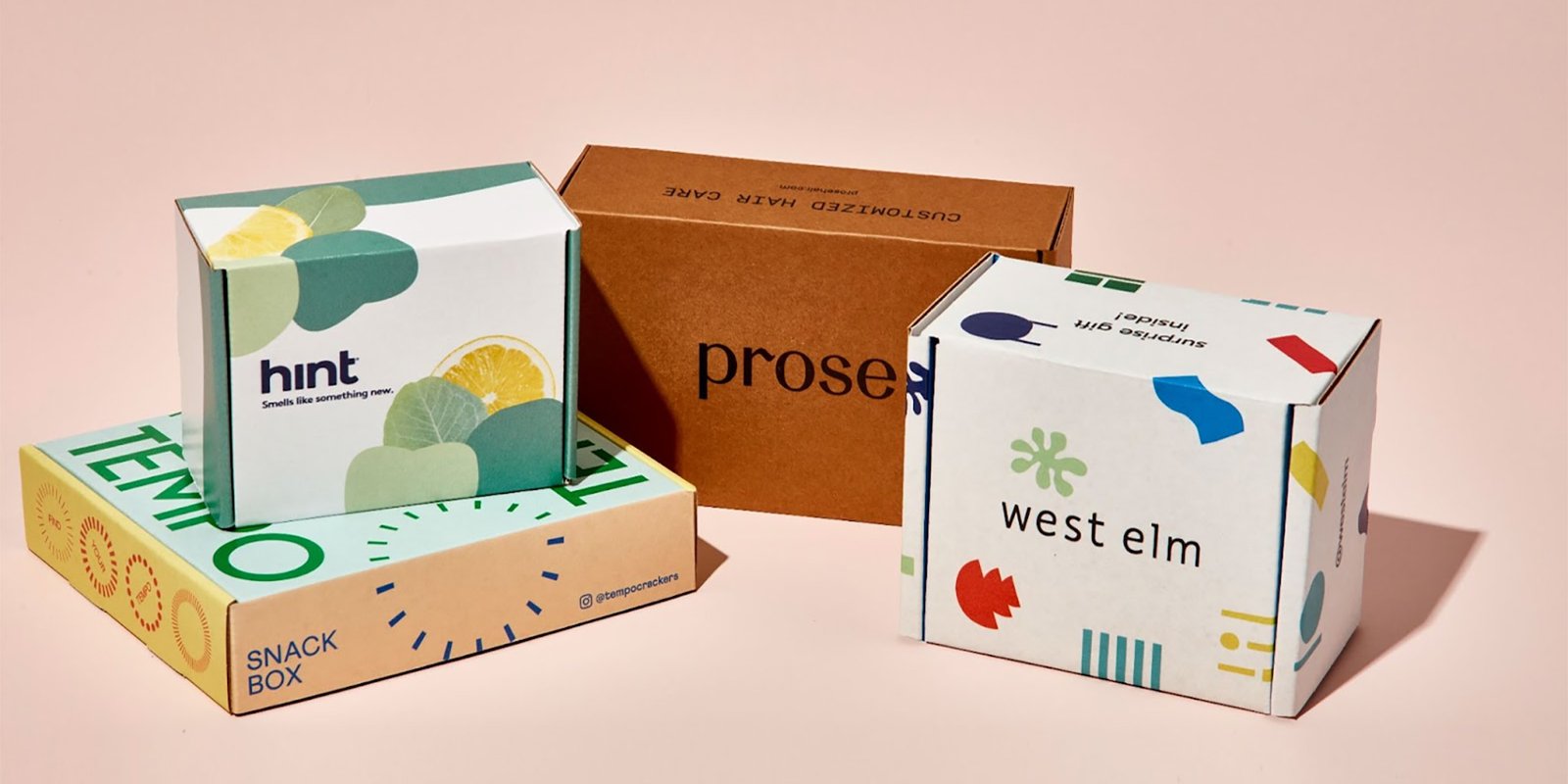
Mailer boxes are self-locking corrugated boxes that don’t require tape to seal (though most brands use a sticker or tape for security). They are the default for DTC (Direct-to-Consumer) brands because they are sturdy enough to ship but presentable enough for a retail shelf. Source: Hale Path’s mailer box guide.
- Best for: Apparel, health and beauty products, and any brand shipping directly to customers via Royal Mail or couriers.
- MOQ Range: 100 units on digital formats.
- Pros: No tape needed, ships flat, and excellent canvas for full-colour printing.
The Cost of Custom Packaging: Real 2026 Price Ranges in the UK
Pricing is never flat, but for a small business ordering 500 units of a standard-sized mailer box (e.g., 20x15x5cm), you can expect to pay between £1.20 and £2.50 per unit. Source: UK Packaging Price Index, 2026 Q1 industry survey via Packaging Gateway.
| Format Type | Typical Unit Price (500) | Digital MOQ | Offset/Flexo MOQ |
|---|---|---|---|
| Corrugated | £0.80 – £1.80 | 100 units | 1,000 units |
| Mailer Box | £1.10 – £2.40 | 100 units | 1,000 units |
| Rigid Box | £3.50 – £8.00 | 250 units | 1,000 units |
| Paper Bag | £0.30 – £0.90 | 500 units | 2,000 units |
| Folding Pouch | £0.40 – £1.20 | 500 units | 5,000 units |
What factors most affect the cost of custom packaging for small orders? The three main factors are volume (price drops significantly as you move from 100 to 1,000 units), print coverage (full colour vs. simple logo), and material choice (standard vs. premium).
Small Business EPR UK: What You Actually Need to Report
Packaging EPR (Extended Producer Responsibility) is the biggest shift in UK waste regulations in decades. It shifts the cost of managing packaging waste onto the producers. For small businesses, the primary concern is the reporting threshold. If you cross it, you have to register with the Environment Agency and report your packaging data annually. Source: UK Government EPR Legislation.
The 2026 Thresholds for Small Producers
A business is considered a \”small producer\” if it crosses both of these thresholds in a calendar year (or the previous year). Source: LegalClarity’s EPR summary and PackUK industry guide.
- Annual Turnover: £1 million or more (based on accounts).
- Packaging Tonnage: 25 tonnes or more of packaging supplied.
If you cross both, you are a \”small producer\” and must register. If your turnover is over £2m and you supply over 50 tonnes, you are a \”large producer\” and must also pay disposal fees and register twice a year. Source: UK Department for Environment, Food & Rural Affairs (DEFRA) 2026 scheme update.
How does a small business calculate its packaging tonnage for EPR? You must sum the weight of all packaging you \”supply\” – this includes primary (product wrap), secondary (cartons), and transit (pallet wrap/shipping boxes). Most small businesses under £1m turnover are currently out of scope, but tracking the data now avoids a scramble later. Source: DEFRA.
Matching Material Choice to Your Brand and Compliance Needs
In 2026, material choice isn’t just about looks; it directly affects your Recyclability Assessment Methodology (RAM) rating, which determines future EPR disposal fees.
- Standard Cardboard: Highly recyclable, scores well in RAM assessments (Green rating), and is the most cost-effective for small brands. Source: RECOUP 2026 Recyclability Index.
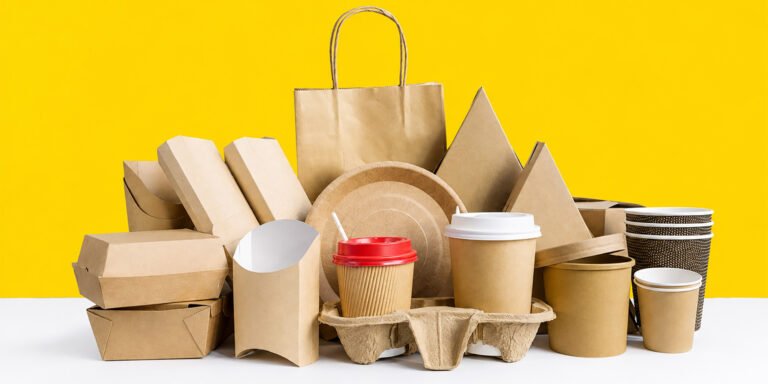
- Kraft Paper: Popular for its natural look, biodegradable, and often used for pouches or bags. Source: Kraft Paper Materials Guide.
- Plastic/Film: Necessary for some products (like food or liquids) but carries higher EPR surcharges (Red/Amber rating) unless redesigned as mono-material. Source: PackUK illustrative 2026 fees.
Can sustainable packaging materials reduce a business’s EPR fees? Yes. Under the 2026 fee modulation, Green-rated (highly recyclable) materials receive a discount, while Red-rated (hard to recycle) materials carry a surcharge. Switching to mono-materials or highly recyclable cardboard can directly lower what a large producer owes. Source: PackUK.
How to Source Custom Packaging with Low MOQs in the UK
For a small brand, the goal is to avoid \”dead stock\” – boxes sitting in a warehouse that you might not use if you change your branding. Digital printing is the solution. Unlike traditional flexographic or offset printing, digital requires no physical plates, which is why suppliers can offer MOQs as low as 100 units. Source: Digital Packaging Guide.
| Printing Method | Setup Costs | Typical MOQ | Best for Volume |
|---|---|---|---|
| Digital | None | 100 units | 100–1,000 |
| Flexographic | Medium | 1,000 units | 1,000–5,000 |
| Offset | High | 1,000 units | 5,000+ |
Essential EPR Checklist for Small UK Brands
If you are approaching the £1m turnover mark, follow this sourced checklist to ensure compliance. Source: DEFRA and Environment Agency 2026 compliance portal.
- Identify your producer size. Cross-check your turnover and packaging tonnage against the 25-tonne and £1m thresholds for small producers.
- Register if necessary. Small producers who cross the threshold must register by April each year for the previous calendar year’s data.
- Fees are now partly modulated. From the 2026-27 scheme year, what a large producer owes depends on the Recyclability Assessment Methodology (RAM) rating of their packaging: Red-rated (hard to recycle) packaging carries a 1.2x surcharge on the base fee for 2026-27, rising to 1.6x for 2027-28, while Green-rated (highly recyclable) packaging receives a discount below the base rate. Source: EPR UK’s 2026 EPR compliance guide.
- First disposal-fee invoices were issued from October 2025, calculated on packaging placed on the market in 2024 – so the lag between what you report and what you’re invoiced for continues each scheme year. Source: GWP Group’s EPR fees guide.
- Brands nearing the thresholds should start tracking packaging weight and material type now, rather than scrambling once growth pushes past the limit.
- Simple records are worth keeping even while comfortably under both thresholds, since growth doesn’t always announce itself in advance – a business that crosses 25 tonnes or £1m turnover partway through the year can suddenly need packaging data it never bothered collecting.
What packaging data should a small business start tracking, even below the EPR threshold? A basic spreadsheet logging material type (paper, plastic, aluminium, etc.) and rough weight per order is enough to start with. It costs almost nothing to maintain and saves a scramble if EPR registration becomes relevant once volume grows.
The Bottom Line
Custom packaging for a small UK business comes down to matching format, supplier, and order size to where the business actually is right now, not where it hopes to be in a year. Digital print keeps that possible without a large upfront commitment, and tracking EPR-relevant data now – even well below the threshold – avoids a scramble once volume grows into it.
Hale Path Packaging runs digital-format custom packaging from 100–200 units, at the accessible end of the UK industry range, with sample batches available before a full production commitment.
Get a free custom packaging quote and we’ll confirm exact MOQ, format and cost for your product.
Related: Custom Corrugated Boxes · Custom Rigid Boxes · Custom Mailer Boxes · Eco-Friendly & Kraft Paper Materials

Harry Taylor
Packaging expert at Hale Path Packaging, sharing insights on custom packaging solutions, sustainable materials, and industry trends.