

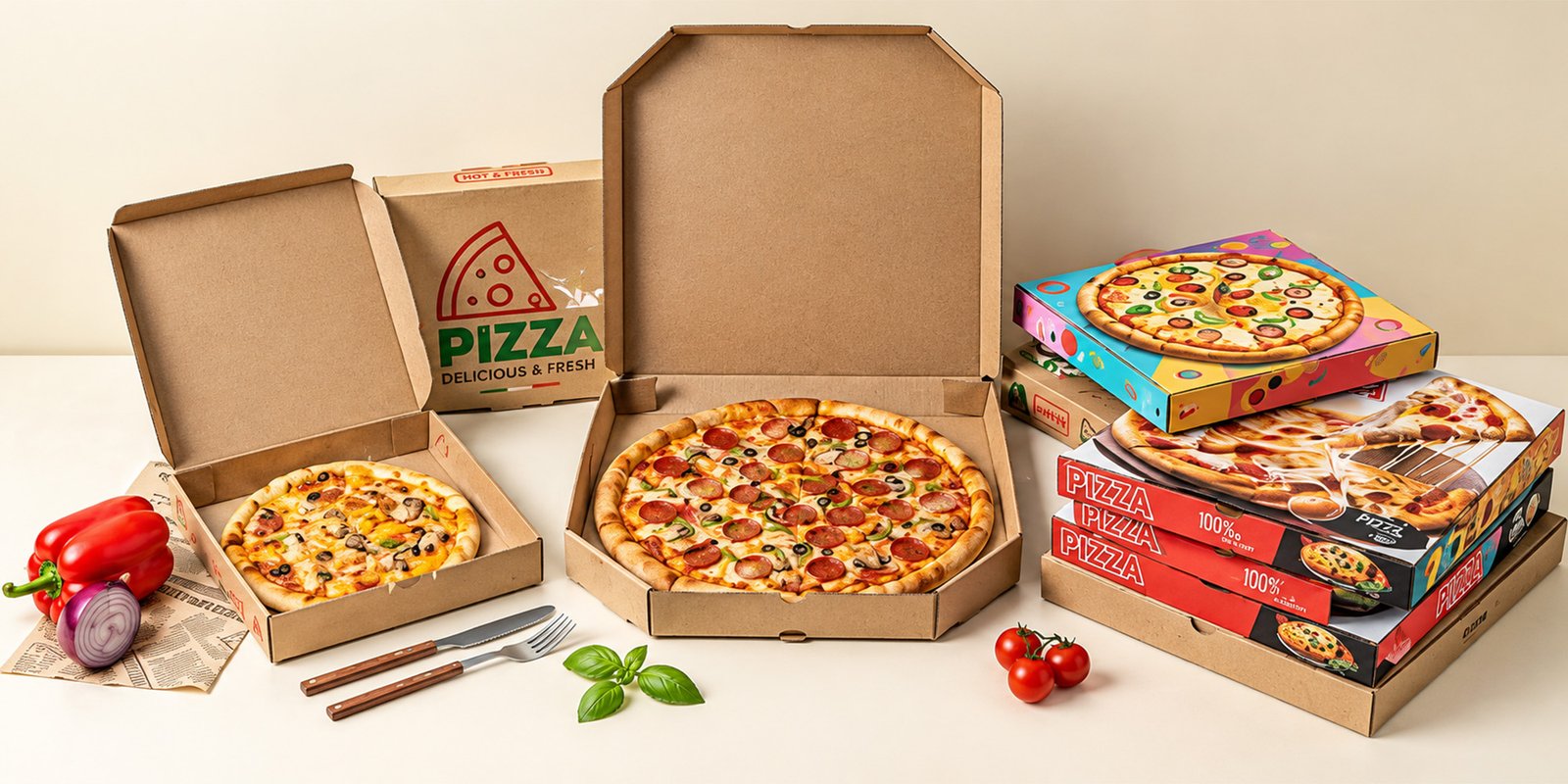
PFAS-Free Pizza & Food Cardboard Boxes UK: What the August 2026 Ban Means for Your Packaging
From 12 August 2026, EU law bans PFAS (“forever chemicals”) above set limits in food-contact packaging placed on the EU market. It doesn’t apply directly in Great Britain, but it binds Northern Ireland under the Windsor Framework, catches any GB business exporting to the EU, and from 2027 it hits GB-only businesses too – through pEPR fees rather than a fine.
If you run a takeaway, a pizzeria, or a food brand that exports in grease-resistant cardboard, PFAS-free packaging holds real legal weight now. As of 12 August 2026, new limits on PFAS – the forever chemicals once used to stop oil and grease soaking through packaging – are in force under EU law, and the rules are more tangled for UK businesses than most suppliers let on. Some boxes are directly affected; others aren’t, and getting that distinction wrong can mean paying for compliance you never needed or missing a real risk that sits closer to home than expected.
- The PFAS restriction sits inside the EU’s Packaging and Packaging Waste Regulation (PPWR) and has been in force since 12 August 2026
- It doesn’t apply directly to Great Britain, but it applies in Northern Ireland under the Windsor Framework, and to any GB business selling into the EU
- There’s no grandfathering clause: packaging manufactured before 12 August can’t be newly placed on the EU market after that date if it breaches the limits
- From 2027, UK pEPR fees also start factoring PFAS in, even for businesses trading purely within Great Britain, through a separate mechanism described below
- DEFRA published its own UK PFAS Plan in February 2026, which signals where UK rules are heading even though no statutory limit exists yet
- Grease-resistant pizza boxes, burger boxes, and food trays are the packaging types most likely to contain PFAS layers
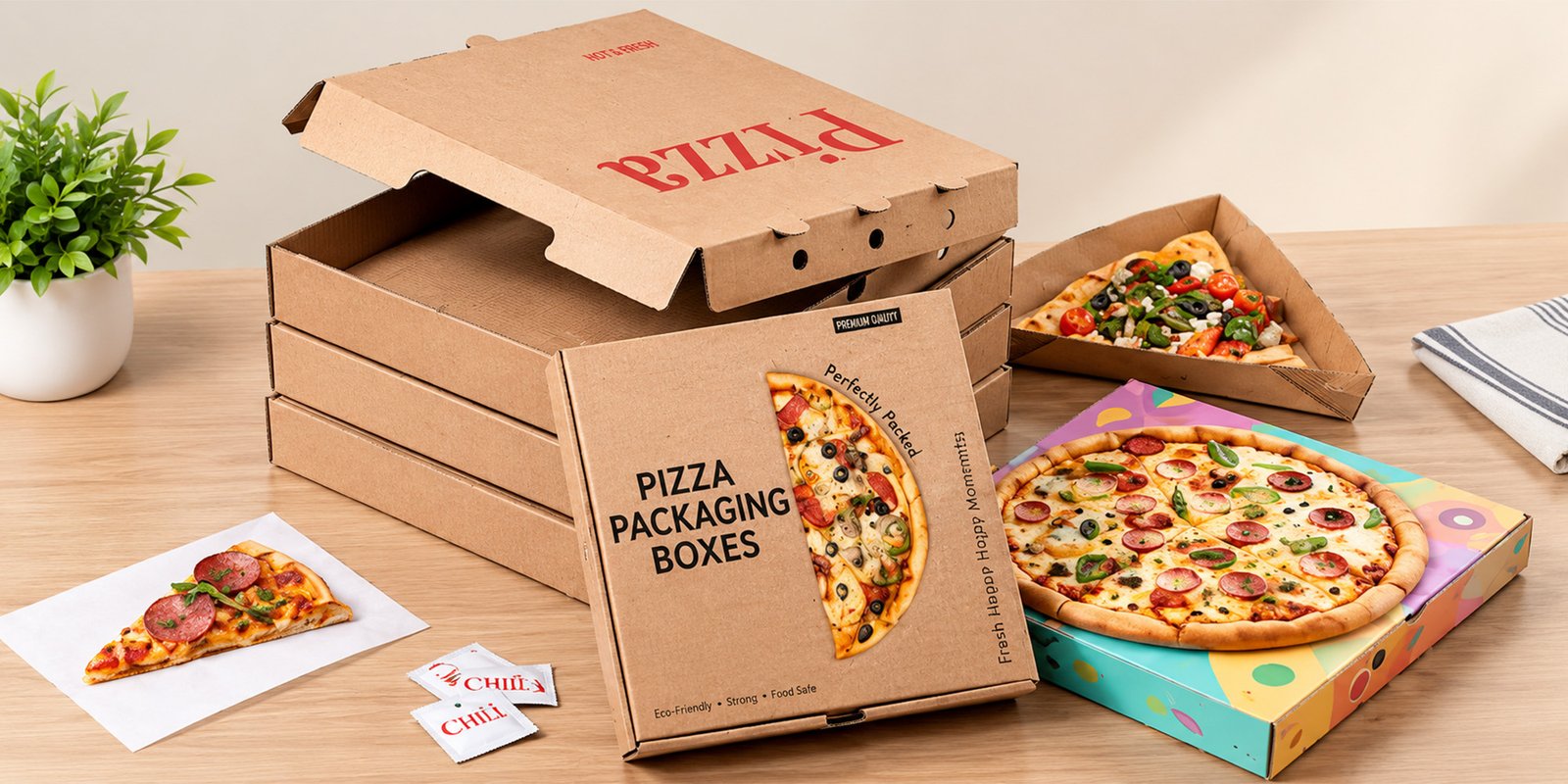
What the August 2026 PFAS Ban Honestly Covers
There’s been a lot of loose talk about a “UK PFAS ban,” and that framing was never quite accurate. What people are actually asking about is the EU’s Packaging and Packaging Waste Regulation (PPWR). It sets concentration limits for PFAS – the family of synthetic chemicals commonly called “forever chemicals” – in any packaging that touches food, and those limits took effect on 12 August 2026.
The Actual Thresholds
Food-contact packaging placed on the EU market can no longer contain PFAS above these limits:
- 25 parts per billion for any single PFAS substance (targeted analysis, non-polymeric)
- 250 parts per billion for the sum of targeted PFAS
- 50 parts per million total fluorine, including polymeric PFAS
These figures are confirmed directly under PPWR Article 5, and they matter because they’re low. A grease-resistant coating added purely to stop oil soaking through a pizza box base can easily sit above them if it was formulated with older PFAS chemistry.
Who This Actually Applies To
This is where most confusion sits, and it’s worth being precise about it.
- Northern Ireland follows this EU rule directly, under the Windsor Framework
- Great Britain (England, Scotland, Wales) is not bound by the PPWR’s PFAS limits
- Any UK business selling food or packaging into the EU market is in scope, regardless of where the business is based
- Businesses trading only within Great Britain aren’t legally required to comply with the limits, but the direction of UK policy and UK cost exposure through pEPR is moving the same way
If your packaging supplier ships into Ireland, France, or anywhere else in the EU, or if your own food products cross into the EU market in that box, 12 August was a hard line, with no grandfathering clause for stock already made. Whether the ban applies to your business comes down entirely to where your packaging or product actually ends up, not where your company is registered.
Why Great Britain Is Not Off the Hook, Even Without a Ban of Its Own
Without a matching statutory limit of its own, DEFRA published its first PFAS Plan on 3 February 2026, titled PFAS Plan: Building a Safer Future Together. It sets out a three-pillar strategy: understanding where PFAS comes from, tackling how it spreads, and reducing continued exposure. Food-contact materials are named explicitly.
The plan commits DEFRA and the Food Standards Agency to a handful of concrete steps that matter to anyone specifying printed window packaging cardboard boxes for food:
- Developing and validating PFAS test methods for food and food-contact materials, working with the National Reference Laboratory
- Expanding sampling and monitoring of packaging already on the UK market
- Considering a UK REACH restriction on PFAS in consumer articles, including packaging
- Reviewing dietary exposure data to understand how much PFAS reaches people through packaging rather than other sources
None of this is a hard limit yet. But it tells you where UK REACH is heading, and it lands at the same time as retailers tighten their own green-claims scrutiny and the Advertising Standards Authority pays closer attention to environmental packaging claims. A 2020 survey by the campaign group PFAS Free UK found PFAS residues in packaging from the majority of major UK supermarkets tested and in nearly all takeaway samples checked; more recent monitoring suggests PFAS presence in mainstream UK takeaway boxes has fallen since then, but interest in genuinely PFAS-free food packaging has only grown as that original finding built pressure across the industry.
The Real UK Cost Is Not a Ban, It Is pEPR
Here’s the part most suppliers don’t mention: Great Britain not being bound by the PPWR doesn’t mean PFAS is cost-free for GB-only businesses. Under pEPR, large producers already have to assess packaging recyclability through the Recyclability Assessment Methodology (RAM), which sorts every packaging line into a red, amber, or green rating that feeds directly into modulated fees.
Under RAM 2027, published by PackUK on 1 July 2026 and replacing RAM 1.1, an item of packaging is automatically rated red if it contains more than 1 part per million of PFAS in total, or if it’s food packaging exceeding 25 parts per billion of any individual or total PFAS. RAM 2027 also introduces an automatic red rating for any paper or card packaging designed to be heated with food inside it – worth checking if any of your food-contact lines are marketed as oven- or microwave-safe.
A red rating pushes a packaging line toward the higher end of the pEPR fee-modulation scale, a cost that lands whether or not the business ever sells a single box into the EU. This makes 2027 the year PFAS stops being a purely EU compliance question for GB businesses and starts being a straightforward pEPR cost line – worth reading alongside our UK Plastic Packaging Tax vs EPR breakdown if you haven’t already mapped your RAM exposure.
A GB-only pizzeria can legally keep using a PFAS-coated box in 2026, but from 2027 that same box likely costs more to put on the market, through EPR fees rather than a fine.
Which Food Boxes Are Actually at Risk
Not every cardboard box carries PFAS. The chemicals were only ever added where a supplier needed grease or moisture resistance without switching to a plastic liner, so risk concentrates in a specific set of products. If you’re wondering whether pizza boxes are PFAS-free by default, the material category alone won’t tell you – the finish will.
| Packaging type | PFAS risk level | Why |
| Plain corrugated pizza boxes | Low | Usually uncoated fibre, no grease barrier added |
| Printed pizza boxes with grease-resistant coating | High | The coating is the exact function PFAS was used for |
| Burger and fried food clamshells | High | Combines grease and steam resistance in one liner |
| Bakery and cake boxes | Low to average | Depends on whether a moisture barrier was specified |
| Cereal and dry goods cartons | Very low | No grease contact, rarely coated |
| Chip shop wrappers and paper bags | High | Historically, one of the most common PFAS carriers |
This is why a blanket statement like “cardboard is fine” or “cardboard is a problem” misses the point. The fibre itself isn’t the issue. The layer applied to make it grease-resistant is where the chemistry lives, whether that’s on a cardboard insert rigid box ordered by the pallet or a single run of printed pizza packaging for a new product launch.
How to Check If Your Supplier’s Boxes Are Compliant
Buyers rarely have a lab on site, so the realistic approach is documentation and direct questions rather than testing every batch yourself.
Ask for a Declaration of Compliance
Any legitimate manufacturer of food-safe retail cardboard boxes should be able to supply a Declaration of Compliance confirming the material meets Regulation (EC) No 1935/2004, the overarching food-contact safety framework, alongside any PFAS-specific confirmation.
Ask What the Grease Barrier Is Made From
If a box is described as grease-resistant, ask directly what achieves that. The answer isn’t a single fix – it’s a choice between a few proven options:
- Aqueous or water-based dispersion coatings
- PLA and other bio-based barrier films
- Bagasse or moulded fibre inner linings
- Simple structural changes, like an absorbent pad, that avoid needing a chemical barrier at all
| Barrier alternative | Grease resistance | Typical cost impact | Best suited to |
| Aqueous or water-based layer | Good | Low to average | Pizza boxes, printed retail packaging |
| PLA bio-based film | Good to very good | Moderate | Products needing a stronger moisture barrier |
| Bagasse or moulded fibre lining | Very good | Moderate to higher | Burger boxes, clamshells, high-grease items |
| Structural design (e.g. absorbent pad) | Moderate | Minimal | Lower-grease items where a coating was never essential |
The right alternative depends on the product and the budget, so compare them instead of defaulting to whichever one a supplier mentions first.
How the EU Actually Tests for PFAS
There’s no single harmonised EU test method for PFAS in food-contact packaging yet, which trips up buyers who assume one universal lab certificate settles the question. The European Commission’s own guidance, published 5 June 2026, recommends a stepwise approach instead: check total fluorine first, and anything under 50mg per kg of packaging can generally be treated as compliant. Above that figure, a method such as pyrolysis-GC/MS is used to work out whether the fluorine present is organic (the PFAS-linked kind) or inorganic. Worth asking your supplier which of these two stages their own testing honestly reaches, instead of taking “PFAS tested” as a complete answer on its own.
“Our packaging is recycled or compostable, so it’s automatically PFAS-free.” This catches a lot of buyers out. Recycled fibre can carry its own contamination risk from mixed input streams, and a compostable layer isn’t automatically fluorine-free either. Being kind to the planet in one respect doesn’t guarantee compliance in another, so ask the specific PFAS question instead of inferring it from a green label.
Get It in Writing, Not Just a Verbal Assurance
Under the EU rule, the importer or brand placing packaging on the market carries responsibility for compliance, and a supplier’s informal reassurance isn’t treated as an adequate defence if a problem is found later. The same logic is sensible practice even where UK law doesn’t yet require it.
A Quick Worked Example
A mid-sized pizza chain sourcing printed pizza boxes across a handful of formats found that three of their box lines, all using a grease-resistant printed finish, had never been tested against the newer thresholds. Two lines used a plain, uncoated corrugated stock and needed no change at all. The third, a printed box with a glossy grease barrier aimed at the export market, required a switch to an aqueous coating supplier. The fix cost a small premium per thousand units and closed the compliance gap comfortably ahead of the deadline, instead of scrambling in the final weeks before it landed.
This pattern holds for most food brands. The risk rarely sits everywhere. It sits in the two or three lines that were specified for grease or moisture resistance and never revisited since, and an audit finds that far more reliably than guessing by price or finish ever will.
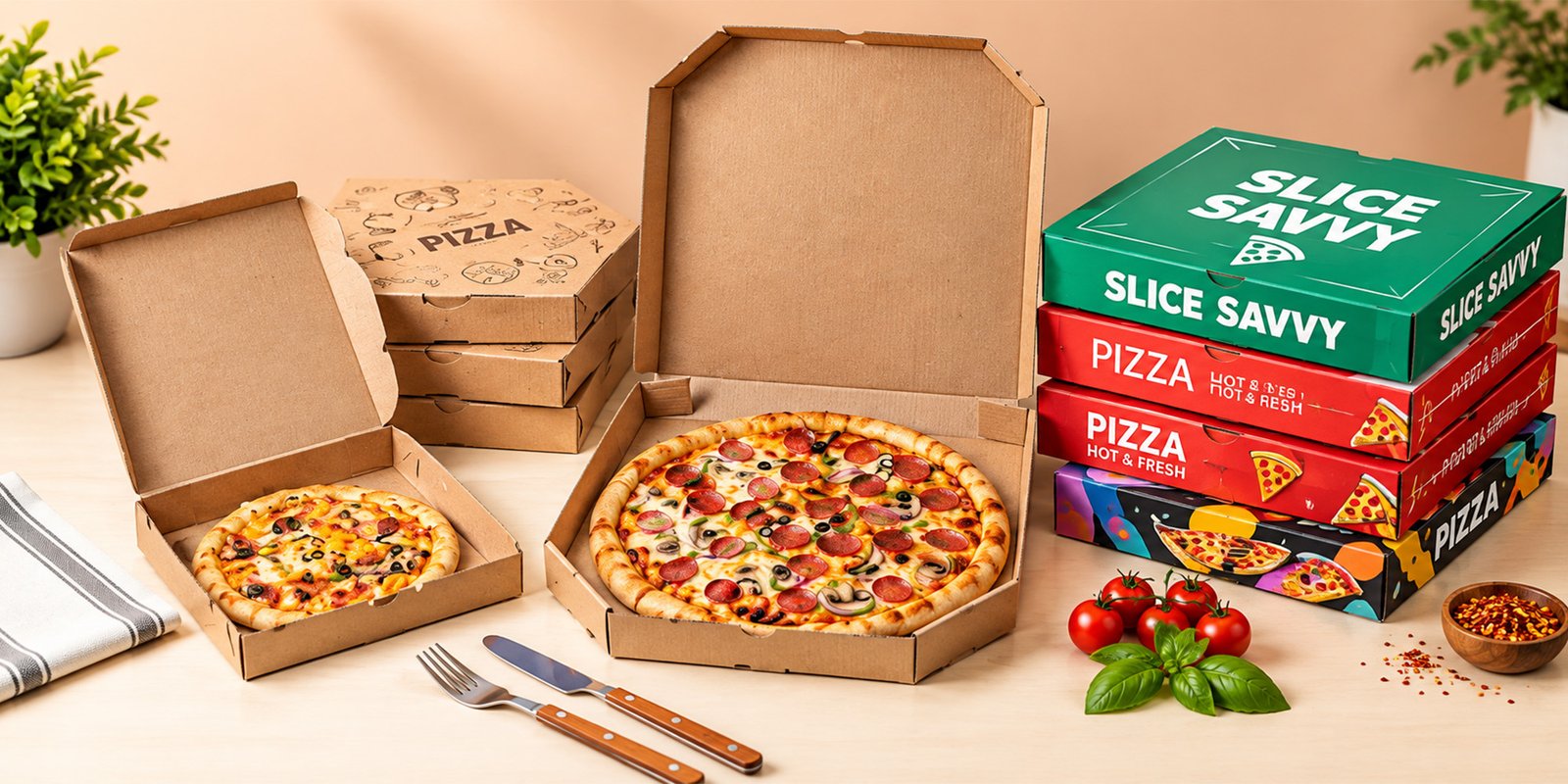
Sourcing Compliant Packaging Going Forward
For UK buyers managing a range across logo shipping cardboard boxes UK-wide, the sensible approach is the same one used before any regulatory deadline: build compliance into the specification stage rather than treating it as an afterthought.
For Independent Takeaways and Pizzerias
If you’re ordering a single box line in modest volumes, the fix is usually simple. Ask your current supplier the direct question about the grease barrier, and if the answer is vague or the box has a glossy printed finish, request a sample in an aqueous-coated alternative. Most independents only need to change one or two lines, not their whole range.
For Multi-Site Brands and Exporters
Brands running several formats, or shipping into the EU as part of a wider range, benefit from an upfront audit across every SKU rather than a reactive check line by line. Our packaging compliance team works with food brands who need grease resistance without the regulatory exposure, covering everything from printed pizza packaging with verified aqueous coatings through to Die Cut Cardboard Cereal Boxes where fluorinated barriers were never needed in the first place. For brands exporting further afield, including businesses shipping custom cardboard boxes to Canada and other markets outside the EU, the direction of travel on PFAS is similar enough that specifying clean packaging now avoids a second re-tooling exercise later.
Whether you need cardboard printed boxes UK-wide for a single product line or a full range of shipping cardboard boxes and retail cartons, getting a Declaration of Compliance alongside your quote is worth asking for as standard, not as an extra.
Questions Worth Asking About PFAS-Free Food Packaging
Does my business need PFAS-free boxes if I only sell in the UK? Not legally, not yet, if you trade purely within Great Britain. From 2027 though, a red RAM rating for PFAS-containing packaging starts affecting your pEPR fees regardless of where you sell, so the cost pressure arrives even without a statutory ban.
Can I still sell existing stock made before 12 August 2026? Within the UK, yes. For the EU market, what matters is the date packaging is newly placed on the market, not the date it was made, and there’s no general stock-exhaustion period once the 12 August deadline has passed.
How do I know if my current pizza boxes contain PFAS? Ask your supplier what the grease barrier is made from and request a Declaration of Compliance. Plain, uncoated corrugated board is very unlikely to contain PFAS.
Is a more expensive box always the safer choice? Not necessarily. A plain, uncoated retail cardboard box with no grease barrier can be both the cheapest and the lowest-risk option.
Will UK law eventually match the EU limits? No confirmed date for full alignment yet, but DEFRA’s PFAS Plan names food-contact materials as a specific area for testing and possible UK REACH restriction, and the 2027 pEPR RAM change is already moving in that direction through fees rather than a formal ban.
Conclusion
The PFAS restriction that took effect on 12 August 2026 is an EU rule, not a UK one, and treating them as equivalent is where most confusion starts. It binds Northern Ireland directly, catches any GB business trading into the EU, and from 2027 it reaches GB-only businesses too, through pEPR instead of a ban. For food brands and takeaways deciding which box to reorder next, the practical move is the same regardless of which side of that line you sit on: know exactly what your current grease barrier is made from, get it confirmed in writing, and change the handful of lines that genuinely carry the risk before either deadline forces the decision for you.
Hale Path Packaging supplies verified, grease-resistant food packaging, including pizza boxes, burger boxes, food trays, and wider candle cardboard boxes, built around your exact volume, format, and compliance needs. MOQs start at 100 units, with a standard turnaround of 7–14 working days from artwork sign-off, so switching a single at-risk line doesn’t mean overhauling your whole order.
Written by the Hale Path Packaging team.

Harry Taylor
Packaging expert at Hale Path Packaging, sharing insights on custom packaging solutions, sustainable materials, and industry trends.