Top and Bottom Boxes vs Die-Cut Mailer Boxes UK: What’s the Difference?
A top and bottom box -a separate lid and base -wins on presentation and is the right call for gifts, cosmetics and premium products customers will see on a shelf or keep. A die-cut mailer box, folded from one piece with a hinged lid, wins on protection, cost and packing speed, and is the right call for e-commerce and postal orders.
If you sell gifts or premium products, a top and bottom box usually makes more sense. If most of your orders go out in the post, a die-cut mailer box is the safer bet. Real life is messier, of course. A glass candle and a paperback need very different boxes. So does a parcel going across town compared with one crossing the country. And then there’s your customer. What should they feel when it opens?
Most sellers spend weeks on the product and ten minutes on the box. It shows. A lid-and-base box makes a gift set feel like a present before anyone opens it. Daily orders need something different. A tough mailer does the job. It gets there in one piece and doesn’t cost a fortune.
In this guide, Hale Path Packaging explains how top and bottom boxes and die-cut mailer boxes differ in structure, protection, assembly, shipping and branding. We’ll walk you through the good points of each style, so you can decide with confidence before you order. Perhaps you’re running a small online shop, or a subscription service, or a brand that’s taking off around the UK. Whatever your business looks like, you’ll know by the end which box suits your product and your budget.
What Is a Top and Bottom Box, Exactly?
A top and bottom box is two pieces: a lid and a base. The lid slides over the base, like a shoebox. People also call it a two-piece box, a lid-and-base box or a telescopic box. Some lids are deep and cover most of the base. Others are quite shallow and only just meet the rim.
Top and bottom boxes come in corrugated board, rigid greyboard or folding carton. Strength and finish usually decide it. Rigid greyboard gets wrapped in printed or coloured paper. That gives it its weight and polish. Corrugated or carton is a fine pick when money is tight.
You lift the whole lid away. Opening the box feels like a small moment for your customer. That “reveal” is why top and bottom boxes are so popular for:
- Gift sets and hampers
- Cosmetics and skincare, such as cosmetic rigid boxes
- Candles and home fragrance, such as candle cardboard boxes
- Jewellery and accessories
- Folded clothing and apparel, including apparel and fashion packaging
- Corporate gifting and presentation packs
What Is a Die-Cut Mailer Box?
A die-cut mailer starts as one sheet of corrugated or kraft board. It goes under a steel die, which cuts and creases the sheet in one pass. Out comes a flat blank. Fold it up and you’ve got a box with a hinged lid and tuck-in or self-locking flaps. People over here call it all sorts: a postal box, a tuck-top mailer, an e-commerce box, or simply a mailer.
Die-cutting is what makes these boxes so simple. The lid stays attached. The scoring is done for you. Most boxes need no tape or glue. They arrive flat, so a pile of them takes little room in your storeroom. A packer can have one built in a few seconds. You’ll spot the same method in shop packaging too, from die-cut cardboard cereal boxes to small folding cartons.
Corrugated mailer boxes are built to travel. The walls are mostly E-flute or B-flute corrugated. They can take the rough treatment parcels get in transit. Keep the inside plain kraft, or add a pattern or a short message. The outside is yours for full-colour branding.
Used for:
- E-commerce orders and subscription boxes
- Books, soap and small beauty products, such as cardboard mascara printed boxes
- Clothing and accessories sent by post
- Start-up and small-brand parcels
Key Differences at a Glance
A top and bottom box is built to impress, while a die-cut mailer box is built to protect and ship efficiently. The table below compares the two styles on the points that matter most to buyers.
| Feature | Top and bottom box | Die-cut mailer box |
| Structure | Two pieces: separate lid and base | One piece with an attached, hinged lid |
| Material | Rigid greyboard, corrugated or carton board | Corrugated or kraft board |
| Opening experience | Lid lifts off completely | Lid flips open on a hinge |
| Assembly | Ready-made, or folded by hand | Flat-packed, folds up in seconds |
| Protection in the post | Good with an outer carton | Strong, designed for posting |
| Premium feel | High | Medium to high with good printing |
| Best for | Gifts, shop shelves, premium lines | Online orders, subscriptions, everyday parcels |
So which one wins? That depends on which one you can let slide. Looks, protection and price rarely all come out on top.
Top and Bottom Boxes: Advantages
Top and bottom boxes give the best unboxing experience and shelf presence of the two styles.
- Premium presentation. The lid comes right off, a bit like unwrapping a gift. The product inside seems worth more.
- Great for display. Rigid boxes stay square on a shelf and in a gift bag. Many customers hold on to it for storage.
- Plenty of finish options. Foil or embossing on the lid shows off a logo. Soft-touch coating feels good in the hand, so it suits a box people will pick up a lot. Want it plainer? Go for matt or gloss lamination.
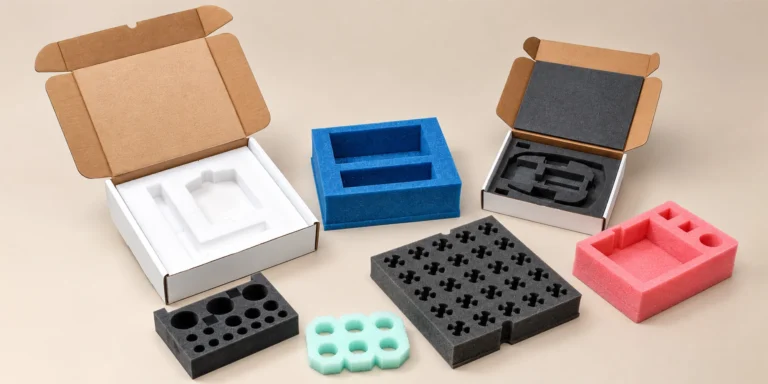
- Good fit for inserts. Add a card, foam or moulded pulp insert and each item gets its own spot. That counts most for sets, bottles and anything fragile.
- Wide size range. Shallow, deep, big or small, they can be made to fit awkward or delicate items too.
For you as a buyer: if the unboxing experience is part of what your customers are paying for, this is the style to pick.
Die-Cut Mailer Boxes: Advantages
Mailers are the all-rounder. They protect well, cost less per box and pack fast.
- Built for the post. Corrugated walls and a locking lid protect products through courier handling.
- Lower cost per unit. Machine production makes them very cost-effective, particularly in larger runs.
- Stored flat. Flat boxes stack in a small space, so keeping a good stock is easy.
- Folds in seconds. Most mailers close without tape or glue. That saves time when you’re packing a lot of orders.
- Branding all over. You can print in full colour on both sides. Put a thank-you note under the lid and it’s the first thing customers read.
- Recyclable. Customers can usually put a plain kraft or corrugated mailer straight in their paper recycling.
For you as a buyer: if getting parcels there safely and affordably is your main worry, this is the one to pick. Spend a little time on the print design and customers will still get a lovely unboxing.
How to Choose Between Them
Looks first? Top and bottom box. Safe delivery first? Die-cut mailer. Can’t decide? Tick off the points in these two lists.
Choose a top and bottom box if:
- You sell gifts, cosmetics, jewellery or other premium products
- Customers will see the box on a shelf, in a shop or at an event
- You want customers to keep and reuse the box
- Your margins support a premium packaging investment
Choose a die-cut mailer box if:
- You sell mainly online and post most orders
- You ship hundreds or thousands of parcels a month
- Storage space and packing speed matter to you
- You want to keep postage costs under control
- You want neat branding at a sensible cost
Before you order, try this. Pack your product exactly as it will go out the door. Then put the parcel on the scales and measure it. Couriers have size and weight limits, so stay under them.
Selling in shops as well? Cardboard counter display boxes put your product front and centre by the till, and a printed gable box makes a handy carry-home pack for gifts and treats.
Plenty of brands use both. Here’s a simple trick. Put a good-looking top and bottom box inside a plain mailer. The mailer takes the knocks in transit. The box inside keeps the best part for the moment your customer opens it. High-value gifts and product launches are where this really pays off.
Take a candle brand, for instance. For its seasonal gift sets, it could use a top and bottom box with a foil-stamped lid, and send those inside a printed mailer when the order is online. Everyday single candles are a different story. A plain kraft mailer is plenty, it’s cheaper, and a logo plus a short thank-you note under the lid still leaves a good impression. The trick is spending where your customers will actually notice.
Making It Yours: Branding, Printing and Sustainability
You can put your own brand on either style, and you can make either one more eco-friendly too.
Customisation options:
- Size: made to fit your product, so it doesn’t rattle about
- Print: got a photo or detailed artwork? Full-colour CMYK handles it. Need your exact brand colour? Ask for Pantone. Or print one colour on kraft for a simple look.
- Surface finish: we offer matt or gloss lamination, foil, embossing, debossing and spot UV. Not sure what suits you? Give us your product and your budget. We’ll point you to one.
- Inserts: card, foam or moulded pulp that stops products moving about
- Extras: ribbons, magnetic closures, windows or printed tissue paper for a special touch
A simple print on kraft board can look great if the design is good. It’s easy to recycle too.
Going Greener in the UK
More UK shoppers now think about what happens to packaging after the parcel is open. Most would rather put it straight in the recycling bin. Paper-based board, water-based inks and materials all help here. Skip plastic windows and thick plastic lamination. Then the box can usually go straight into paper recycling.
Then there’s EPR, the UK’s Extended Producer Responsibility scheme for packaging. Many businesses that supply packaging have to report what they use and pay fees towards it. As the fees can vary with the materials, a recyclable design may help you keep them down. Have a look at the latest guidance to see where you fit in.
Questions Buyers Often Ask
What is the main difference between a top and bottom box and a die-cut mailer box? A top and bottom box has two separate pieces, a lid and a base, and is designed for presentation and gifting. A die-cut mailer box is made in one piece with a hinged lid and is designed for postal delivery and e-commerce.
Which box is better for e-commerce and posting? Usually a die-cut mailer. It arrives flat, folds up in no time, stands up well to the post and keeps costs down on regular orders.
What’s the best box for gifts and premium products? A top and bottom box is the better choice. The lift-off lid creates a memorable unboxing moment, and rigid versions look and feel premium on the shelf or at the doorstep.
Can I print my logo and brand colours on the boxes? Yes. Both styles can be printed with your logo, brand colours and artwork, inside and out. You can see more options in our range of cardboard printed boxes. There are plenty of finishes to choose from too, like matt or gloss lamination, foil stamping, embossing and spot UV.
What if my product is an odd size? Not a problem. We make boxes to measure. Give us the dimensions and we’ll recommend a size and style to match.
Will my customers be able to recycle the box? Mostly, yes. Kraft and corrugated boxes can normally go in your household paper recycling in the UK. They stay that way as long as you use water-based inks and steer clear of plastic windows and heavy plastic lamination.
Can you add inserts to keep my product in place? Yes. Our inserts are cut from card, foam or moulded pulp, shaped to your product. It stays put in transit, and it looks neat inside when your customer opens the box.
Do you send samples? Absolutely. Ask the Hale Path Packaging team about samples. You’ll see the size, the board and the print quality with your own eyes.
What’s the minimum order, and when will my boxes turn up? It changes with each job. The style, size, material and print finish all change it. Send us your details and we’ll send you a quote and a delivery estimate.
In Summary
Top and bottom boxes are the better choice for presentation, gifting and premium products, while die-cut mailer boxes are the better choice for e-commerce, subscriptions and postal delivery. Top and bottom boxes win on look and feel. Mailers take the rest: protection, price, storage and packing speed.
Not sure yet? Picture your customer. Is the box landing on their doormat, or sitting on a shelf? Will they bin it or keep it? How much did they pay for what’s inside? Answer those first. Your budget and delivery plan can follow.
Either way, the box is often the first thing a customer holds of your brand. Make it well and it builds trust. That can bring people back to order again. Some buyers post their unboxing online.
Want help choosing? The Hale Path Packaging team can walk you through both styles and suggest a board and finish. We’ll look at the size as well, to keep shipping and postage costs under control.
Written by the Hale Path Packaging team, packaging specialists with 10 years of experience supplying corrugated, rigid and custom packaging to start-ups and established brands across the UK.

Harry Taylor
Packaging expert at Hale Path Packaging, sharing insights on custom packaging solutions, sustainable materials, and industry trends.