Candle Gift Boxes UK: Protecting Glass Jars for Christmas Gifting
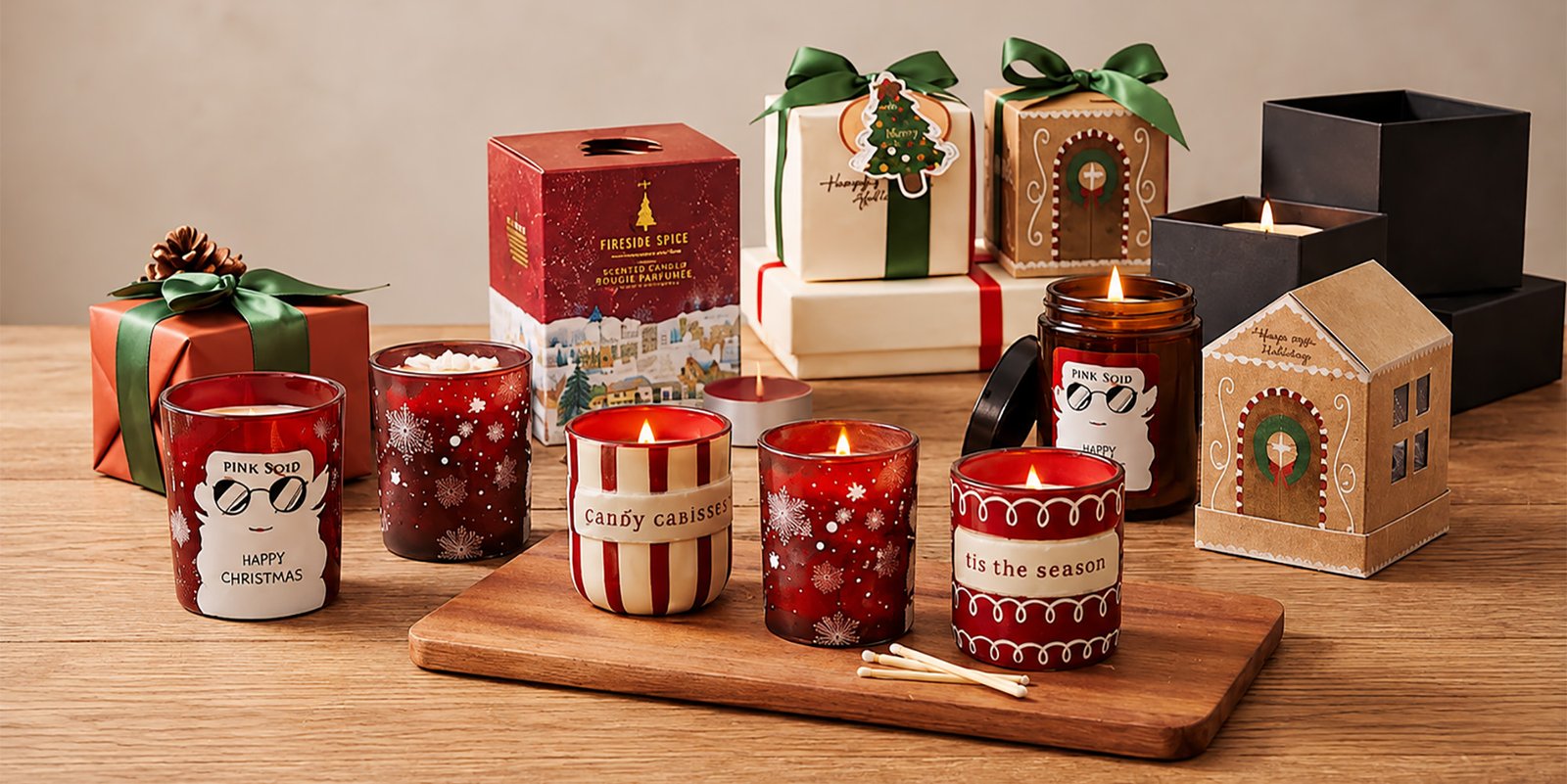
Candle gift boxes UK brands need for Christmas must handle risks a quiet-month box never sees: higher parcel volume, rougher courier handling, jar-to-jar knocking in multi-item sets, and cold weather making glass more brittle. A well-fitted divider, the right box type for the gift, and ordering early are what separate a jar that survives December from one that doesn’t.
In the run-up to Christmas, glass candle jars face a completely different set of risks than they do the rest of the year. December brings higher order volumes, busier couriers, and rougher parcel handling, and a jar that would survive every other month can arrive cracked at someone’s door on the 23rd. Whether it’s a single gift jar or a full boxed set, the right box, cushioning, and divider choice make the difference between a jar that survives the journey and one that doesn’t.
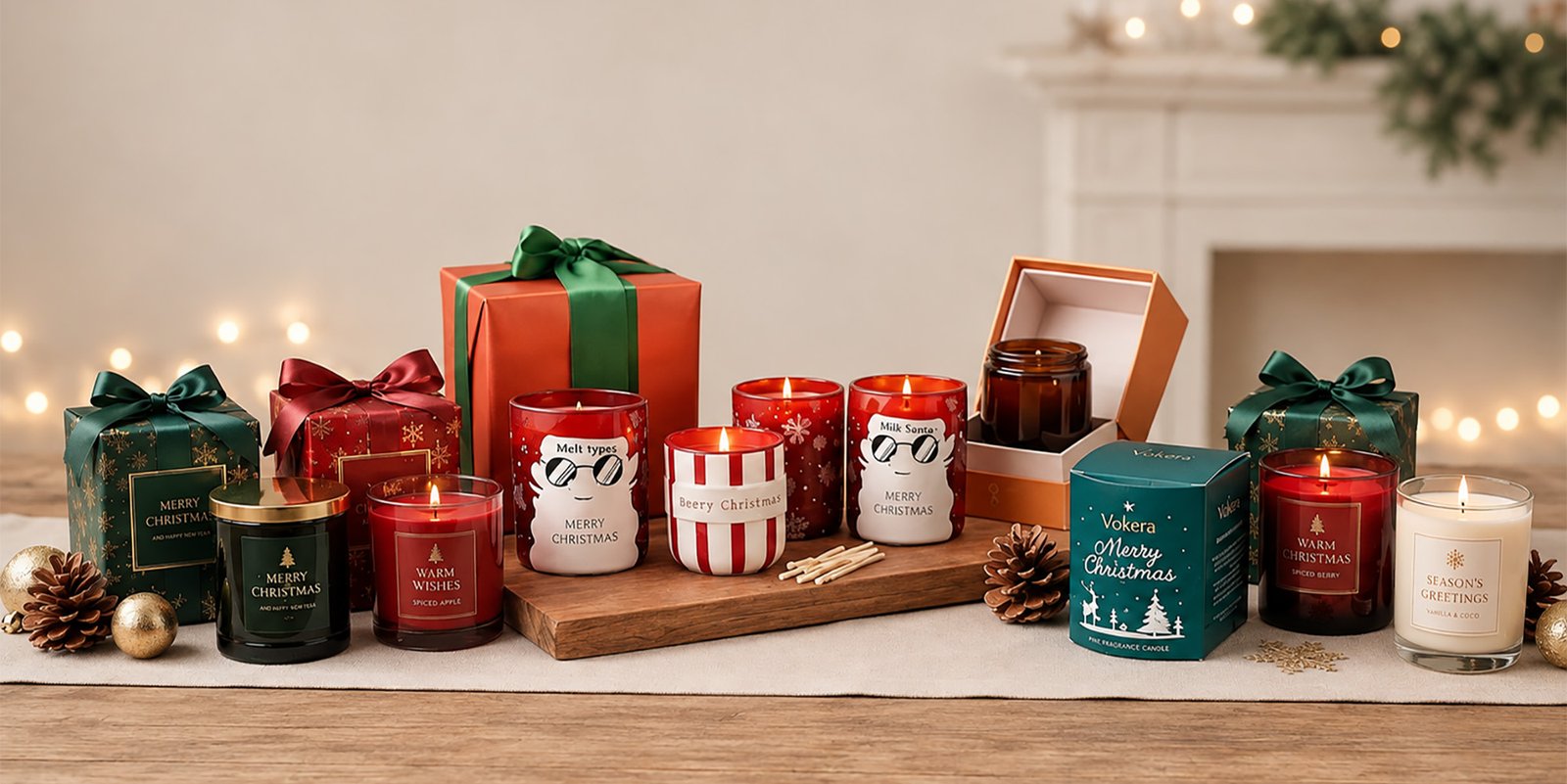
Why Are Candle Gift Boxes Important?
Candle gift boxes are vital for protecting glass jars through the busiest and roughest month of the year. A well-chosen box shields against knocks, vibration, and jar-to-jar contact – the kind of damage most brands only discover in December when volume and courier pressure both peak. The same pressure applies to other fragile gift categories, including custom jewellery boxes.
Candle gift boxes matter because they:
- Handle higher volume and rougher courier treatment
- Protect against both hard knocks and quiet vibration damage
- Keep multi-jar gift sets from chipping against each other
- Hold up in cold, brittle winter conditions
Looking for the right way to protect your candles this Christmas? This guide covers box types, divider options, cold-weather risks, mandatory labelling, and real UK pricing, so you can choose the right setup for your product before the rush begins.
Why Christmas Is Different From the Rest of the Year
Candle gift boxes UK brands use in a quiet month can work fine even with an average box. In a quiet month, the parcel isn’t competing for space on a full van. It isn’t sitting in a busy depot for an extra day. It isn’t stacked under three other Christmas orders on the way to someone’s door. None of that easy treatment happens in December.
Higher volume changes how a parcel gets handled:
- Seasonal staff under pressure. Couriers bring on temporary workers who are learning the job during the busiest time of year.
- Sorting centres at full capacity. Depots run flat out, leaving less time to handle each parcel carefully.
- Rougher handling overall. A box that would normally get some care is more likely to get thrown, dropped, or crushed – there’s simply more happening and less time to be gentle.
- A tougher test. A box that survives a quiet Tuesday in June has to survive a busy, chaotic Thursday in December. Those are two very different tests.
The Jar Problem: Impact and Vibration Are Different Risks
Glass jars break for two separate reasons, and Christmas makes both worse:
Hard knocks. Someone drops the parcel or handles it roughly at a sorting centre, and the jar breaks outright. It’s more common in December purely because there’s more volume moving through the network and more hand-offs before a parcel reaches the door.
Vibration. You won’t see this one happening. A jar can pick up a hairline crack from nothing more than two or three days of gentle bumping against other parcels in transit, without ever taking a real hit. It’s slow wear, not a single incident, so there’s nothing obvious to point to afterwards.
Courier network strain. This has nothing to do with the box itself, but it makes both risks worse. Routes that normally take one day can stretch to two or three days at peak December volume.
Multi-jar gift sets add a further risk. Boxed sets sell better as gifts than single candles, but two or three jars packed together give them more surfaces to knock against – not just the box wall, but each other. A box that protects one candle well can still let three candles chip each other during a longer, rougher December journey.
Choosing the Right Box for the Gift
Custom candle boxes UK brands choose for Christmas gifting usually fall into a few practical types. The right choice matters even more when volume and courier pressure both peak at once.
Rigid two-piece box with fitted divider. The standard choice for anything sold as a premium gift. December is exactly when the unwrapping moment matters most – opening a Christmas gift feels very different from getting a routine reorder in March. The extra rigidity also genuinely helps protect the jars during rougher December delivery, not just the presentation.
Corrugated shipper box with internal divider. Works well for brands with high online order volume, where keeping costs down matters more than unboxing presentation, since the customer never sees the outer shipping box. It still protects the jars properly, without the cost of a full rigid presentation box.
A second outer transit layer. Worth adding for brands shipping nationally or using longer delivery routes during the peak. It costs more, but for a jar spending extra days in a busy courier network, that second layer is real insurance against damage that only shows up after several days of handling.
Do I need a rigid box, or is a corrugated shipper enough for candle gifting? It depends on whether the customer ever sees the outer box. For retail or direct-gift presentation, a rigid two-piece box with a fitted divider protects the jar and carries the unboxing moment. For high-volume online orders where the outer box is discarded on arrival, a corrugated shipper with an internal divider protects just as effectively at a lower cost.
Cold Weather Adds a Complication Most Brands Don’t Plan For
Summer heat gets talked about a lot in candle packaging – softening wax, shifting fill, all real problems in July. In December, the problem flips: cold makes glass brittle, and that’s just as real a risk.
Leave a jar sitting overnight in an unheated delivery van or a cold depot, and it turns slightly more brittle than it would be at room temperature. So the same knock a jar would shrug off easily in September can crack it once winter sets in. There’s no packaging fix for the glass itself, but a well-fitted divider and a genuinely protective box do more work in cold conditions, since the glass has less give to begin with.
Don’t Forget the Label: CLP and Candle Safety Requirements
This is worth flagging even though it’s a labelling issue, not a box issue – because it affects what has to go on the box, and getting it wrong carries real legal risk. Any candle containing a fragrance or other classified substance requires CLP (Classification, Labelling and Packaging) hazard labelling under GB law, enforced by the Health and Safety Executive. Most fragranced candles need the GHS07 exclamation-mark pictogram at minimum; some also require GHS02 (flammable) or GHS09 (environmental hazard) depending on the formulation. Penalties for non-compliance can include unlimited fines and, in the most serious cases, imprisonment.
What labelling does a candle need beyond CLP? UK candles also need a separate safety-pictogram label under BS EN 15494:2007 (“Product Safety Labels”), covering practical warnings like “never leave a candle unattended” and “keep away from flammable objects.” This is distinct from the CLP hazard label, and both are typically required together. If your box design includes label panel space, building it in for both from the start avoids a redesign later.
What Christmas Candle Packaging Actually Costs in the UK
| Packaging option | Cost per unit | Best suited for |
|---|---|---|
| Rigid two-piece gift box with fitted divider | £1.50–£4.00 | Premium gift presentation; price depends on size, compartment count, and print detail |
| Corrugated shipper box with internal divider | £0.60–£1.80 | High online order volume where cost matters more than unboxing presentation |
| Moulded pulp divider only (own outer box) | £0.20–£0.60 | Brands supplying their own outer box, needing jar-specific compartments |
| Second outer transit layer | +£0.30–£0.90 | Longer or higher-risk delivery routes, often added only for the Christmas peak |
Christmas print orders also need to go in earlier than most brands expect. Suppliers get busy across every product category in the run-up to Christmas, not just candles. A box order placed in early November can face longer waiting times than the same order placed in September.
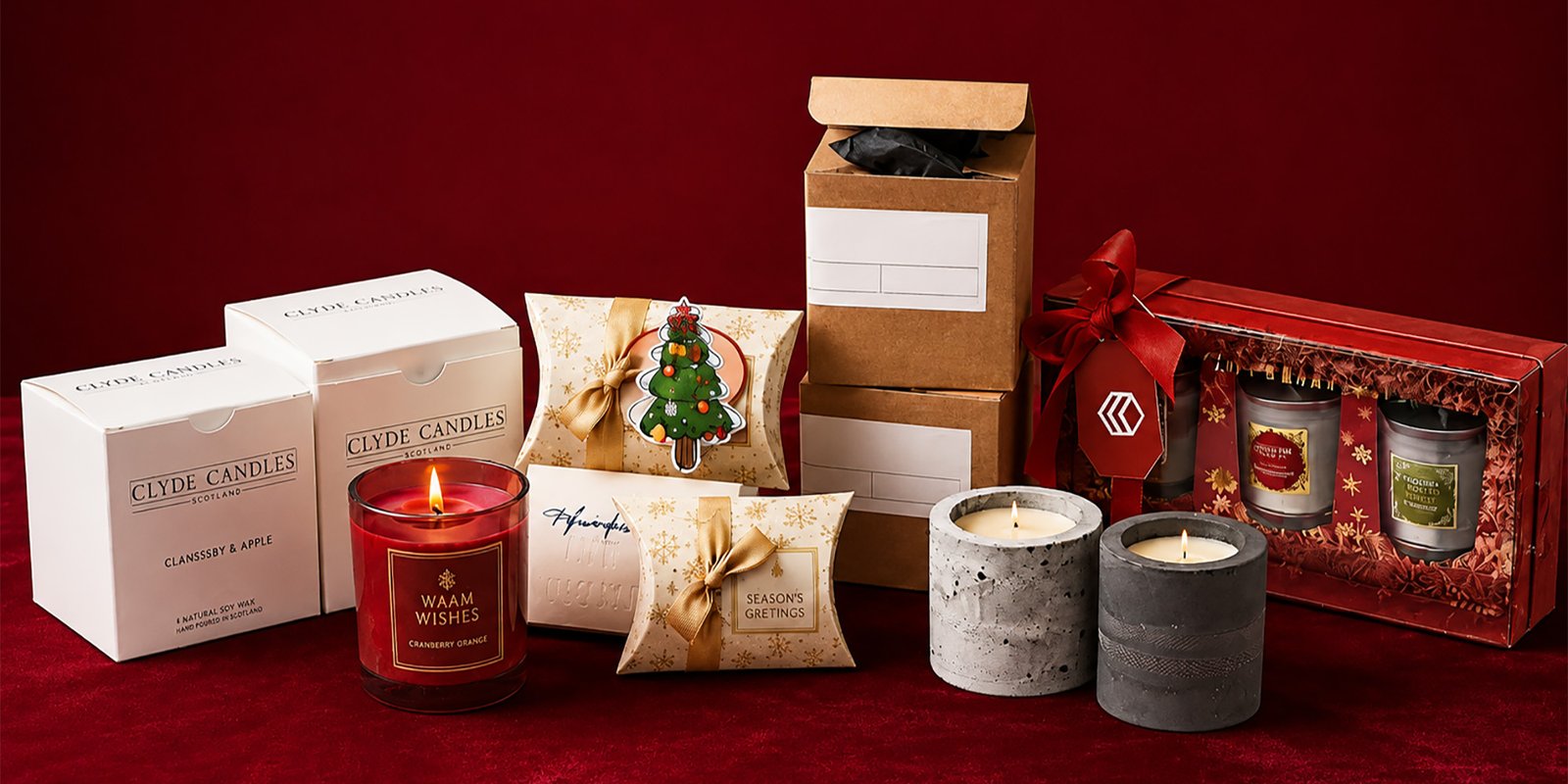
Why Sustainable Packaging Matters for Christmas Candle Gifting
Consumer demand for green gifting. Christmas shoppers today look at packaging in a way they didn’t a few years ago. More of them are hunting for recyclable or plastic-free options when they pick a candle gift set, and quite a few won’t blink at paying a little more for it. Getting that right tells them the brand isn’t just chasing a sale – that kind of trust brings the same customer back next Christmas.
Reducing environmental impact at peak volume. December is when packaging volume goes up the most across the whole candle category, so it’s also when the environmental cost of that packaging is at its highest. Every plastic air pillow and non-recyclable laminate thrown away adds straight to landfill, right at the point when volume is heaviest. Switching to paper-based void fill, moulded pulp dividers, and mono-material boxes brings that impact down, and none of it means giving up protection for the jars.
Strengthening brand identity through the unboxing moment. A Christmas gift box is one of the rare moments a customer actually pays attention to the packaging itself, rather than just what’s inside it. The materials a brand chooses, paired with how the box is presented, say something about that brand before anyone’s even lit the candle – and that first impression sticks around long after December’s over.
Choosing Sustainable Christmas Candle Packaging: What Actually Matters
Material selection:
- Recycled cardboard for the outer box – cheaper, and recycles easily
- Moulded pulp dividers instead of plastic inserts – compostable, and still hold the jars firmly in place
- Paper-based void fill instead of plastic air pillows – also keeps the box out of the UK’s Plastic Packaging Tax, which applies only to plastic packaging components
Protection still comes first. Going sustainable doesn’t mean accepting more breakage. A well-designed divider system made from recycled board can perform just as well as a plastic one, as long as the wall thickness and fit are right for the jar’s weight.
Cost efficiency. You don’t need a bigger budget to go sustainable. Trim the design down so it uses less material, and costs drop straight away. Place the order early enough to catch better volume pricing before Christmas demand pushes prices up. And a UK-based supplier saves money on shipping while also cutting the carbon footprint.
Certifications worth checking:
- Chain-of-custody certification (e.g., Certified) on the cardboard or paper, confirming it came from a responsibly managed forest
- A real, verifiable compostable certification on any pulp or paper void fill – an “eco-friendly” sticker on its own doesn’t mean much
- Clear, printed recycling instructions on the box, so whoever unwraps it knows exactly what to do with it once Christmas is over
Conclusion
Christmas tests candle gift packaging harder than any other month, simply because the whole parcel network is under more strain. Getting the dividers, box type, labelling, and timing right for the season – instead of assuming a box that worked in a quiet month will also work at peak volume – protects both the product and the gift moment the customer is paying for. Divide the jars properly, size the box for the season’s real weight, get the CLP and safety labelling right, and order earlier than feels necessary.
Written by the Hale Path Packaging team, packaging specialists with 10 years of experience supplying candle, home fragrance, and seasonal gift packaging to independent and growing brands across the UK, working directly with candle makers on divider fit trials and peak-season transit testing ahead of the Christmas rush.

Harry Taylor
Packaging expert at Hale Path Packaging, sharing insights on custom packaging solutions, sustainable materials, and industry trends.