Gift Box Inserts UK: Foam, Card & Moulded Pulp for Christmas Fragile Items
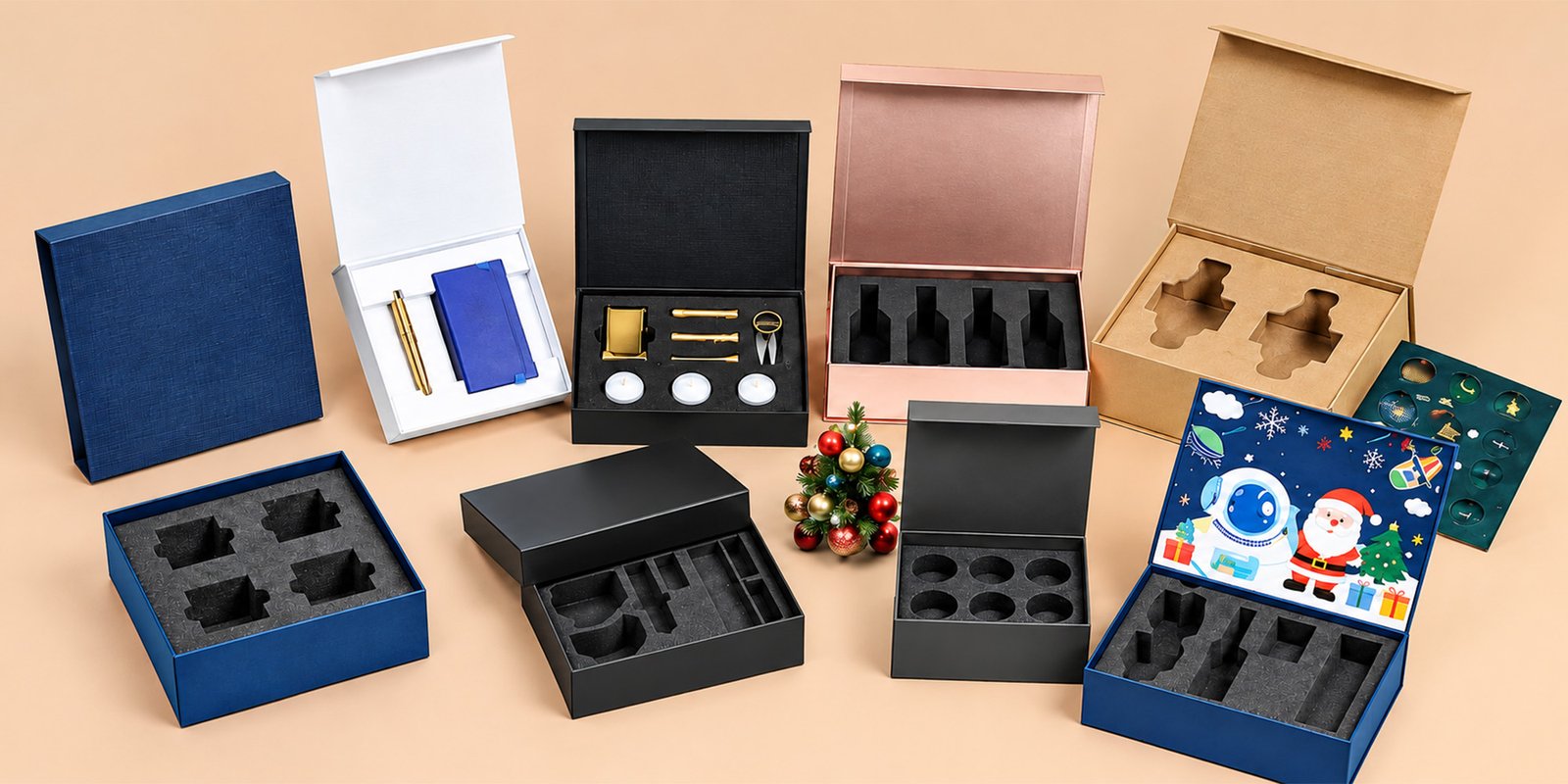
Gift box inserts UK brands use for fragile Christmas items fall into three materials — die-cut foam for irregular or genuinely fragile shapes, card for flat items needing fixed positioning rather than cushioning, and moulded pulp for a recyclable middle ground. The insert, not the outer box, is usually what determines whether the item survives its journey intact.
A gift feels finished the moment nothing shifts inside the box. Inserts for gift boxes give candles, jars, chocolates, or ceramics their own snug seat, so opening the box feels deliberate rather than jumbled together. Whether it’s rigid board, foam, or moulded pulp, each tray cradles the contents and stops them from knocking about in transit — the same fit-first approach we use on our Shampoo Boxes UK range for bottled products.
Hale Path Packaging builds these inserts around your exact product dimensions, cavity counts, and box depth, with die-cut precision that fits like it was measured twice, similar to the multi-cavity fit we build into our Makeup Kit Boxes UK range. As Christmas packaging inserts go, choose the layout, the number of slots, and the finish, then order from small trial quantities upward with pricing that scales down as your volumes climb.
Pair your insert with matte, gloss, or spot UV finishes on the outer box, and lean on our design support to get the fit right before a full production run. With UK-based manufacturing, custom sizes and cavity layouts, realistic Christmas lead times, and protective Christmas gift inserts matched to the product rather than a generic template, we help get your fragile Christmas items seated right the first time.
This guide covers the three main insert materials for gift box inserts UK brands use around fragile Christmas items: foam, card, and moulded pulp; what each one actually does well, and what it costs in 2026 — the same protection-first approach covered in our candle gift set packaging guide for glass jars specifically.
Why the Insert Matters More Than the Box Itself
The outer box only protects against outside forces. A rigid or corrugated box stops crushing and impact coming from outside the parcel, like a heavy box stacked on top or a hard knock during transit. That’s its whole job. It doesn’t do anything for what’s happening inside the box once the parcel starts moving – the same outer-versus-inner distinction we make clear to buyers of our Window Cosmetic Boxes UK range.
Small knocks add up over days, not just one big hit. An item that has room to move will knock against the box wall, or against another item next to it, again and again over a multi-day journey. It’s rarely one dramatic drop that causes the damage. It’s usually dozens of tiny impacts stacking up.
The damage often doesn’t show until it’s opened. Chips, cracks, and hairline fractures caused by this kind of repeated movement don’t always show up straight away. The item can look fine from the outside right up until the customer unwraps it and the damage is suddenly obvious.
The insert is what actually stops this. A properly fitted insert removes the room to move in the first place. It holds the item in a fixed spot so none of that repeated knocking can happen, regardless of how the parcel gets handled along the way.
Does a strong outer box make up for a poorly fitted insert? No. A strong box with a weak insert still fails – no matter how sturdy the outer box is, if the insert inside it isn’t doing its job, the product can still get damaged. A well-designed insert inside an ordinary box often protects better than a strong box with a poor insert- the same primary-versus-secondary protection logic behind our Lotion Boxes UK structural design.
Foam Inserts: Best for Irregular or Multi-Piece Items
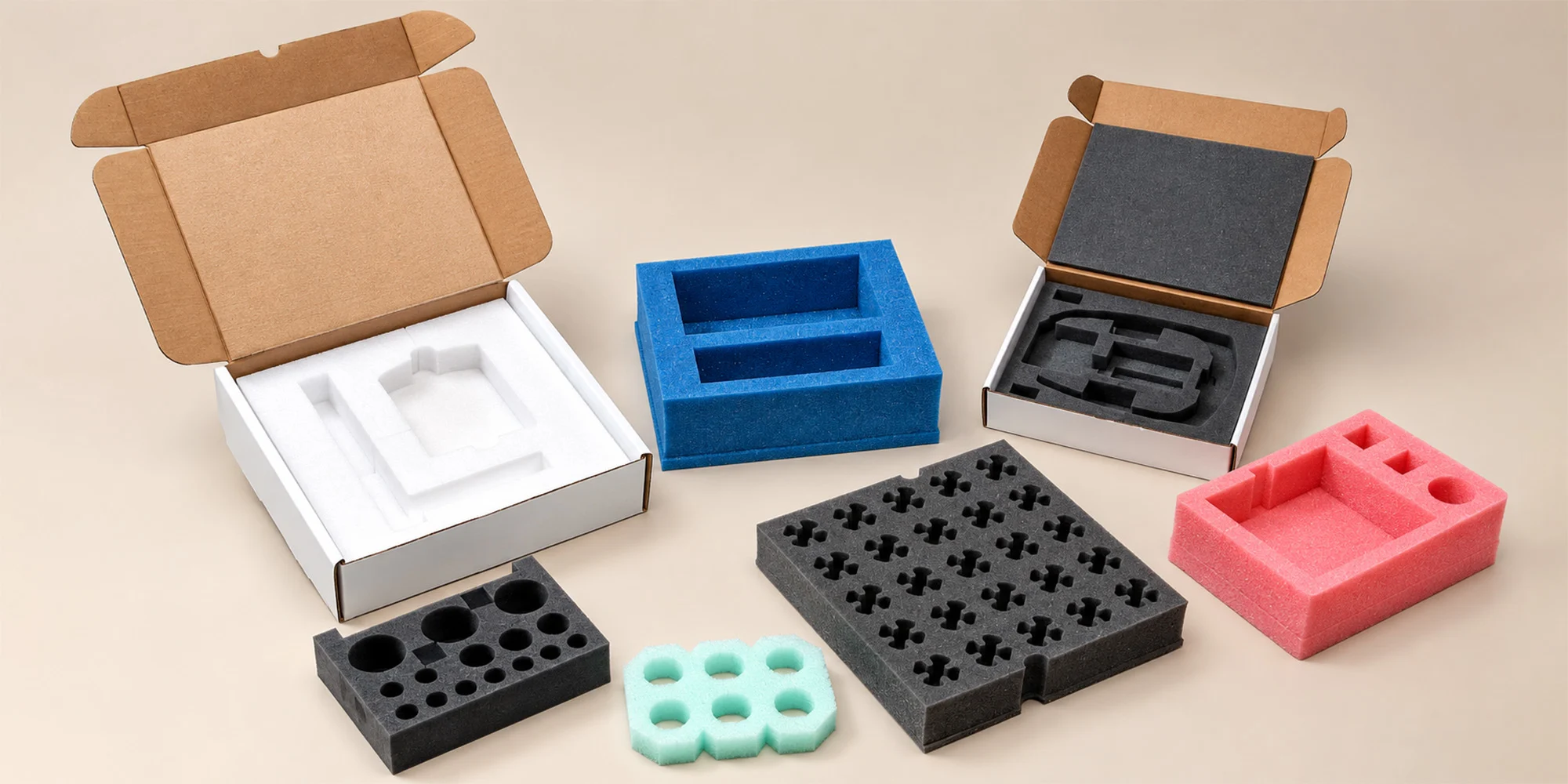
Foam box inserts UK brands reach for, typically die-cut polyethene or polyurethane foam shaped precisely to the product, are the standard choice for items with an awkward or irregular shape that a simple card divider can’t accommodate cleanly.
Die-cut foam inserts hold their shape well under repeated compression, which matters for anything travelling through multiple handling points during the Christmas peak specifically, when a parcel might get compressed under other boxes in a van or depot more than once before it arrives. Foam does more than hold a product in place; it actually absorbs the shock of an impact, which is why it’s the strong pick for genuinely fragile materials like ceramics, glass ornaments, or electronics — the same shock-absorption we build into our Concealer Boxes UK inserts.
The trade-off is recyclability:
- Standard foam is hard to recycle. It doesn’t go through normal UK kerbside streams.
- Greener foam options exist, but aren’t mainstream yet. Recycled-content and more recyclable foams are out there, just not as widely available or as cheap as standard foam.
- Hardest material to defend on sustainability. For a brand leaning into a green position at Christmas specifically, foam is usually the toughest insert to justify honestly – the same recyclability trade-off is worth checking against our Sunscreen Packaging Box UK range, where similar recyclable-versus-protective decisions come up.
Card Inserts: Best for Flat or Semi-Flat Items
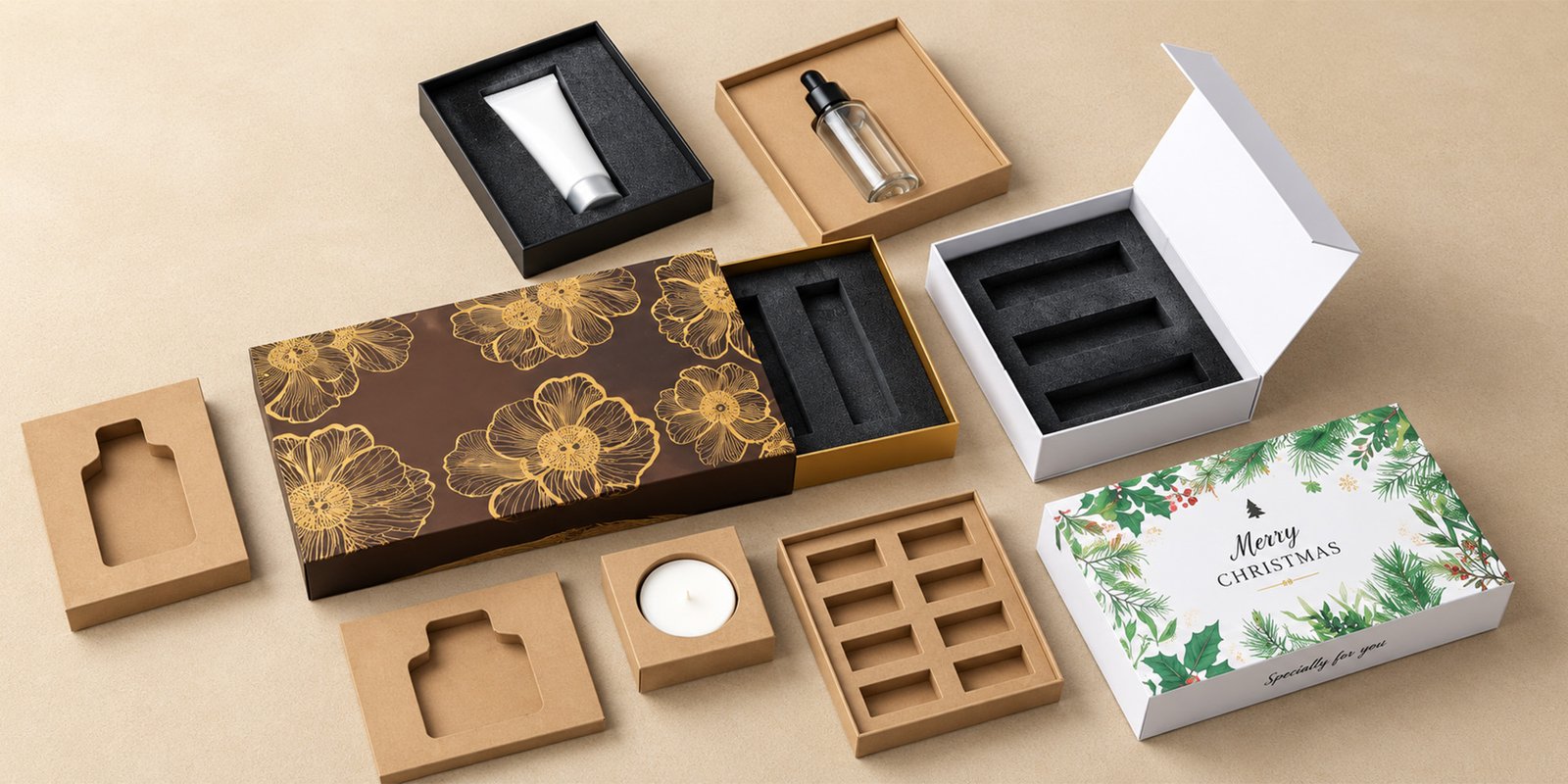
Cardboard box inserts for gifts, usually corrugated or solid board cut and folded into a divider or tray shape, work well for flatter items – books, framed items, jewellery, or anything that doesn’t need deep cushioning so much as a fixed position within the box.
Card is cheap relative to foam and moulded pulp, recycles easily through standard UK kerbside collection, and can be printed on directly, which makes it a natural choice for brands that want the inside of the box to carry branding as part of the unboxing experience – the same branded-interior thinking behind our Custom Night Cream Boxes UK work. The limitation is protection depth. Card folds and creases hold a fixed position but barely cushion against a real impact, so a card insert on its own is usually the wrong call for anything truly fragile like glass or ceramic.
Moulded Pulp: The Middle Ground for Christmas Fragile Items
Moulded pulp gets you genuine cushioning and recyclability at the same time, which is exactly why it’s become the go-to for brands who don’t want to compromise on either.
- Genuine cushioning for fragile items. Holds glass jars, ceramics, and other rounded or irregular items securely in their own compartments, similar to foam.
- Recyclable as a base material. Runs through the same standard paper stream as the outer box in most cases – though coatings, added finishes, or local kerbside rules can affect this in practice, so it’s worth checking the exact spec rather than assuming automatically.
- Sustainability positioning that actually holds up. Backed by the Confederation of Paper Industries’ Design for Recyclability Guidelines (2024), which include a dedicated section on moulded fibre packaging — the main UK trade body for paper-based packaging.
- Looks premium now too. Newer smooth-finish and coloured pulp options compete visually with card and even some foam finishes, so it doesn’t have to look like an egg carton anymore.
- Better for products, not just the planet. Holds each item in place the way foam does, with a materially better recyclability story than foam.
Is moulded pulp always recyclable? As a base material, yes — it’s fibre-based and covered under CPI’s recyclability guidelines. Whether a specific finished insert is recyclable in practice depends on any coatings or additives used and on local kerbside collection rules, so it’s worth confirming the exact spec if a recyclability claim will be printed on the box.
Worth knowing before you commit: moulded pulp needs a custom mould made for your specific product, which takes longer and costs more upfront than a die-cut foam or card insert. Order it well ahead of the Christmas rush, not as a late addition.
Why Do You Need Custom Insert Boxes?
You’re looking for a way to make your packaging feel more considered and less thrown together. Tissue paper on its own doesn’t quite get you there, and a jar or ornament sliding around inside the box undoes the effort the moment it’s opened.
- Keep your products safe in transit with a properly fitted insert
- A well-cut insert stops products from knocking together or against the box wall
- Add real cushioning for delicate items with foam or moulded pulp dividers
- Stop boxes collapsing under other parcels stacked on top during a busy Christmas dispatch
- Size the insert to the exact shape of your product, not a generic template
Matching the Insert to the Product
Multi-jar candle sets, small ceramics, and glass ornaments generally do best in moulded pulp or foam, since both hold each item in a fixed compartment and prevent contact between pieces – the same protection principle behind our Day Cream Boxes UK work for jar-based products.
Books, framed prints, and flat homeware suit card inserts well, since the protection need is more about fixed positioning than deep cushioning.
Electronics and anything with sharp corners or protruding parts usually need foam specifically, since it’s the material best suited to precise, deep cutouts that hold an irregular shape securely without crushing under weight – the same precision-fit thinking behind our Anti-Aging Cream Boxes UK inserts.
Custom foam packaging inserts combining multiple cavities for a mixed gift set – a candle plus a card plus a small ceramic item, for example – let a brand build a genuinely considered multi-item Christmas set without needing three separate outer boxes, similar to how a Face Mask Boxes UK set gets built around several components at once.
What Gift Box Inserts Actually Cost in the UK in 2026
| Insert material | Cost per unit | Notes |
|---|---|---|
| Die-cut foam | £0.40–£1.50 | Multi-cavity inserts for gift sets sit toward the higher end |
| Card | £0.15–£0.60 | Cheapest option; price depends on board weight and printing |
| Moulded pulp | £0.30–£1.20 | Plus a one-time tooling fee of £300–£900 for the custom mould, separate from per-unit cost |
Order wholesale gift box inserts UK in bulk, and the per-unit cost keeps dropping the more you buy. Sustainable packaging inserts UK brands go for as part of a wider Christmas sustainability push tend to pair a pulp insert with a recycled outer box, so the whole package stays in one recyclable stream without giving up the protection a fragile item actually needs.
A Few Questions Worth Asking Before Christmas Stock Goes to Print
- Has the insert actually been tested with the real product weight and shape, or is it sized from a generic template that assumes different dimensions?
- If sustainability positioning matters to the brand, has the insert material actually been checked against the outer box’s recyclability, rather than assuming a recyclable box automatically means a recyclable package — the same check we run on our Custom Blush Packaging UK range?
- Has the lead time for a custom moulded pulp shape been factored into the Christmas production schedule, given it takes longer to tool than foam or card?
- For multi-item gift sets, has each individual component’s protection need been assessed separately, rather than applying one insert material across the whole set regardless of what each piece actually requires — the same component-by-component thinking behind our Setting Spray Boxes UK multi-part kits?
Conclusion
The insert, not the outer box, is usually what actually determines whether a fragile Christmas gift survives its journey intact. Foam suits irregular and genuinely fragile items well but comes with a recyclability trade-off. Card is cheap and fully recyclable but offers limited cushioning. Moulded pulp sits in between – genuine protection with a strong recyclability story, at the cost of longer lead times and higher tooling investment.
Match the insert to what the product actually needs structurally, not to whichever material happens to be quickest to order, and build in enough lead time for whichever option that turns out to be – the same lead-time discipline covered across our apparel packaging and coffee packaging guides.
Written by the Hale Path Packaging team, packaging specialists with 10 years of experience supplying gift, seasonal, and protective packaging inserts to independent and growing brands across the UK, working directly with brands on insert fit testing and material selection ahead of the Christmas production schedule.

Harry Taylor
Packaging expert at Hale Path Packaging, sharing insights on custom packaging solutions, sustainable materials, and industry trends.