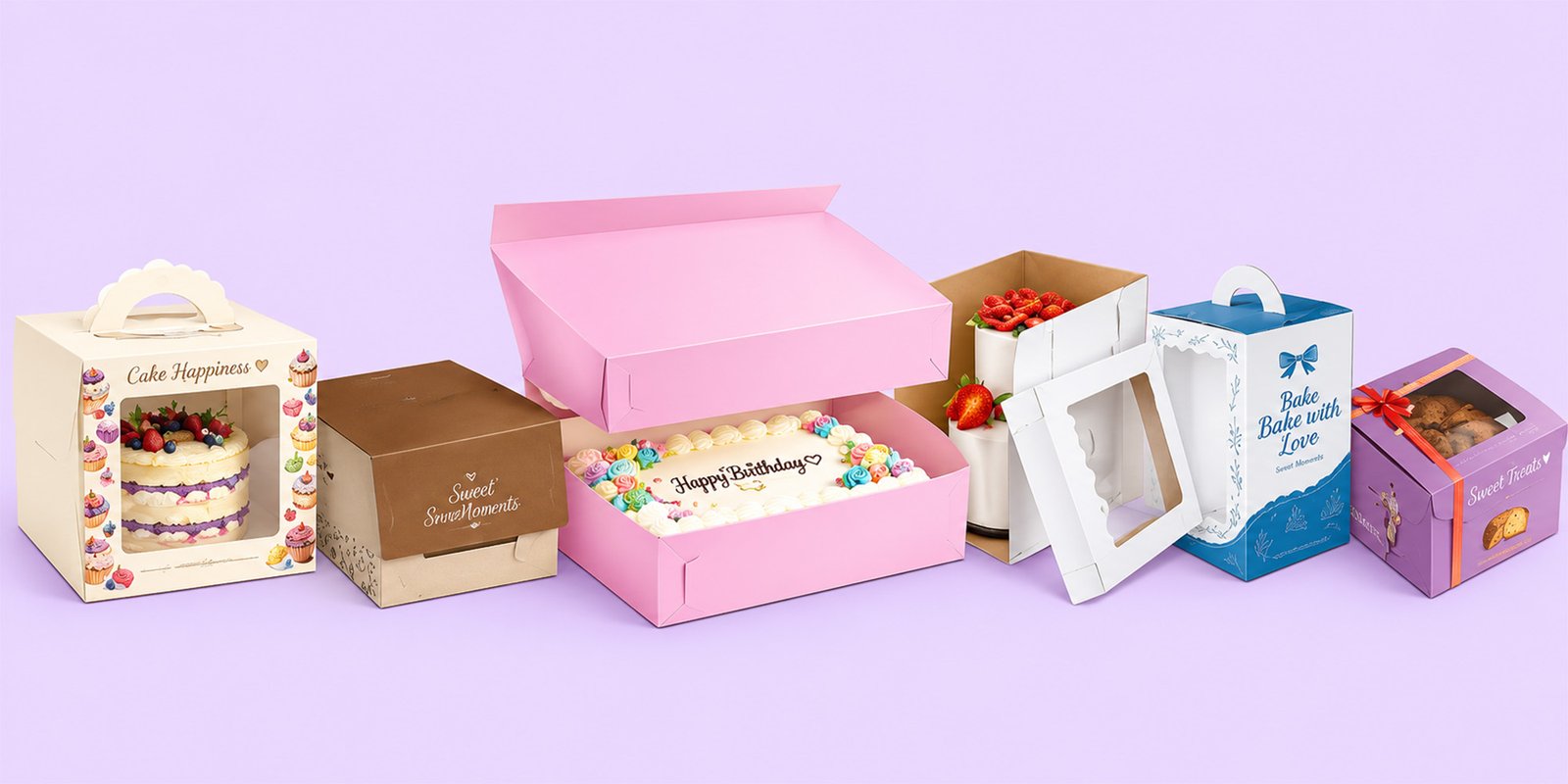
How to Stop a Cake Sliding in Its Box During TransportHow to Stop aCake Sliding in Its Box During Transport
A cake can easily slide inside its box during transport, damaging its decoration and affecting its presentation. Choosing the right box size, using a sturdy cake board, and securing the cake properly can help keep it stable and protected throughout delivery.
You open the lid at the venue on Saturday morning, and there it is. The whole cake has shuffled to one side. Icing is smeared on the cardboard, and one edge has a dent. Still a cake, just not the one you made.
Is that bad luck? Not really. A sliding cake usually comes down to a handful of small things, and every one of them can be sorted at home. We checked a few baking sites for this, so the tips below aren’t just ours.
The short answer: stick the cake to its board, stop the board moving, use a box that fits, and keep the box flat in the car. Then drive gently.
Why Does a Cake Slide Around Inside Its Box?
Two things make a cake slide: slippery surfaces and spare room. A smooth board on a smooth box floor has almost no friction. Leave a gap, and a sharp brake or bend can shove the cake across it. Add grip, close the gap, and most sliding stops.
Look at it from the cake’s side. It’s heavy, soft, and sitting on a slippery surface. Hit the brakes, and the cake keeps going. Nothing holds it back.
That can happen in three places:
- On the board. Icing slips easily on a smooth board.
- In the box. Card on card, or card on a coated base, glides easily.
- In the car. On a smooth seat, a box can wander a surprising distance.
What’s the Best Way to Stop a Cake Sliding in Its Box?
Work from the inside out. Chill the cake, fix it to its board, make sure the board can’t move in the box, and add grip underneath. None of these steps cost much. Together they cover the three places a cake can slip.
Most baking guides give much the same routine, for example Wilton’s transport guide and The Vanilla Valley’s transport tips. It’s common advice, not a guarantee.
- Chill the cake. Cold icing is firmer, so a knock leaves less of a mark. Both Wilton and The Vanilla Valley suggest chilling or freezing a buttercream cake before you move it.
- Stick it down. Put a small dab of buttercream on the board, set the cake on it, and give it a gentle wiggle. The icing acts like glue.
- Pick a board a little wider than the cake. The Vanilla Valley recommends a bigger board than the cake. You get an edge to hold, and the cake isn’t right at the rim.
- Grip underneath. Wilton and The Vanilla Valley both suggest a non-slip mat under the box, and Wilton adds one inside a box that’s larger than the board. Some bakers also use shelf liner or double-sided tape on the box floor.
- Fill the gaps. Board still drifting? Glue small cardboard corners or a cardboard insert or divider into the box so the board can’t travel.
- Give it a tilt. Before you shut the lid, tip the box slightly. Anything shifting? Better to learn that in the kitchen than on the A-road.
Mats and liners go under the board, never against the cake. Not sure if something is food-safe? Leave it out.
Does the Box Size and Style Matter?
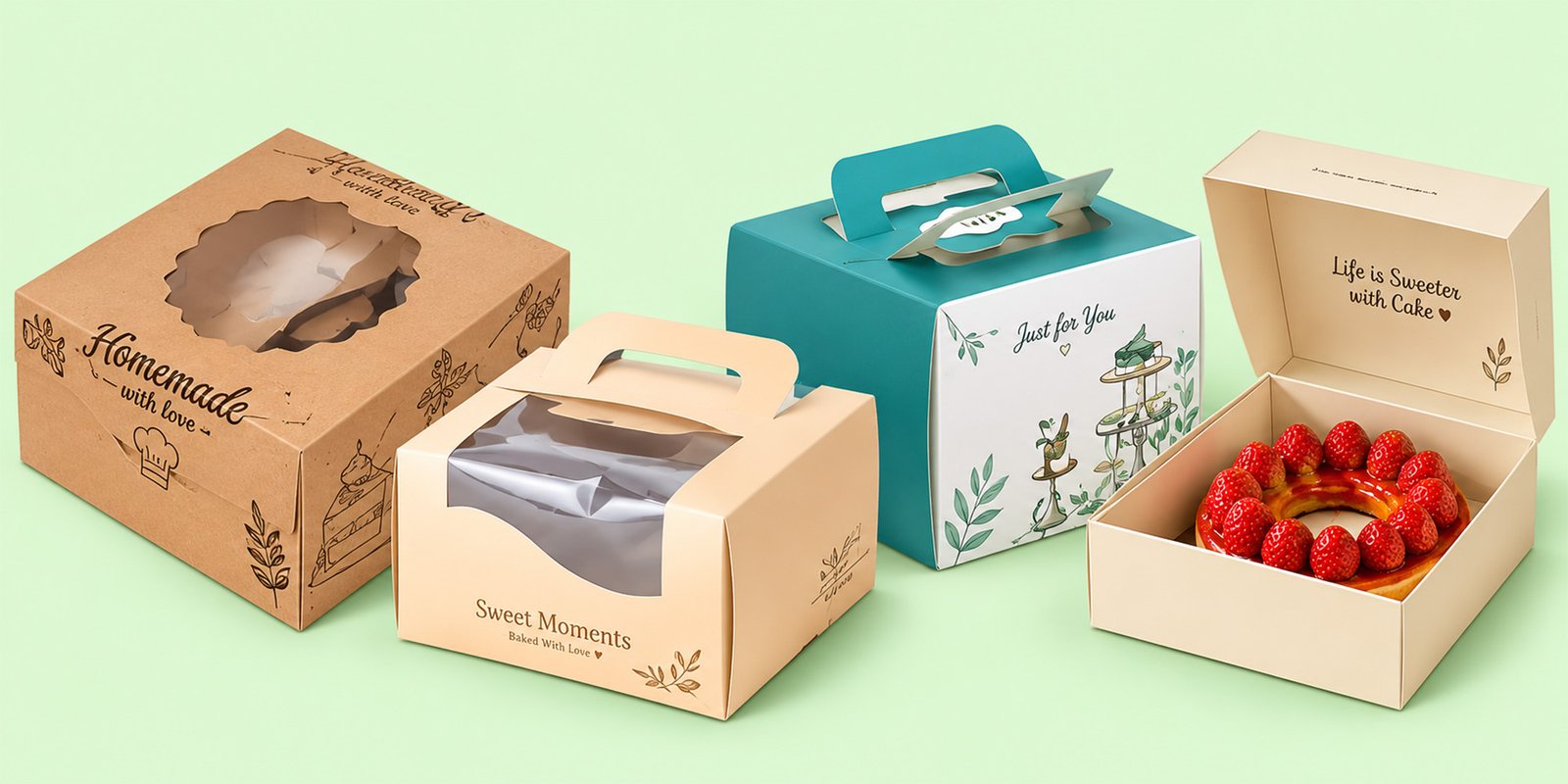
Yes, a lot. A box that fits the board snugly leaves the cake little room to slide. Too much space lets it travel. Height counts as well, since a lid that touches the icing can smudge it. Start with the inside size.
What counts is the inside of the box. That’s the room your board has to fit. Our guide on how to measure a cake for a box goes through it. The quick version: measure the board, not just the cake, then measure the full height with any topper.
How snug is snug? Wilton suggests a box the same size as the board, and The Vanilla Valley says the same width as the board, so it can’t move. The Vanilla Valley also suggests a box at least 2 inches taller than the cake, more if it’s decorated. Still, every cake and box is different, so try a real cake in a real box, or ask for a sample, before you order a lot.
A few other things help:
- An open-end box. With one end open, the cake slides in on its board. No lowering it down from the top.
- Building the box around the cake. Some bakers put the cake in the base first, then fold up the sides.
- Enough height. Your topper needs headroom, or the lid will squash the icing.
- A board that won’t bend. If the board is too thin, it can flex. Our cardboard and paperboard materials page explains the board side.
Don’t have a box that works? A cake carrier with locking latches is the other usual choice. It’s handy for heavy cakes or regular trips. Fix the board to the base with tape so it stays put. A covered stand works too. A plain plate needs a mat under it.
If stock boxes are always a bit off, a made-to-order box may be worth a look. Our custom cake boxes can be made to your size, for instance as die-cut custom shape boxes, so the board has very little room to move.
How Should You Place and Drive the Box in the Car?
Place the cake box on a flat surface in the car and keep it away from other bags or items. Drive slowly, avoid sudden brakes, and take turns carefully to prevent the cake from moving inside the box.
Where does the box go? Here are the usual options.
- The boot floor. Flat and level, so it’s the favourite. Many guides suggest a non-slip mat under the box; Wilton mentions a yoga mat. For a platter, America’s Test Kitchen suggests lining the boot with a damp towel to stop it slipping.
- The back seat. It often slopes, so the box can tilt.
- Someone’s lap. Skip it. A lap is never level for long.
Hot day? Keep the cake cool. Cream and soft fillings really need it, and some bakers steer clear of cream cheese icing in a heatwave. A cool box with ice packs can help on a warm day. Tell your client if the cake needs the fridge when it arrives, and check your own food safety rules for how long a cake can stay out of the fridge.
Now, the driving. Start gently and brake early. Take corners wide and slow, and crawl over speed bumps. Choose the calm road over the quick one if you can.
How Do You Transport Tiered, Tall or Heavy Cakes?
Move tiers separately and stack them at the venue. Tall and heavy cakes need extra support. Weight adds force when you brake, so give the base extra strength and go easy on the pedals.
Here’s what bakers often do:
- Tiered cakes: one box or carrier per tier. Stack them when you get there. America’s Test Kitchen gives the same advice: don’t stack until you arrive.
- Heavy cakes: a stronger base helps. Some bakers stack two or three boards.
- Dowels: food-safe dowels inside tiered cakes add support. Use whatever method suits your recipe.
- Tall cakes: measure the whole height with the topper on, then find a box that’s taller. Delicate toppers can ride separately and go on at the venue.
Sending cakes by courier is a different job again. They usually need an outer carton, such as a regular slotted container, and our retail and e-commerce packaging page has more on that.
What Should You Do When a Cake Still Moves?
Bring a small repair kit, and look the cake over when you arrive. Slide it out of the box instead of lifting. A little smudge or dent is often quick to mend, as long as you have the right bits with you.
Even a careful baker has a bad day. So pack a little kit:
- Spare icing in the right colour
- A small spatula or palette knife
- Paper towels
Open the lid in the car park and walk round the cake. Spotted a dent? Mend it there, where it’s quiet, not in the middle of the party. America’s Test Kitchen also suggests packing extra supplies for touch-ups.
One tip from Wilton: cut one side of the box open and slide the cake out. That’s easier on the icing than lifting.
And if the cake did slide? Think back. Did the cake move on its board, or the board in the box, or the whole box? Jot it down. The same mistake tends to come back.
Is It Time to Look at a Custom Cake Box?
It might be, if you keep fixing the same fit problem. Stock boxes work well for common sizes. A made-to-order box can be a better answer when your boards or heights are unusual, or when you want the same branded look on every cake. Compare the full cost, not just the unit price.
Plenty of bakers manage fine with stock boxes and a few tricks. Others keep running into the same problem. Maybe the boards are an odd size. Maybe the cakes are tall. Or maybe they’re simply tired of fiddling with corners.
Here’s a made-up example, not a real customer or a HalePath price. A baker sells around 20 eight inch cakes a week on ten inch boards. Her stock box is a touch big, so every cake gets corners and a mat. A box cut to her board size could save her that job. She’d still want a few quotes before deciding. Our guide to what cake box prices depend on shows what to ask.
At HalePath, our general minimum order is 100 units. Making the boxes typically takes 7 to 14 working days, depending on the custom order. Free design support and free samples are also available, subject to your requirements and our current terms. See our design and sampling page for how we work through details, and our production and order information page for how orders run. You can also look at our bakery trays.
Frequently Asked Questions About Stopping Cakes Sliding in Boxes
How can I keep a cake from sliding in its box? Fix the cake to its board with a dab of icing, put a non-slip mat under the board, and use a box that fits. Then keep the box level in the car and take it easy on the road.
What can I put under a cake box to stop it sliding? A non-slip mat, shelf liner or rubber mat is common. Some bakers use a damp towel in the boot. Try it with an empty box first.
Should I chill a cake before transporting it? Many bakers do. Cold icing is firmer, so it smudges less if the cake gets a knock.
How big should the cake board be? A little wider than the cake is the usual advice. Then match your box to the board, since the board sets the box size.
Should the box be bigger than the cake board? Only a little, if at all. Wilton and The Vanilla Valley both suggest a box the same size or width as the board. Too much space lets the board move. Test with a real cake or a sample.
How do I transport a tiered cake? Give each tier its own box. Build the stack when you get there.
Is a cake carrier better than a box? It can be, for heavy cakes or regular trips. A snug box with a mat works well for many cakes.
When should I order custom cake boxes? When stock sizes keep causing trouble, or you want one branded, repeatable fit. Our general minimum order is 100 units, and we confirm the details in your quote.
Conclusion: So, Did the Cake Make It?
Back to that Saturday morning. The fix was a few small things done before the car moved: a chilled cake, a dab of icing, a grippy mat, and a box that fit.
That’s really it. Hold the cake to the board, the board to the box, and the box to the car. Then drive like there’s a full cup of tea on the back seat.
If you only change one thing this week, check your box fit. Measure the board, try it with a real cake and see how much room it has to move. Sort that first, then add the extras.
And if your cakes never fit stock boxes, we can help you work out what would. Our custom packaging solutions page is a good place to start.
One last question. Where does your cake slip most often: on the board, in the box, or in the car? Tell us, and we’ll cover it in a future guide.

Harry Taylor
Packaging expert at Hale Path Packaging, sharing insights on custom packaging solutions, sustainable materials, and industry trends.