Quick answer: A good affirmation card deck starts with three decisions — size, card stock and box. Poker size (63 x 88 mm) suits daily-use decks; tarot size (70 x 120 mm) gives artwork room to breathe. Use 350gsm card with a matte or soft-touch finish so the cards shuffle well and last. Pack them in a tuck box for a first run, or a rigid magnetic-closure box for a premium edition. Minimum order is 100 decks, production takes 7–12 days, and delivery is free across the UK.
Who actually uses affirmation cards
Affirmation cards are short, positive statements printed on a deck of cards — drawn daily, used in coaching sessions, or given as gifts. The buyers are usually coaches and therapists (for client work), wellness and mindfulness brands (as a product or a free gift with purchase), corporate teams (for workshops and wellbeing programmes), and independent creators selling their own deck online. If that sounds like you, the rest of this guide is the practical part: sizes, stock, finishes and boxes.
Choosing your deck size
Size changes how the deck feels in the hand and how much your artwork can say.
- Poker (63 x 88 mm) — the standard playing-card size. Compact, familiar, easy to shuffle. Best for daily-draw decks and decks that travel in a bag or pocket.
- Tarot (70 x 120 mm) — larger, with more room for illustration and longer affirmations. Best when the artwork is the point of the deck.
- Large tarot (89 x 127 mm) — the premium option for art-led decks where detail matters. Feels substantial; shuffling takes more practice.
- Mini decks — small-format cards for gift sets, subscription-box inserts and sample packs.
If you’re unsure, order a free sample in poker size first and hold it — the right size is the one that feels right in your hand. See custom affirmation cards for the full range.
Card stock and finishes
Card stock is the decision that affects everything else — how the deck shuffles, how long it lasts, and how premium it feels.
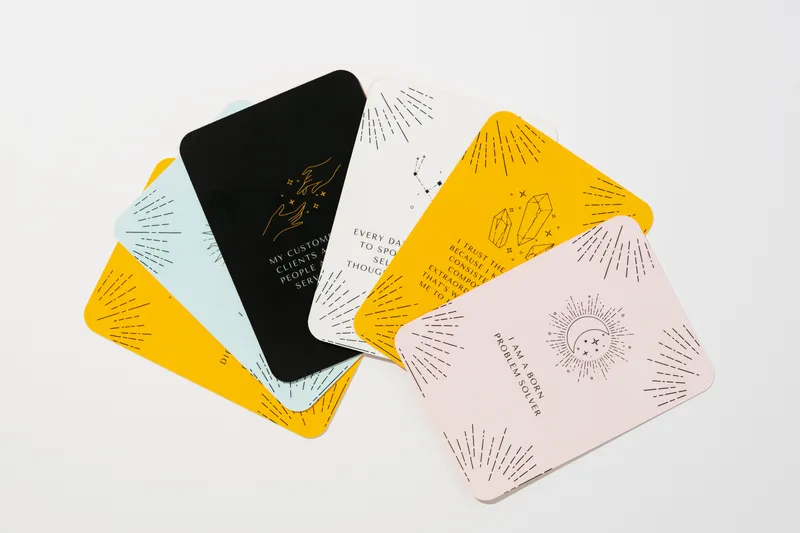
- 350gsm premium cardstock is the standard for a deck that gets used daily. Lighter stock feels flimsy; heavier stock gets hard to shuffle.
- Matte or soft-touch lamination protects the print and gives a smooth, premium feel. Gloss is brighter but shows fingerprints.
- Rounded corners stop the corners fraying with repeated use.
- Foil stamping and gilded edges are the luxury upgrades — worth it for a gift edition or a deck sold at a premium price.
The same stocks work across card types. If you also sell tarot oracle cards, flash cards or relationship cards, the same size and finish choices apply.
How many cards in a deck
Most affirmation decks run 30–60 cards. A 44-card deck is a common middle ground — enough variety for daily draws without the design workload of a 78-card tarot set. Shorter decks (30 cards) suit corporate gifts and event giveaways; longer decks suit creators selling a full product. Decide the count before you start designing — it fixes your printing cost and your box size.
The box matters as much as the cards
A deck without a box is a pile of cards. The box is what makes it a product.
- Tuck box — the standard, cost-effective option. A printed tuck box holds the deck, protects it and carries your branding. Good for a first run. Our guide to card game and tuck box printing covers the formats in detail.
- Rigid magnetic-closure box — the premium option. A rigid box with a magnetic lid turns the deck into a gift item and justifies a higher price. See magnetic gift boxes.
- Two-piece lid-and-base box — a middle ground: sturdier than a tuck box, cheaper than a magnetic rigid box.
What it costs, and what small creators should order
Minimum order is 100 decks, production runs 7–12 days, and delivery is free across the UK. A free sample is available before you commit, so you can check the size, stock and finish in your hand. For a first deck, order 100 and test it with your audience — a deck that sits in storage is money tied up. Custom print is what makes it yours: your artwork, your words, your box. If you’re still testing the idea, a smaller run of a mini deck is a cheaper way to prove demand.
Checklist before you order
- Pick the size — poker for daily use, tarot for art-led decks.
- Choose 350gsm stock with matte or soft-touch lamination.
- Decide the card count (30–60 is typical) before designing.
- Pick the box — tuck for a first run, rigid magnetic for a premium edition.
- Order a free sample and shuffle it before approving the full run.
- Check the artwork has 3 mm bleed on all sides and is supplied as a high-resolution CMYK PDF.
FAQ
What size are affirmation cards?
Poker size (63 x 88 mm) is the most common. Tarot size (70 x 120 mm) is popular for art-led decks, and large tarot (89 x 127 mm) suits premium editions.
How many cards are in an affirmation deck?
Most decks have 30–60 cards. A 44-card deck is a common middle ground.
What is the minimum order for custom affirmation cards?
100 decks, with production in 7–12 days and free UK delivery. A free sample is available first.
What box should I choose for my deck?
A tuck box for a first run or a budget deck; a rigid magnetic-closure box for a premium or gift edition.

Harry Taylor
Packaging expert at Hale Path Packaging, sharing insights on custom packaging solutions, sustainable materials, and industry trends.