Sizes UK: How to Measure a Cake Properly
Not sure what size cake box you need? Learn how to measure your cake, board and height, and what to tell a supplier before you order.
Cake Box Sizes UK: How to Measure a Cake and Choose the Right Box
Say you run a small bakery and it’s Friday at four. A customer is collecting an eight-inch celebration cake at five. The cake is finished, and the icing is spot on. Then you lift the lid of the box, and the cake won’t go in.
The cake itself would fit. The board wouldn’t. It sits on a ten-inch drum, and the box was ordered for an eight-inch cake. Now you’re pushing, wincing, and thinking about redecorating.
It happens more than bakers admit. The problem is rarely the cake. It’s the numbers we give the supplier, and the numbers we assume the supplier means.
Search cake box sizes UK suppliers list, and you’ll find charts everywhere. A chart won’t fix this problem. This guide gives you a method instead. You’ll learn how to measure a cake properly, why the board matters, and when stock boxes stop making sense. You’ll also get a checklist to send to any supplier.
The short answer: Measure the board, not just the cake. Add the full height, decorations included. Then match those numbers to the inside of the box. Ask your supplier to confirm it before you order.
What Size Cake Box Do You Need for Your Cake?
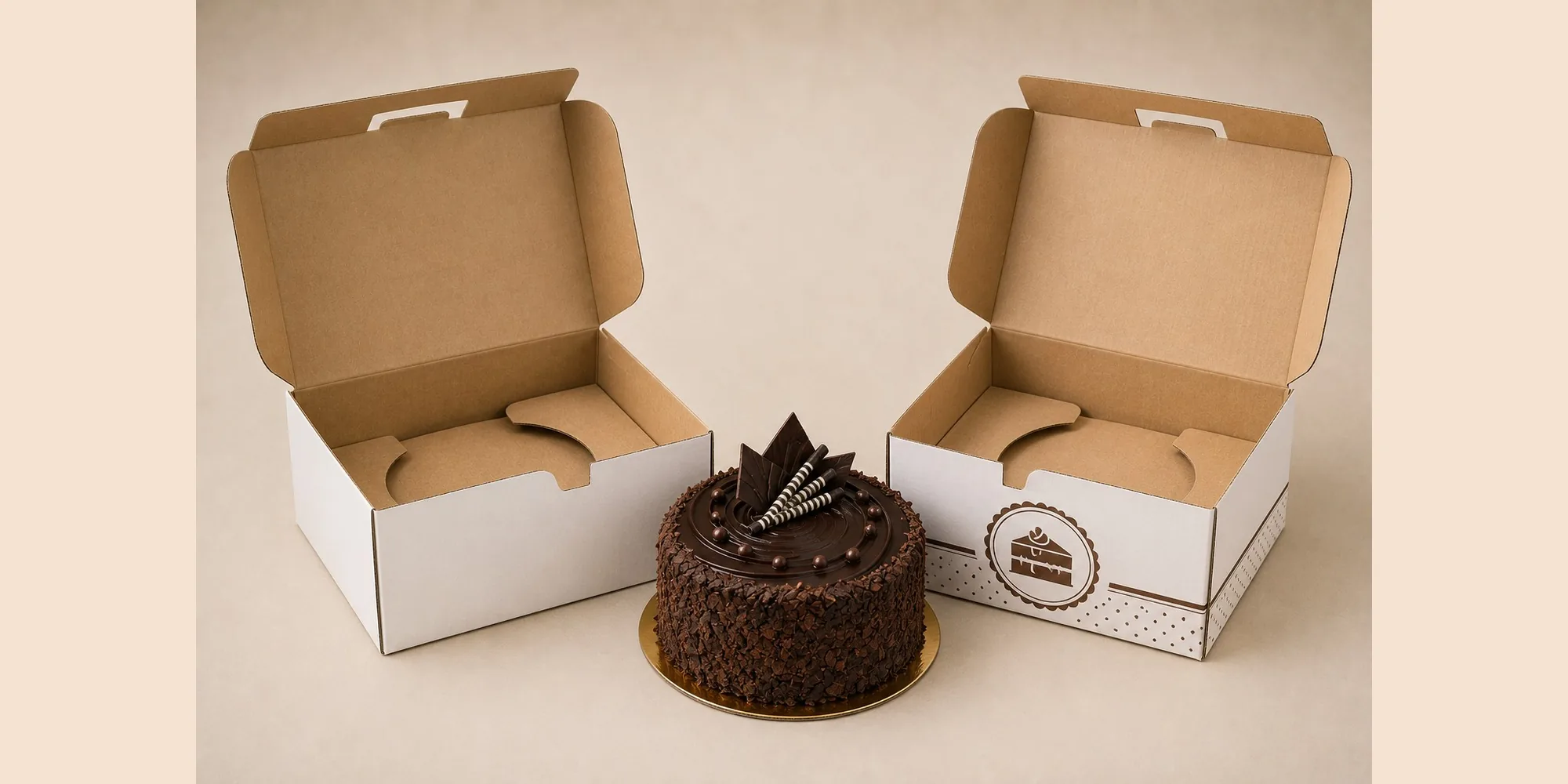
You need a box with an inside space bigger than your cake board, not just your cake. Take the board size, allow room for the lid to close, and check the height with any topper. Cake box sizes UK suppliers list are usually length by width by height. Always check whether the size is inside or outside.
Three things get mixed up all the time.
| What | What it means | Why it matters |
| Cake size | The width or diameter of the sponge itself | It’s the number everyone quotes, so it’s the one people order by |
| Board size | The card or drum the cake sits on | It’s usually wider than the cake, so it sets the box footprint |
| Box size | The space inside the box, plus the outer size | The inside is what your cake actually has to fit |
Here’s the rule of thumb: the cake diameter is seldom the number to order from. The board decides the footprint, and the decorations decide the height. If you only remember one thing from this article, make it that.
Then there’s inside versus outside. The walls of a box have thickness, so the outer size is always a little bigger than the usable space. Some suppliers list one, some list the other, and some don’t say. If it isn’t stated, ask. Our bakery trays show the kind of bakery products we work with.
How Do You Measure a Cake for the Correct Box Size?
Measure the cake at its widest point, then the board, then the full height to the tallest decoration. Write each number down in millimetres. Check them against the inside of the box, not the outside, and confirm the final specification with your supplier.
Here’s a method you can follow with a tape measure in two minutes.
- Measure the cake at its widest point. Include any overhang from piping or a collar.
- Measure the board or drum. Do it edge to edge.
- Measure the full height, from the underside of the board to the tallest point of the cake or topper.
- Look for odd shapes. A bow, a sugar flower, or a sparkler holder can stick out further than you think.
- Find the inside size of the box you’re considering.
- Check the lid. Will it close over the topper? A window lid can change how much room you have.
- Record everything the same way. Length, then width, then height, always in millimetres.
- Confirm the specification with your supplier before you place an order.
That last step matters. A measuring checklist is useful, but it doesn’t replace a supplier’s dieline or a finished sample.
A worked example (illustrative numbers, not HalePath sizes). Say an 8-inch round cake sits on a 10-inch board. In millimetres, that’s about 203 and 254, because one inch is 25.4 mm. The board is the bigger number, so 254 mm is the figure that sets the footprint. Now the height. Say the cake is 100 mm tall, the board is 12 mm thick, and the topper adds 60 mm. The full height is 172 mm. The box has to cope with both numbers, plus a little room.
How much room? That depends on the box design, the board and the decorations. Nobody can give you one allowance that works for every box. Anyone who does is guessing.
Suppliers often work in millimetres, while many UK bakers think in inches. Convert early. It saves a back-and-forth later. Our design and sampling page explains how we work through specifications with you.
What Cake Box Sizes Work for Round, Square, Tall and Tiered Cakes?
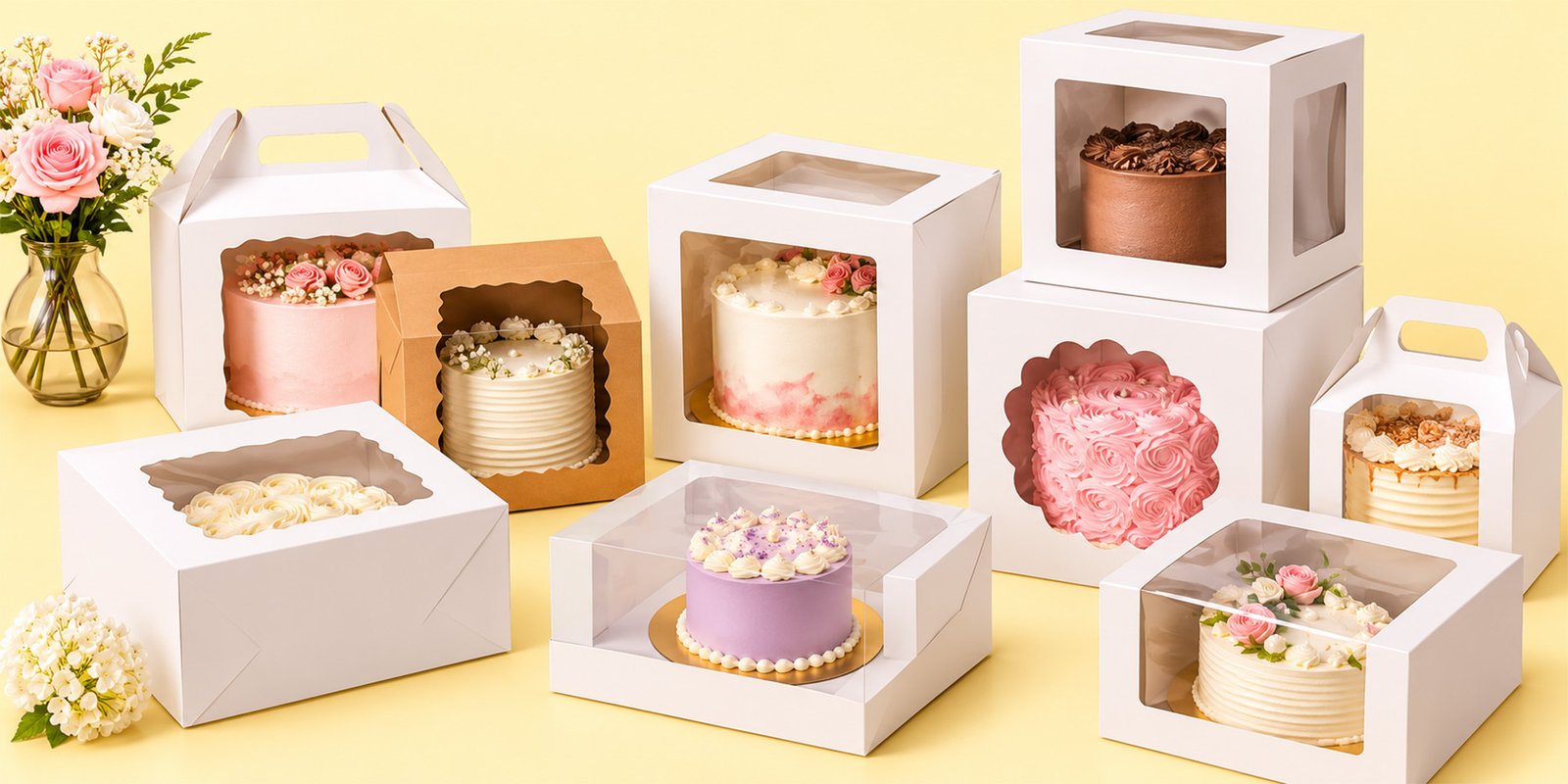
The right size depends on the shape. Round and square cakes are usually sized by their board. Tall cakes are sized by their total height. Tiered cakes are often boxed tier by tier, then assembled on site. Always measure your own cake and board, because a stock chart only describes its own stock.
Round cakes
Round cakes are the easiest to measure, and the easiest to get wrong. The cake is round, but the box is square. The corners waste space, and the board still sets the footprint. Measure the board across its widest point and work from there.
Square and rectangular cakes
Square cakes and traybakes fit boxes more neatly, because the corners are used. Here you need both length and width. Don’t assume a square cake sits on a square board. Check and write both numbers down.
Tall cakes
Tall cakes are where height trips people up. A tall box can look generous on a product listing and still leave the topper touching the lid. Measure the full height with decorations, then compare it with the inside height. Heavier cakes may also need a different board and construction, so ask about it. Our cardboard and paperboard materials page covers the board side.
Tiered cakes
Most bakers box tiers separately. Each tier gets its own measurements, and the stacking happens at the venue. If a cake travels fully assembled, measure the whole thing as one. Cupcakes are a different job, because they need inserts or cavities to stay put, and muffin and cupcake boxes are made for exactly that.
A word on size charts. We’d rather not hand you one. A chart built around one shop’s stock won’t match your boards. Treating it as a UK standard causes the very mistake we’re avoiding.
Should Your Bakery Choose Standard or Custom-Sized Cake Boxes?
Standard boxes suit cakes that fit common formats and bakeries that want easy restocking. Custom boxes are worth a look when your boards or heights don’t fit stock sizes, or when you want one branded specification. Neither is automatically better, cheaper, or stronger.
| Standard sizes | Custom sizes | |
| Best when | Your cakes fit common formats | Your cakes or boards are unusual |
| Range | A consistent menu | A distinctive format or a branded system |
| Watch for | Poor fit if your board is non-standard | Planning time and a minimum order |
| Restocking | Often straightforward | Needs repeat order planning |
The bigger question is your whole range, not one cake. Here’s a simple way to think about it.
- List the cakes you sell most often.
- Group the ones with similar boards and heights.
- Check which groups can share a box size.
- Decide which cakes need a dedicated size.
- Think about storage space for each box type.
- Review it whenever your menu changes.
Fewer sizes mean less clutter on the shelf. But don’t force a small cake into a large box just to cut the count. A cake that slides around gets damaged.
If your boards, heights, or range don’t sit well in stock sizes, it may be worth discussing a custom specification. Have a look at our custom cake boxes, which can be made as die-cut custom shape boxes cut to your exact dimensions. Our general minimum order is 100 units, which is why custom sizes suit boxes you’ll order again and again. We confirm the details for your order in your quote.
Selling online and delivering by courier? Packaging for a collection counter and packaging for the post aren’t the same job. Cakes sent by post usually need an outer carton such as a regular slotted container, and our retail and e-commerce packaging page has more on that side.
What Measurements Should You Give a Cake Box Supplier Before Ordering?
Give your supplier the cake shape, width, height, board size, tallest decoration, and the internal box size you need. Add quantity, number of sizes, and any printing or window needs. Accurate details get you a more useful quotation.
Copy this list into an email and fill it in.
- Cake type and shape
- Cake width or diameter
- Cake length, if it isn’t round
- Cake height
- Board or drum size
- Board thickness, if you know it
- Tallest decoration or topper
- Internal box size you need
- Quantity
- Number of different sizes
- Preferred box format
- Window, if you want one
- Printing or branding
- How the cake is used: collection, counter display, or delivery
Why bother? A supplier can only judge the right format from what you tell them. Vague details lead to vague quotes. Good details don’t guarantee a perfect first design, but they make it far more likely.
Want custom cake boxes with a logo? Settle the dimensions first. The print area depends on the final box size, so a later size change can mean new artwork. Our printing and finishing services page explains the options, and we confirm what suits your box in your quote.
At HalePath, typical turnaround is 7 to 14 working days, depending on the custom order. Free design support and free samples are available, subject to your order requirements and our current terms. If the box will touch the cake or icing, ask about food-contact suitability for the board and coating early. We confirm what applies to your order. For how orders run, see our production and order information.
Ready with your measurements? You can request a quote through our custom cake packaging page.
Frequently Asked Questions About Cake Box Sizes
Should a cake box be the same size as the cake board? Close to it. The inside needs to fit the board so the cake slides in and the lid closes, but not so loosely that the board moves. How much room to allow depends on the box design, so check with your supplier.
How much extra room should a cake have inside its box? There’s no single figure that suits every box. It depends on the construction, the board, and your decorations. Test with a real cake or a sample before you commit to a large order.
Are cake box dimensions internal or external? It depends on the supplier. Some list the outside size, some the inside. If a listing doesn’t say, ask. The inside size is the one that tells you whether your cake fits.
How do I choose the right height for a decorated cake? Measure from the underside of the board to the tallest decoration. Then compare it with the inside height of the box. Check the lid too, because a window lid can reduce the room you have.
What size box do I need for a tall cake? Start with the total height, topper included, and add room for the lid. If no stock box offers enough inside height for your cake, a custom size may be worth discussing.
Can one cake box size fit different cake sizes? Sometimes, when the boards are the same size. But a box that’s much bigger than the board lets the cake slide about. Group cakes by board size and height, then see which can share a box.
Should a bakery use standard or custom-sized cake boxes? Standard suits common formats and easy restocking. Custom suits unusual boards, heights, or a branded specification. Look at your whole range before you decide.
What measurements does a packaging supplier need for a custom cake box? The cake and board size, full height, tallest decoration, internal box size, quantity, and number of sizes. Add printing or window needs, too. Our general minimum order is 100 units.
So, Did the Cake Fit?
Back to that Friday at four. The fix wasn’t a bigger box. It was a better measurement: the board, the height, and the lid, written down before anyone placed an order.
That’s the whole method for cake box sizes UK bakers can rely on. Measure the board. Measure the height. Check the inside of the box. Then send your supplier numbers they can actually use.
If your cakes don’t fit stock sizes, we can help you work out a specification. Our custom packaging solutions page is a good place to start.
One last question. Which measurement do you forget most often: the board, the height, or the lid? Tell us, and we’ll cover it in a future guide.

Harry Taylor
Packaging expert at Hale Path Packaging, sharing insights on custom packaging solutions, sustainable materials, and industry trends.