Is Custom Packaging Worth It? The Real ROI Math for Small UK Businesses
Is custom packaging worth it? Custom packaging typically pays back through three measurable levers – fewer damage-related returns, higher repeat purchase rates, and reduced void-fill/shipping waste – not through vague “branding value.” NielsenIQ research found well-designed packaging can lift in-store sales by up to 30%. The real risk most guides skip isn’t cost, it’s commitment: a brand that orders 5,000 custom units and then changes its product size or rebrands is stuck holding stock it can’t use. That risk is solvable with the right MOQ, not by avoiding custom packaging altogether – and it’s the part of this decision that competitor content doesn’t actually walk through.
Most “packaging ROI” content repeats the same advice when someone asks if custom packaging is worth it: track sales before and after, monitor conversion rates, watch repeat purchase behaviour. All true, and all missing the two things a small business owner actually needs before committing a budget – an actual formula to calculate the return, and an honest answer to the real hesitation behind the question: what happens if I order too many and get it wrong?

Is Custom Packaging Worth It? What “ROI” Actually Means
What is the ROI formula for custom packaging? ROI is calculated as (Return − Investment) ÷ Investment, expressed as a percentage. For packaging specifically: Investment is your total packaging spend (unit cost × volume, plus any setup/tooling fees). Return is the measurable financial benefit – reduced damage-return costs, increased repeat purchase revenue, and shipping/void-fill savings, added together. If a business spends £2,000 on a packaging upgrade and it generates £3,000 in combined savings and additional repeat-purchase revenue over a defined period, the ROI is (£3,000 − £2,000) ÷ £2,000 = 50%.
A worked example. A small UK skincare brand shipping 400 orders a month switches from a generic stock box to a correctly sized custom mailer at an incremental cost of £0.15 per unit – roughly £720 a year at that volume. If that switch cuts damage-related returns by even 3 percentage points (a conservative shift, well below the return-rate improvements documented in packaging studies) on an average order value of £35, with a typical UK return-processing cost in the 20-30% of item value range, that’s a saving in the region of £350-£500 a year from returns alone – before counting any repeat-purchase uplift. Against a £720 spend, that’s not yet a positive ROI on returns savings alone, which is exactly why the calculation has to include repeat purchase behaviour, not stop at return-rate savings.
Does custom packaging actually increase sales, or just brand perception? Both, and they’re linked – this is often the real question underneath is custom packaging worth it as a search. NielsenIQ research found well-designed packaging can increase in-store sales by up to 30%, since packaging functions as a silent salesperson at the point of decision. For ecommerce specifically, the mechanism is repeat purchase rather than first-sale conversion – packaging quality shapes whether a customer buys again, which compounds over a customer’s lifetime value in a way a single sale doesn’t. Source: NielsenIQ research, as cited in Meyers’ data-driven packaging ROI analysis.

The Real Risk Nobody Walks You Through: Getting Locked Into an MOQ
This is the part missing from almost every “packaging ROI” guide, and it’s usually the actual reason a small brand hesitates when weighing whether custom packaging is worth it in the first place.
Order 5,000 units of a custom box, then change your product dimensions, rebrand, or discontinue a SKU, and you’re holding stock that no longer fits anything you sell. That’s not a hypothetical – it’s the single most commonly cited concern among small brands weighing custom packaging, and it’s a real financial risk that no ROI formula accounts for unless you build it in deliberately.
What happens if I order custom packaging and then need to change my product? You’re left holding unusable stock, which is a direct loss on top of whatever you spent — this is the real risk behind “is custom packaging worth it,” more than unit cost itself. The fix isn’t avoiding custom packaging; it’s matching your MOQ to how settled your product and branding actually are. A brand still iterating on formula, size, or branding should order in the smallest workable batch, not the cheapest per-unit price.
This is exactly why MOQ, not unit price, is the number to negotiate first. Hale Path Packaging runs digital-format custom packaging from 100-200 units – low enough that a brand can test a design against real sales before committing to the volume where per-unit savings actually start to matter. That removes the lock-in risk from the ROI equation almost entirely, rather than asking a brand to accept it as the cost of going custom.

Is Custom Packaging Worth It? Three Ways It Actually Pays Back
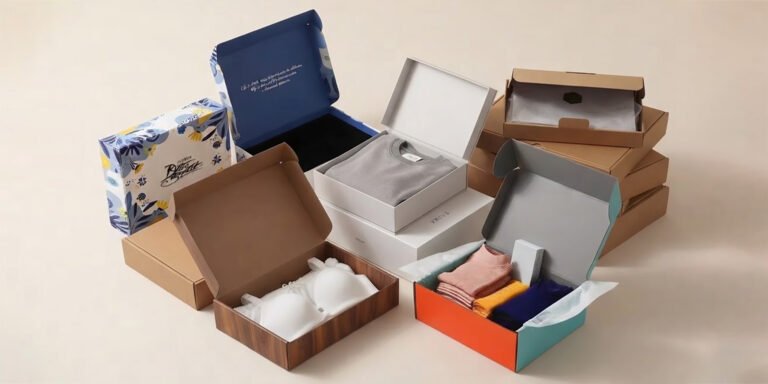
- Reduced damage-related returns. A box or bag that fits the product properly stops it moving in transit – the leading cause of damage claims across most product categories. Custom boxes with inserts or a correctly sized corrugated mailer address this directly, and the saving is calculable against your own current return rate, not a generic industry average.
- Repeat purchase and perceived value. Packaging is the first physical interaction a customer has with a brand after an online order – before the product itself. A rigid box for a premium product, or consistent branded printing across a mailer range via commercial printing, signals quality before the product is even seen, which is what drives the repeat-purchase behaviour NielsenIQ and other packaging research consistently link to packaging quality.
- Reduced shipping and void-fill waste. A box sized to the product, rather than a generic stock size padded with filler, cuts both material cost and the dimensional-weight shipping charges couriers apply to oversized parcels – a saving that compounds on every single order, not just the ones that get returned.
How long does it take custom packaging to pay for itself? It depends entirely on order volume and which of the three levers above moves fastest for a given business – a brand with a high existing damage-return rate sees payback fastest through reduced returns, while a brand with strong repeat-customer potential sees it through retention. As a general pattern, brands that track sales, return rate, and repeat purchase data before and after a packaging change (rather than assuming the benefit) get a real payback figure specific to their business, rather than relying on an industry-wide estimate that may not apply to their category.

What This Means Practically Before You Order
Once the is custom packaging worth it question is answered with real numbers rather than a guess, a few practical steps keep the decision low-risk:
Match MOQ to how settled your product is, not to the lowest unit price on a quote – see the lock-in risk above.
Track your current damage-return rate before switching, so the “after” comparison is measured against your own real baseline rather than assumed.
Start with your highest-volume or highest-return SKU, not your whole catalogue, so the ROI calculation is based on real data from one product before committing further budget.
Factor in regulatory cost alongside unit price – if you’re a UK brand crossing EPR thresholds, material choice affects packaging fees as well as durability; see our Packaging EPR UK guide for the sourced figures.
Is Custom Packaging Worth It? The Bottom Line
Custom packaging ROI isn’t a branding argument – it’s a calculation with three real inputs: fewer damage returns, higher repeat purchase rates, and lower shipping waste, weighed against unit cost and the genuine risk of over-committing to a volume before your product and branding have settled. The honest answer to “is custom packaging worth it” is: yes, for most small businesses, provided the MOQ matches where the business actually is – which is a sourcing decision, not a design one.
Hale Path Packaging works with small UK brands on exactly that sequencing – starting at a low MOQ, tracking real return-rate and repeat-purchase data against a single SKU, and scaling volume once the numbers justify it.
Get a quote and talk through the right starting MOQ for your product.
Related: Low-MOQ Custom Packaging UK · Custom Packaging for Small Business UK · Packaging EPR UK for Small Businesses · Custom Rigid Boxes · Custom Boxes with Inserts

Harry Taylor
Packaging expert at Hale Path Packaging, sharing insights on custom packaging solutions, sustainable materials, and industry trends.