How to Transport a Cake Safely: Choosing the Right Cake Box, Board and Support
Nobody remembers the hours spent piping. People remember the cake that arrived dented on one side with the topper face down. Damage in transit undoes good work faster than anything else.
To transport a cake safely, make sure it is firm, fixed to a rigid board and sitting in a box that fits it closely, with clear space above the decoration. Keep the box flat in the vehicle, and think about the filling’s temperature before you set off.
The parts depend on each other. Start with the board, since its size decides which box you need, and the box in turn limits how much the cake can shift.
How to Prepare a Cake for Safe Transportation
Let the cake settle before you move it. How long that takes depends on the recipe, so no single chilling time suits every cake. Buttercream, ganache and cream fillings all behave differently.
Put a small dab of icing or ganache in the middle of the board, set the cake on it and press down gently. A food-safe non-slip mat under the board stops the whole thing wandering across the base of the box.
Pick the board by weight. Lift the cake. If the board bends, it is too thin.
Tiered cakes need dowels inside each tier and usually a central support. These belong to the bake and are not the same as protective inserts and dividers, which hold a board still inside a box. On longer or bumpier journeys, many bakers box each tier separately and stack them at the venue.
Fragile pieces such as sugar flowers, wafer paper and tall toppers are often safer in their own container and added on arrival. Pack spare icing and a palette knife for touch-ups.
Sort the vehicle before the cake comes out. Clear the surface, check that it’s level and remove loose items. The cake goes in last and comes out first.
How to Keep Your Cake From Moving or Getting Damaged in the Box
Cakes suffer because they were free to move, so sliding is a problem of fit more than force.
Here is a typical case. Take a neat cake on its board and put it in a box far too big for it. The first roundabout shifts the board sideways, and by the second the side of the cake is pressing against the wall. Now use a box that matches the board. The cake stays right where you put it.
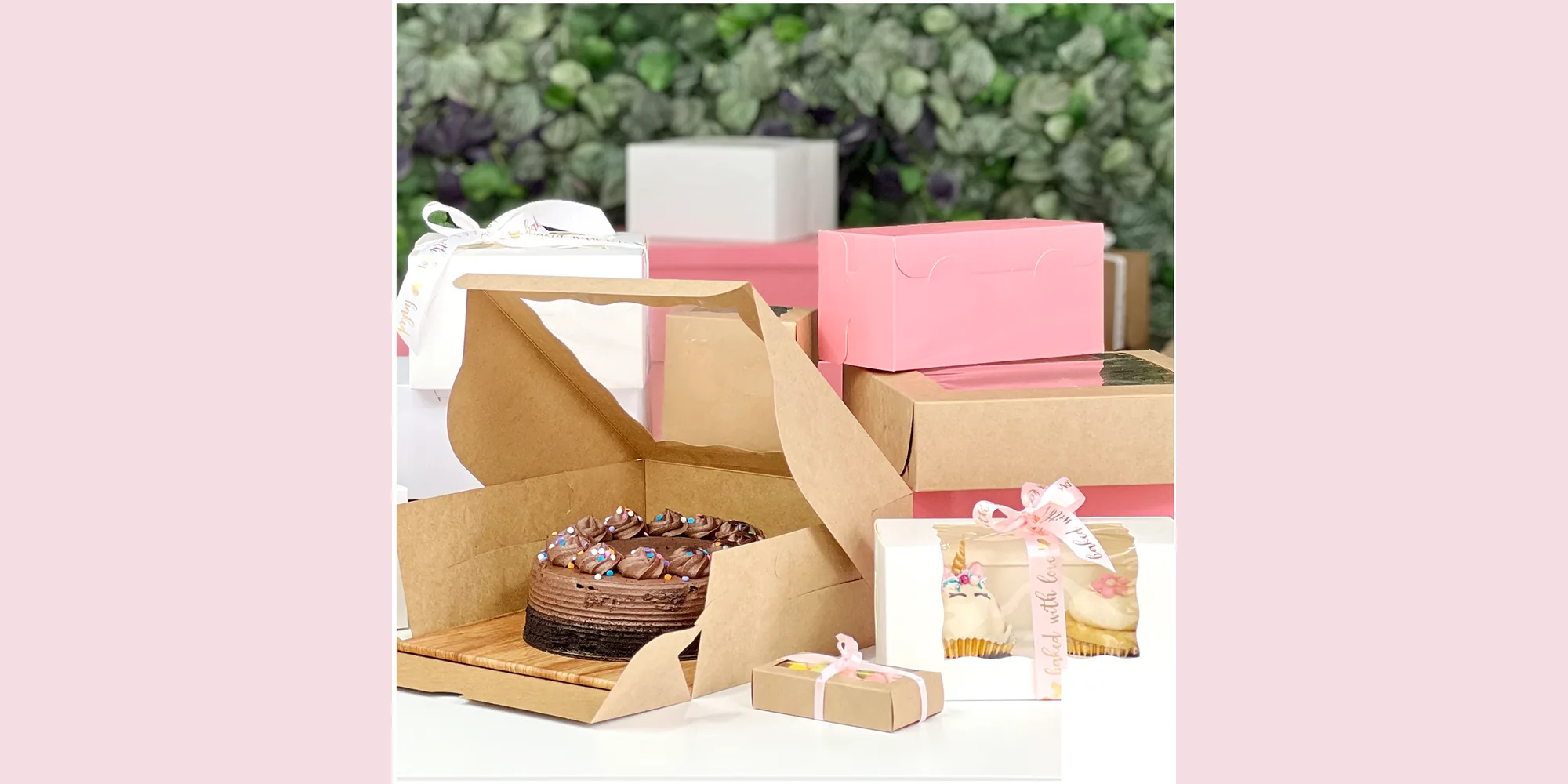
Leave only as much room around the board as you need to get it in and out of the box. Measure the board rather than the cake, because the board sets the footprint. A snug box, a non-slip layer under the board and a level surface in the vehicle do most of the work. If a gap remains, add inserts or supports that steady the board without touching the cake.
Then look upwards. Toppers, piped peaks and frosting shouldn’t touch the lid, and a small shift on the road can drag one across the icing. Measure the cake at its full height, toppers and all, and leave some clear space above it.
To keep the frosting intact, give the surface time to set, keep the box shut and level, and don’t put anything on top of it. When one box holds several items, add dividers. Cupcakes need their own compartments, and custom muffin boxes are made with that in mind.
How to Choose the Right Cake Box for Delivery
Look at the inside of the box first rather than the outside. Internal width and length need to suit the board. Internal height needs to clear the cake and every decoration with a little to spare.
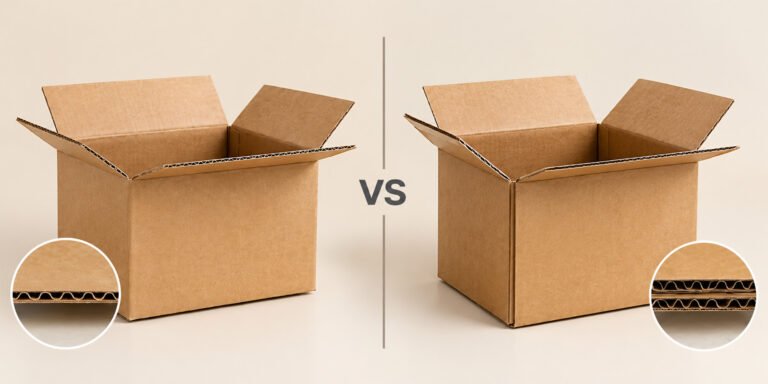
The best box is simply the one that fits the cake in front of you. It should be strong enough for the weight, hold the board firmly and keep the lid away from the decoration. Check the construction and specifications with your supplier before assuming a material will carry a tall or heavy cake. Measure the height with the topper on. Allow a little extra height, since the cake can move slightly.
If your cakes are regular sizes with modest decoration, a standard box does the job. Custom sizes become worth it if you make the same design again and again, work with tall or unusual shapes, or want every order to fit just as closely. Inserts are useful, though not compulsory. They steady a single board or separate several items in one box. But they won’t fix a box that’s simply too big.
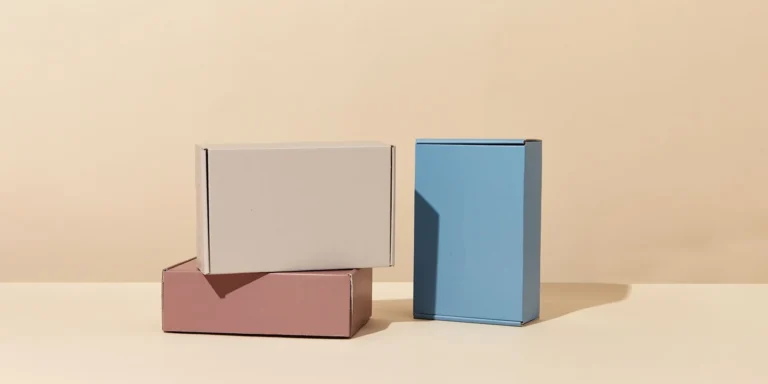
If you want a precise fit, custom cake boxes can be made to your own measurements. Hale Path Packaging supplies custom and pre-made packaging, with a general minimum order of 100 units. Turnaround is usually 7 to 14 working days depending on the order, so build in some time ahead of busy weeks.
Packaging Selection Table
| Order type | Best packaging approach | Support needed | Biggest risk |
| Single-tier cake | Box matched to the board, with clearance above | Non-slip layer under the board | Sliding in an oversized box |
| Tall cake | Extra internal height and a snug footprint | Rigid board, level placement | Tilting and leaning |
| Tiered cake | Separate boxes for each tier, where that suits the cake | Dowels inside each tier and a board for every tier | Tiers shifting or sinking |
| Cupcakes | Box with compartments | Inserts that hold each cake upright | Tipping and icing contact |
| Several cakes in one order | One box per cake, held steady in the vehicle | Non-slip mats and a sensible loading layout | Boxes sliding into one another |
| Cakes suited to posting | Food-suited inner packaging inside a sturdy outer carton | Cushioning on the inside, plus a check with the courier first | Rough handling and temperature |
Information to Provide When Requesting Custom Packaging
Quotes come back faster and fit better when you have these details to hand:
- Cake width and length
- Cake-board dimensions
- Finished height including decorations
- Approximate product weight
- Cake structure and number of tiers
- Delivery method
- Required quantity
- Branding and printing preferences
How to Transport Different Types of Cakes Safely
Single-tier celebration cakes are the easy case. A matched board, a snug box and a flat surface cover most of the risk.
Tall cakes sit high. The weight sits at the top, so even a small tilt makes the cake lean. Pick a box with enough internal height, put the cake low down and towards the middle of the vehicle, and add tall toppers once you get there.
Wedding cakes are usually safer travelling in separate tiers, particularly when they’re heavy, tall or going a long way. Each tier gets its own board and box, and you assemble at the venue with spare icing and tools. If you do deliver a cake assembled, be sure the internal supports are sound, and the route is short and smooth.
Cupcakes need compartments or inserts, so every one stands upright. Leave clear space above the icing.
Heavy cakes need a stiff board and a strong box. Odd-shaped cakes often do better in custom sizes, because standard boxes leave gaps around them. Die-cut custom shape boxes and our range of die-cut boxes UK are cut around the product. Measure the widest point.
Delivering Cakes by Car or by Courier
In a car, pick a spot that is flat and stable. In some cars, that is the boot floor. In others it is a footwell. Move anything loose out of the way and put non-slip mats under the box to hold it. Never carry it on your lap. Drive gently, brake early and take corners slowly.
Temperature is where people get caught out. A cardboard box protects the cake from knocks. It does not control temperature. If the filling is sensitive, plan cooling for the whole trip and keep the time in transit short. Different ingredients have different requirements. Stick to your own food safety plan and the official guidance on starting a food business.
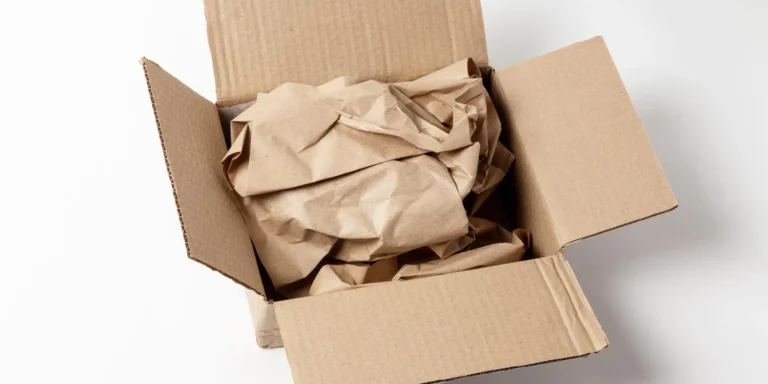
Postal delivery is a different job. In the post, you don’t control the handling, and parcels pass through sorting networks. A cake sent that way needs food-suited packaging, outer protection and internal cushioning. A strong corrugated outer carton is the usual choice, and our food and beverage packaging range covers food-suited formats.
Some cakes can go by courier, but only those built for it, and only with a service that accepts food. Soft, chilled or heavily decorated cakes are often unsuitable for ordinary parcel delivery. Royal Mail’s guidance on sending food and perishable items in the post says to let cakes cool completely, wrap them and place them on a sturdy cardboard base, use cupcake box inserts, and pack in a strong corrugated box labelled “perishable”. It recommends Tracked 24 or Tracked 48 as a minimum, and notes that icing made with soft cheese or cream makes a cake perishable. For general packing advice, see the Post Office guide on how to pack a parcel. A “fragile” sticker is no replacement for proper packaging.
Pre-Delivery Checklist
- Stability: cake firm, fixed to its board, tiers dowelled inside
- Board and support: rigid board, right size, non-slip layer
- Box dimensions: snug internal fit around the board
- Decoration clearance: nothing touching the lid or sides
- Inserts and dividers: fitted for cupcakes and multiple items
- Vehicle: level surface, loose items removed
- Temperature: cooling planned for the filling and the journey
Frequently Asked Questions About Cake Transportation
How do I transport a cake without it falling apart? Let it set, fix it to a rigid board and support tiers internally. Use a snug box, keep it level and drive gently.
How do I keep a cake from sliding around in its box? Match the board to the inside of the box and put a food-safe non-slip layer underneath. If gaps are left, fill them with supports. Make sure the supports don’t touch the decoration.
Should I put a cake box on a car seat or in the boot? Both can work. The surface must be flat, and the box must not be able to move. The boot floor is often steadier. Avoid soft or sloping seats.
How do I transport a tall cake safely? Pick a box with plenty of internal height and keep the cake low and central. Take tall toppers separately and put them on once you arrive.
Which is better for a tiered cake: delivering it assembled or in separate tiers? Separate tiers are usually safer for heavy cakes, tall cakes and longer trips. Assembled delivery suits short, smooth journeys with well-supported tiers.
How do I protect buttercream cakes in warm weather? Heat softens buttercream, so keep the vehicle cool and the journey as short as you can. The box won’t cool the cake for you.
Can I send a decorated cake through the post? Only if the cake suits parcel journeys and the service accepts food. Many decorated cakes don’t. Use proper inner and outer packaging.
Which cake box should a bakery use for deliveries? One that fits the cake and board closely, carries the weight and clears the decoration. Custom sizing suits consistent or unusual cakes.
Conclusion
Nearly every problem in this guide comes down to space. The board may have too much room around it. The decoration may have too little room above it. Or the support underneath may not be enough. Close those gaps, and the rest gets easier.
Next time, measure the board and the finished height before you order. Those two numbers point you to the right box. Custom sizing earns its place when your cakes repeat, run tall or break the usual shapes.
Ready to match your packaging to your cakes? If your cakes need a precise fit, send Hale Path Packaging your board size, finished height and quantity. Together we can work out whether standard or custom cake boxes make more sense for your orders.
Written by the Hale Path Packaging team, packaging specialists with 10 years of experience supplying corrugated, rigid and custom packaging to start-ups and established brands across the UK.

Harry Taylor
Packaging expert at Hale Path Packaging, sharing insights on custom packaging solutions, sustainable materials, and industry trends.